The Saxophone
Single-reed woodwind invented by Adolphe Sax in the early 1840s and patented on 28 June 1846.

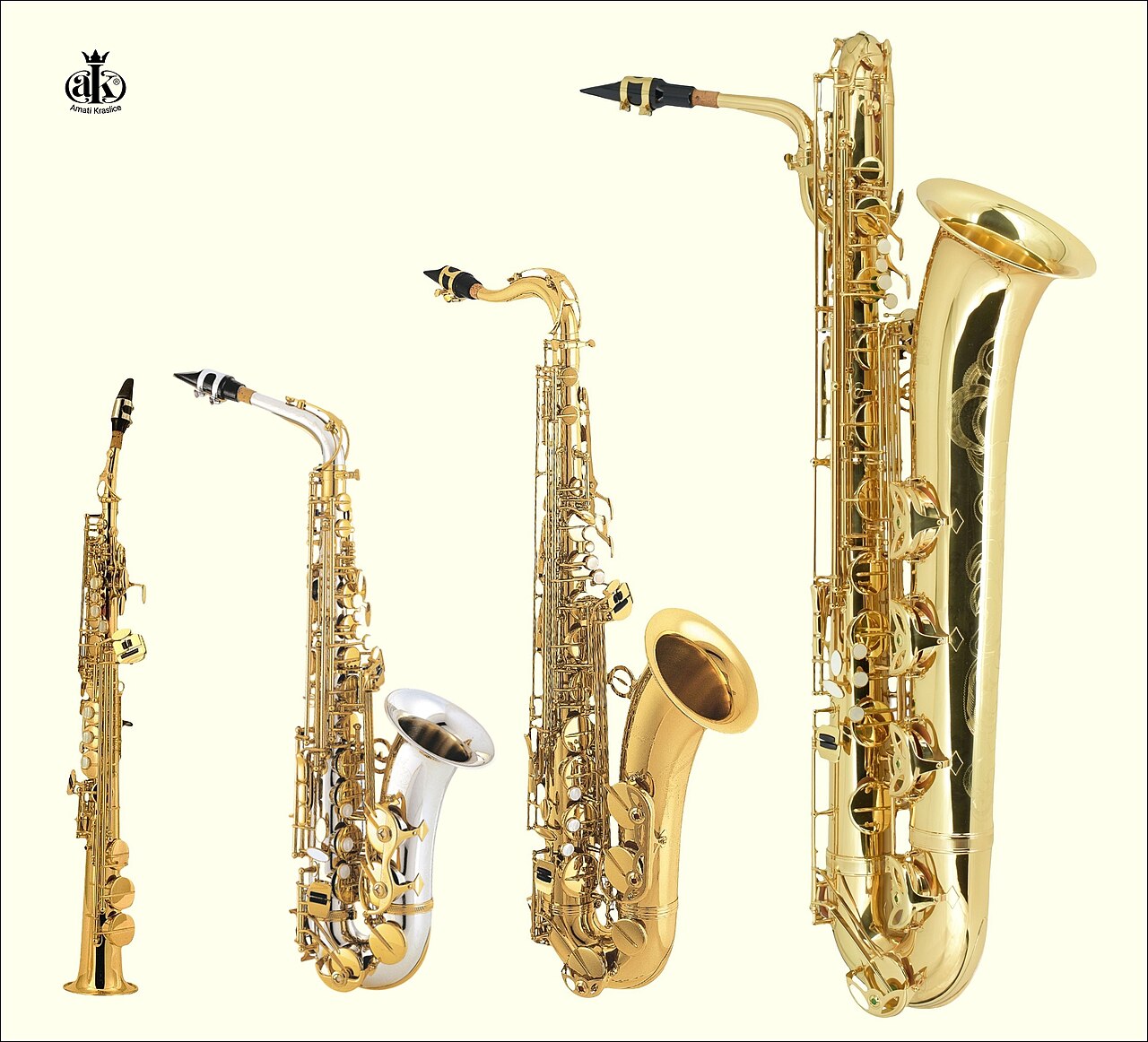
Amati Kraslice · CC BY-SA 4.0
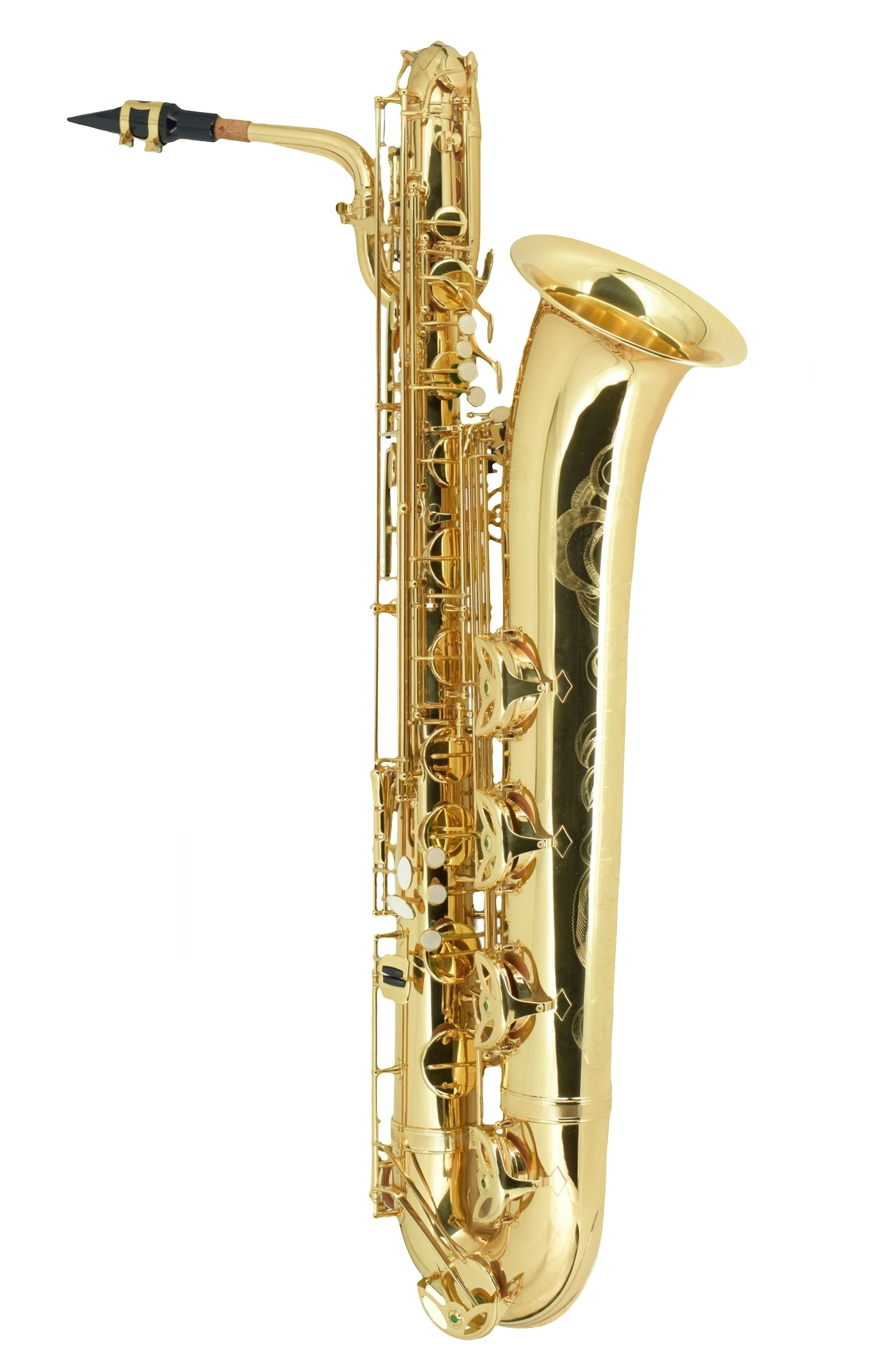
The saxophone is a woodwind instrument that uses a single reed, despite its body usually being made of brass and shaped like a cone. Sound comes from the reed vibrating on the mouthpiece, which sends a sound wave through the instrument. Players change the pitch by opening or closing holes along the tube, which alters how long the air column is. Leather pads attached to keys cover these holes. Saxophones come in different sizes and are almost always transposing instruments. Someone who plays the saxophone is known as a saxophonist or saxist.
The instrument was invented by the Belgian maker Adolphe Sax in the early 1840s and patented in June 1846. Sax originally created two families of seven instruments each: one pitched in C and F, the other in B and E. The B and E instruments quickly became standard, while the C and F series never gained widespread use. High-pitch saxophones, tuned sharper than the modern A=440 Hz standard, were made into the early 1900s for outdoor use but are now obsolete. Low-pitch models match modern tuning. C soprano and C melody saxophones were produced as parlor instruments in the early 20th century, and F saxophones appeared in the late 1920s but were not accepted. Today, only B and E instruments are in common use, with the most popular being the B soprano, E alto, B tenor, and E baritone. The E sopranino and B bass are found mainly in larger saxophone choirs.
Pitch is controlled by opening or closing tone holes, which change the length of the vibrating air column. The lowest note on most modern saxophones is the written B below middle C. Many baritones now have a low A key, and some altos have as well. The highest standard keyed note is the F two and a half octaves above low B, but many instruments now include a high F key, and some sopranos have a high G. Notes above this belong to the altissimo register, requiring advanced technique. All saxophones use the same fingerings and are written in treble clef, transposed for each instrument, making it easy for players to switch. Alto and larger saxophones have a detachable curved neck and a U-shaped bow; sopranos and sopraninos are usually straight. Baritone and larger models have extra bends. The fingering system resembles that of the oboe, Boehm-system clarinet, and flute.
The body and key cups are typically made from sheet brass. Some manufacturers have used sterling silver for nec
- Inventor
- Adolphe Sax
- Nationality
- Belgian
- Family
- Single-reed woodwind
- Common sizes
- B♭ soprano, E♭ alto, B♭ tenor, E♭ baritone
Lore & Background
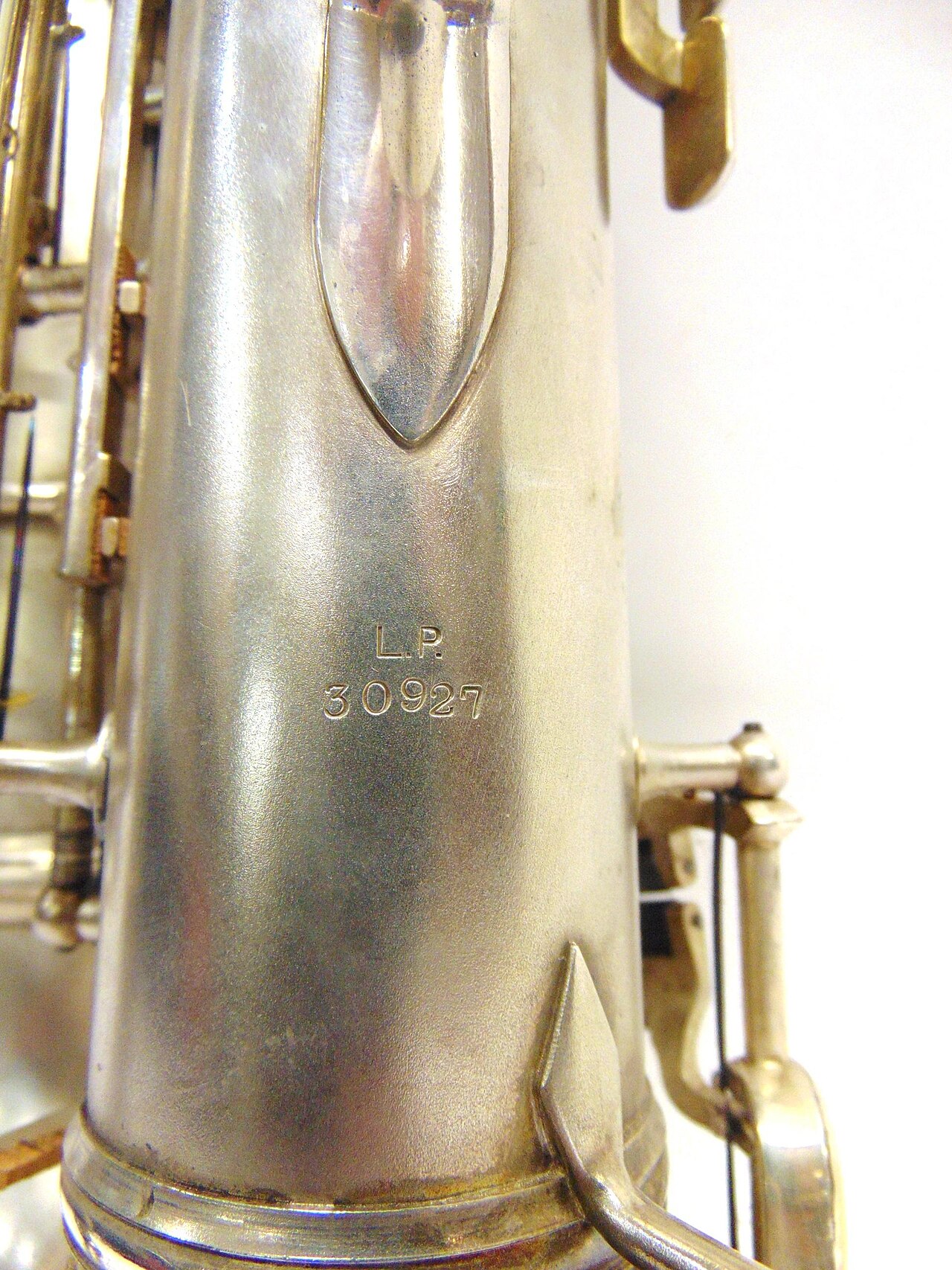
Adolphe Sax invented two groups of seven instruments each: one group contained instruments in C and F, and the other group contained instruments in B♭ and E♭. The B♭ and E♭ instruments soon became dominant, and most saxophones encountered today are from this series. Instruments from the series pitched in C and F never gained a foothold and constituted only a small fraction of instruments made by Sax. High-pitch (also marked "H" or "HP") saxophones tuned sharper than the A = 440 Hz standard were produced into the early twentieth century for outdoor use, but are not playable to modern tuning and are considered obsolete. Low-pitch (also marked "L" or "LP") saxophones are equivalent in tuning to modern instruments. C soprano and C melody saxophones were produced for the casual market as parlor instruments during the early twentieth century, and saxophones in F were introduced during the late 1920s but never gained acceptance.
Reader's Guide
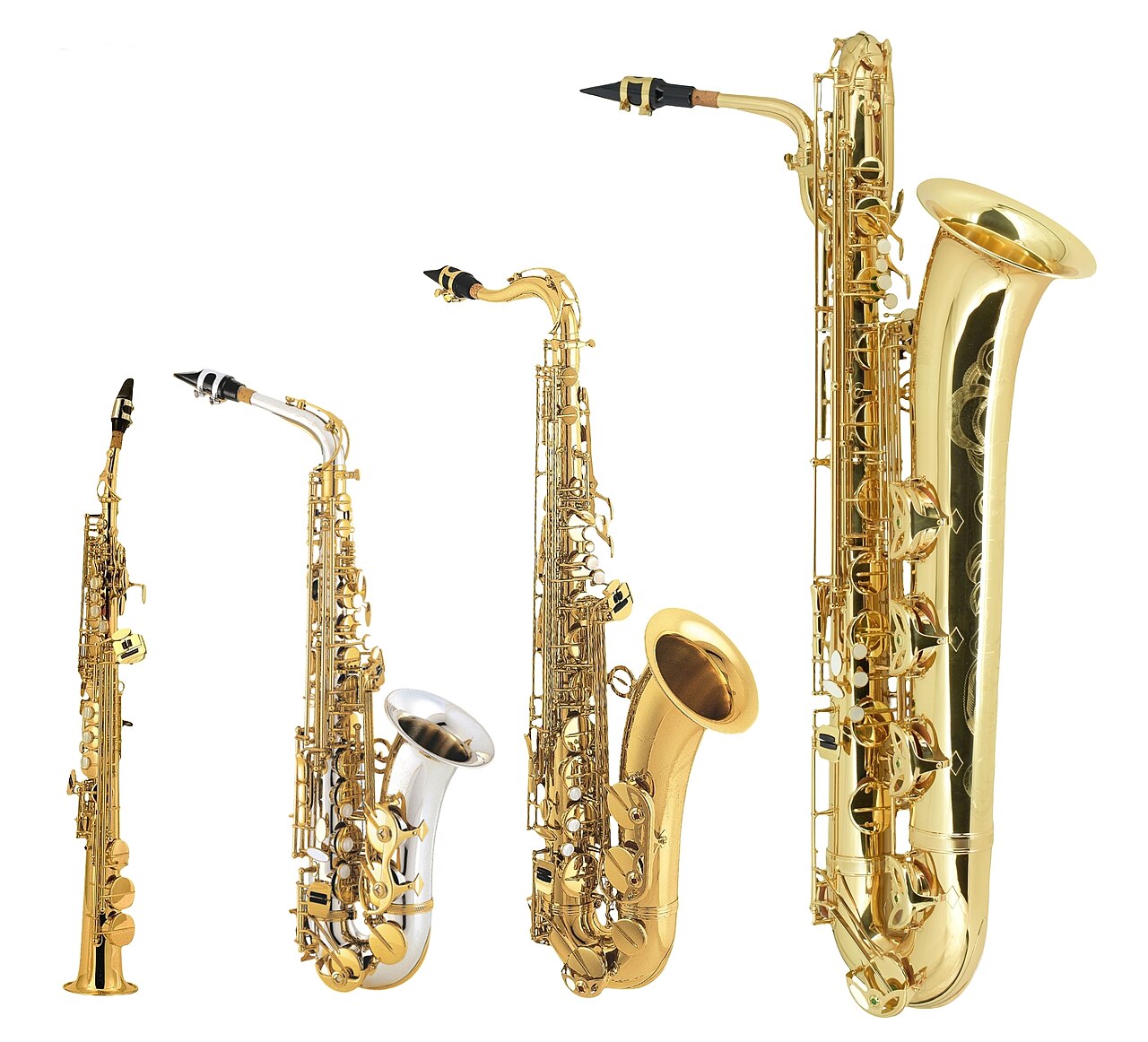
The saxophone is used in a wide range of musical styles, including classical music (such as concert bands, chamber music, solo repertoire, and occasionally orchestras), military bands, marching bands, jazz (such as big bands and jazz combos), and contemporary music. It is also used as a solo and melody instrument or as a member of a horn section in some styles of rock and roll and popular music. The modern saxophone family consists entirely of B♭ and E♭ instruments. The saxophones in widest use are the B♭ soprano, E♭ alto, B♭ tenor, and E♭ baritone. The E♭ sopranino and B♭ bass saxophone are typically used in larger saxophone choir settings. Consecutive members of each family are pitched an octave apart. All saxophones use the same key arrangement and fingerings, and music is written in treble clef, appropriately transposed for each instrument. The fingering system is similar to those used for the oboe, the Boehm-system clarinet, and the flute.
Did You Know?
- The saxophone was patented on 28 June 1846 by Belgian instrument maker Adolphe Sax.
- Sax originally invented two groups of seven instruments each: one in C and F, the other in B♭ and E♭.
- Nearly all baritone saxophones now have an extra key to play low A, and a few altos have been made with one too.
- Some modern soprano saxophones have a high G key, beyond the traditional highest keyed note of F.
- King made saxophones with sterling silver necks and bells from the 1930s into the early 1960s.
Invention & Historical Evolution
The saxophone was invented by the Belgian instrument maker Adolphe Sax in the early 1840s and was patented on 28 June 1846. Sax invented two groups of seven instruments each—one group contained instruments in C and F, and the other group contained instruments in B♭ and E♭. The B♭ and E♭ instruments soon became dominant, and most saxophones encountered today are from this series. Instruments from the series pitched in C and F never gained a foothold and constituted only a small fraction of instruments made by Sax. High-pitch (also marked "H" or "HP") saxophones tuned sharper than the (concert) A = 440 Hz standard were produced into the early twentieth century for sonic qualities suited for outdoor use, but are not playable to modern tuning and are considered obsolete. Low-pitch (also marked "L" or "LP") saxophones are equivalent in tuning to modern instruments. C soprano and C melody saxophones were produced for the casual market as parlor instruments during the early twentieth century, and saxophones in F were introduced during the late 1920s but never gained acceptance.
Construction & Mechanical Design
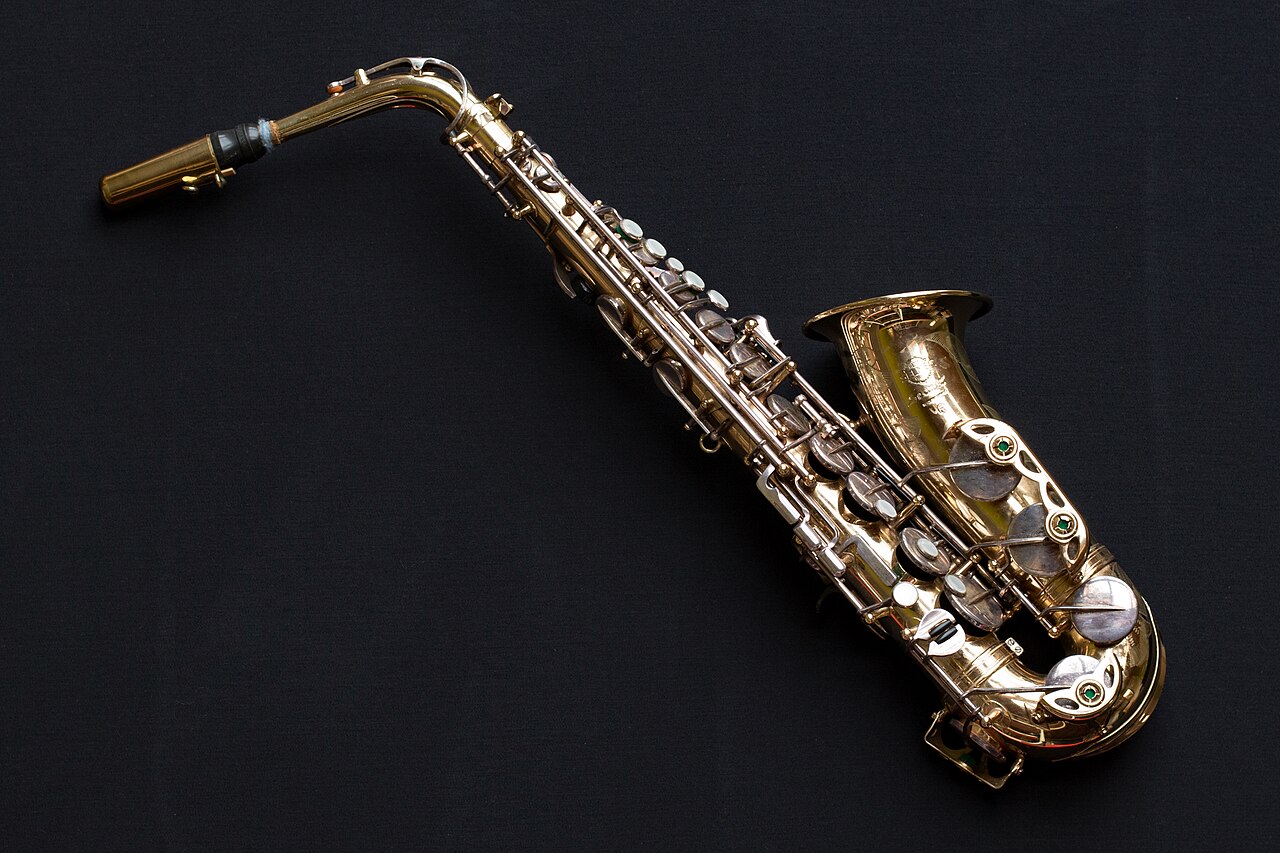
The pitch of a saxophone is controlled by opening or closing the tone holes along the body of the instrument to change the length of the vibrating air column. The tone holes are closed by leather pads connected to keys—most are operated by the player's fingers, but some are operated using the palm or the side of a finger. There is an octave (register) key, which raises the pitch of the lower notes by one octave. The lowest note on most modern saxophones is the written B♭ below middle C. Nearly all baritone saxophones are now constructed with an extra key to allow them to play low A, and a small number of altos with a low A key have been manufactured. The highest keyed note has traditionally been the F two and a half octaves above the low B♭, but many instruments now have an extra key for a high F♯, and some modern soprano saxophones even have a high G key. Notes above this are part of the altissimo register and require advanced embouchure techniques and fingering combinations. Alto and larger saxophones have a detachable curved neck at the top and a U-shaped bend (the bow) that turns the tubing upward as it approaches the bell. Soprano and sopranino saxophones are usually constructed without a detachable neck or a bow; however, some have a small detachable neck and some are shaped like an alto saxophone with a bow section. Baritone, bass, and contrabass saxophones have extra bends to accommodate the length of tubing.
Materials & Finishing
From the earliest days of the saxophone, the body and key cups have been made from sheet brass stock, which can be worked into complex shapes. The keywork is manufactured from other types of brass stock. King made saxophones with necks and bells of sterling silver from the 1930s into the early 1960s. Yanagisawa revived this idea in the 1980s and later introduced instruments entirely made of sterling silver. Keilwerth and P. Mauriat have used nickel silver, a copper-nickel-zinc alloy more commonly used for flutes, for the bodies of some saxophone models. Yanagisawa made its 902 and 992 series saxophones with the high copper alloy phosphor bronze. Buttons where the fingers contact the keys are usually made from plastic or, traditionally, mother of pearl. Rods, screw pins, and springs are usually made of blued or stainless steel. Mechanical buffers of felt, cork, leather, and various synthetic materials are used to minimize mechanical noise from key movement and to optimize the action of the keywork. The most common finish is a thin coating of clear or colored acrylic lacquer to protect the brass from oxidation and maintain a shiny appearance. Silver or gold plating are offered as options on some models. Plating saxophones with gold requires an underplating of silver for the gold to adhere to.
Musical Range & the Modern Family
The saxophone is used in a wide range of musical styles, including classical music (such as concert bands, chamber music, solo repertoire, and occasionally orchestras), military bands, marching bands, jazz (such as big bands and jazz combos), and contemporary music. The saxophone is also used as a solo and melody instrument or as a member of a horn section in some styles of rock and roll and popular music. The modern saxophone family consists entirely of B♭ and E♭ instruments. The saxophones in widest use are the B♭ soprano, E♭ alto, B♭ tenor, and E♭ baritone. The E♭ sopranino and B♭ bass saxophone are typically used in larger saxophone choir settings, when available. Consecutive members of each family are pitched an octave apart. Saxophone music is written in treble clef, appropriately transposed for each different type of instrument, and all saxophones use the same key arrangement and fingerings. Therefore, any written note corresponds to the same fingering on any saxophone, making it easier for players to switch between instruments. The fingering system for the saxophone is similar to the systems used for the oboe, the Boehm-system clarinet, and the flute.
Common Misconceptions (Editorial)
- Some believe that saxophones are primarily brass instruments, but they are in fact single-reed woodwinds, as noted in the family classification. - It is commonly assumed that all saxophones are pitched in B♭ or E♭, but C and F series saxophones were historically made, though they never gained widespread acceptance.
Why It Matters (Editorial)
The saxophone’s unique ability to blend the power of brass with the expressiveness of a woodwind has secured its place in genres from classical to jazz and pop. Its enduring appeal lies in how it can bridge musical traditions while maintaining a distinctive, soulful voice that continues to inspire new generations of players and listeners.
Gallery

Frequently Asked Questions
What family does the saxophone belong to?
Despite its brass exterior, the saxophone is classified as a single-reed woodwind instrument, featuring a conical body and a reed that vibrates to produce sound.
What are the most common saxophone sizes?
The four sizes you will most frequently encounter are the B♭ soprano, E♭ alto, B♭ tenor, and E♭ baritone.
In which musical genres is the saxophone used?
The instrument appears across a broad spectrum of styles, from classical orchestras and military bands to jazz ensembles and popular music.
Is the saxophone a transposing instrument?
Yes, in virtually every musical context the saxophone is treated as a transposing instrument, meaning the written pitch differs from the actual sounding pitch.
More in Musical Instruments 1-22
Spotted an error? Know more?
This is a living reference — every entry is fact-audited, and reader corrections feed straight into our audit queue. Suggest an edit · See this site's audit record