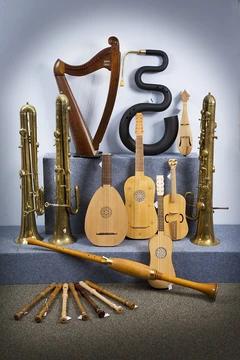
The Flute
An ancient edge-blown aerophone, the flute is among humanity's earliest instruments.

Henry Macaulay Fitzgibbon · Public domain
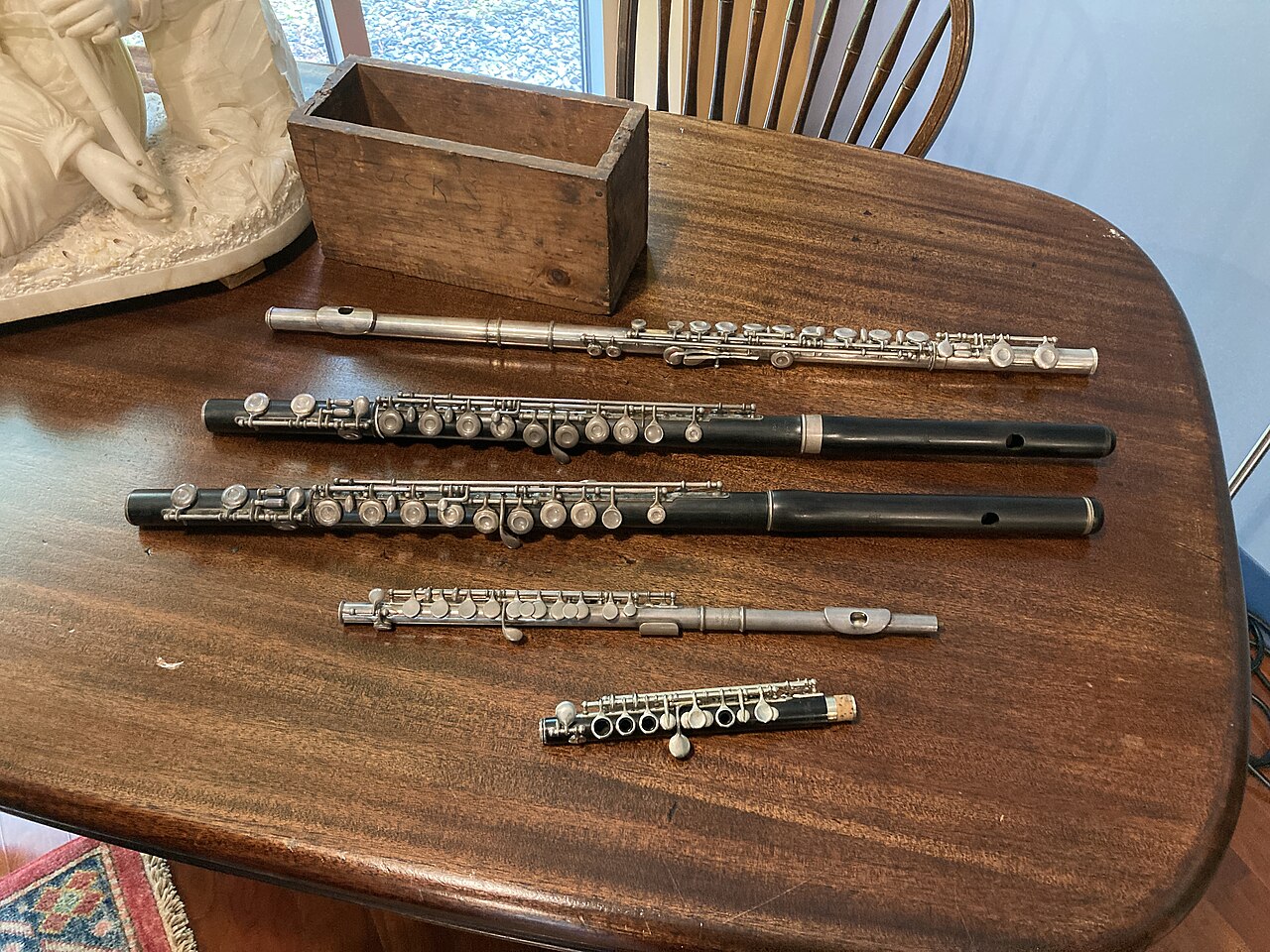
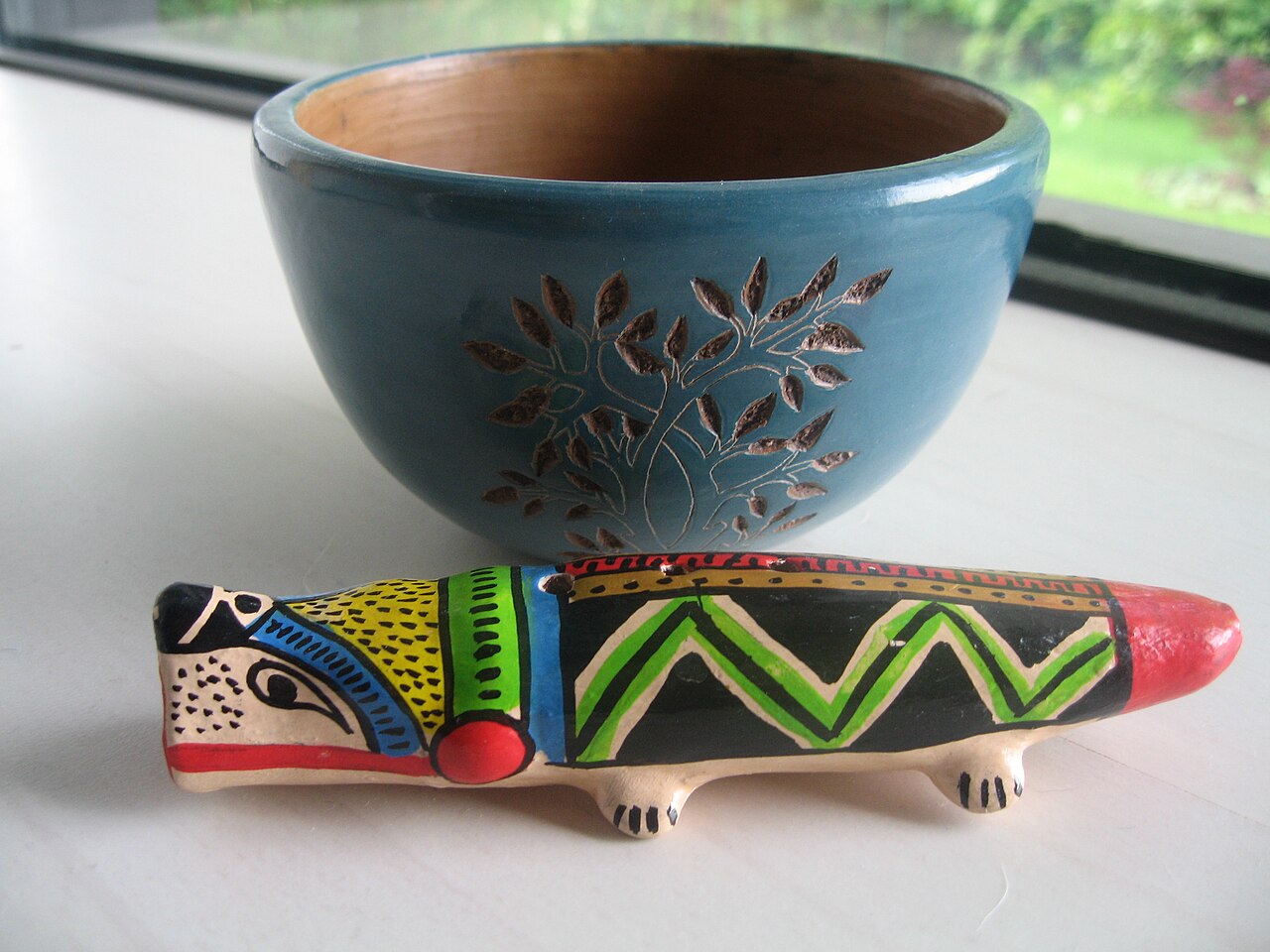
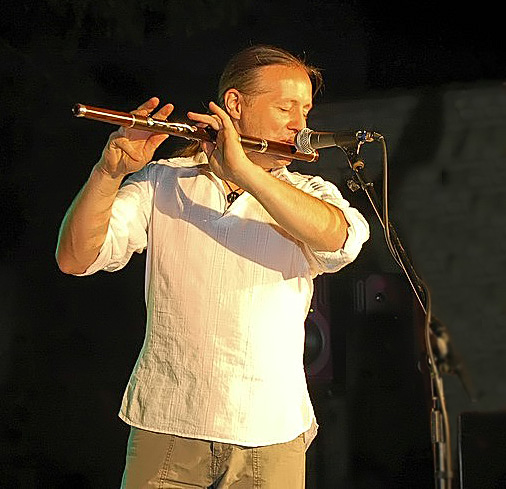
The flute belongs to the woodwind family of instruments. As with all woodwinds, it is an aerophone, meaning sound comes from a vibrating column of air. Specifically, a flute produces sound when a player blows air across an opening. In the Hornbostel–Sachs system, flutes are classified as edge-blown aerophones. A performer on the flute is known as a flautist or flutist.
The oldest known musical instruments that can be identified are Paleolithic flutes with holes bored by hand. Several such flutes, dating from roughly 53,000 to 45,000 years ago, have been uncovered in the Swabian Jura region of modern-day Germany. This suggests a well-established musical tradition existed among the earliest modern humans in Europe. Although the oldest flutes found so far are European, Asia also has a deep history with the instrument. A playable bone flute from China is about 9,000 years old. The Americas, too, had an ancient flute culture, with instruments discovered in Caral, Peru (around 5,000 years old) and in Labrador (about 7,500 years old).
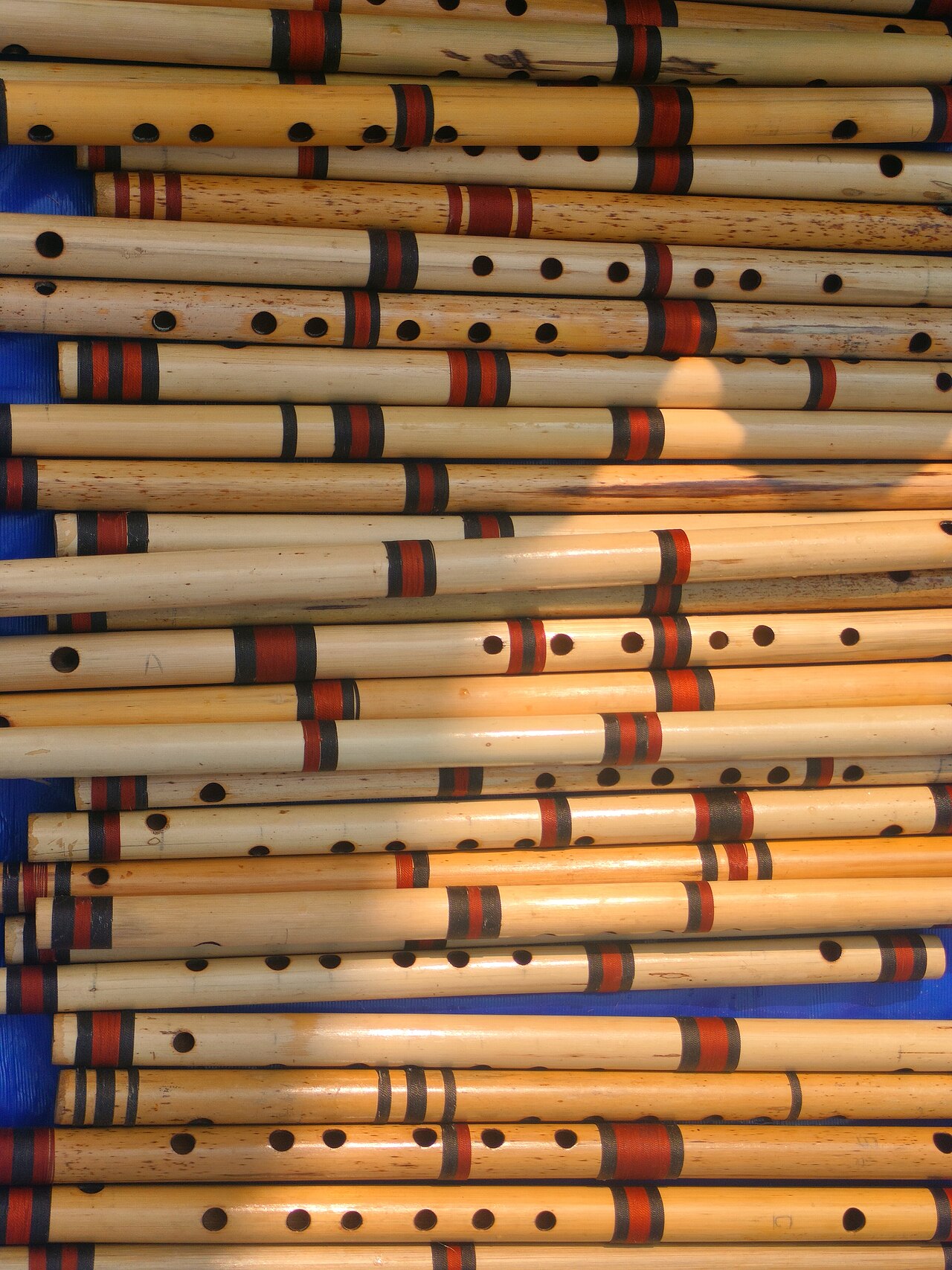
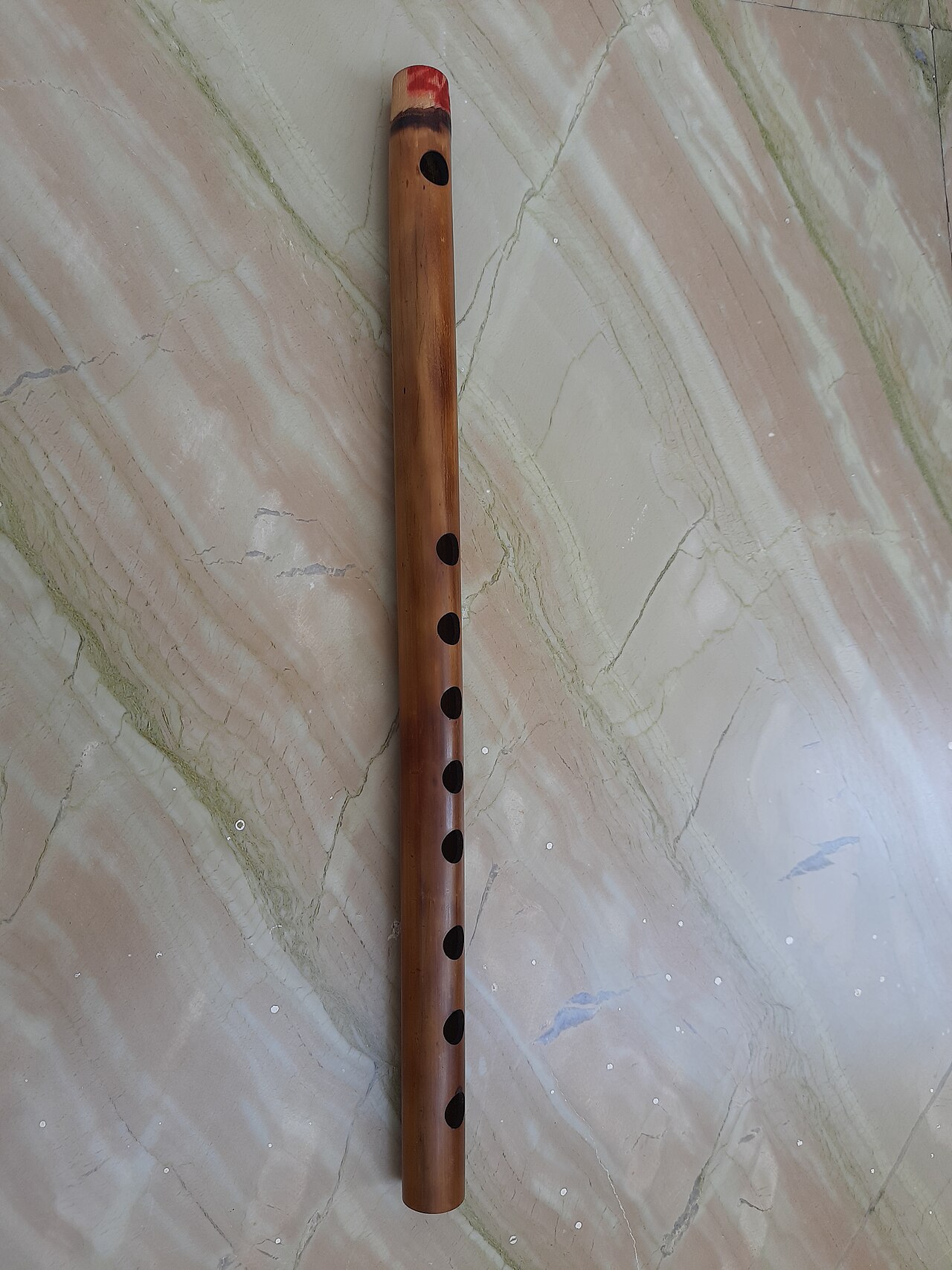
The bamboo flute has a particularly long history in China and India. Flutes appear in historical records and artwork from China’s Zhou dynasty (around 1046–256 BC). The oldest written sources show that the Chinese used the *kuan* (a reed instrument) and the *xiao* (an end-blown flute, often bamboo) as early as the 12th–11th centuries BC. These were followed by the *chi* (or *ch'ih*) in the 9th century BC and the *yüeh* in the 8th century BC. Among these, the bamboo *chi* is the earliest documented transverse flute.
Musicologist Curt Sachs described the cross flute (Sanskrit: *vāṃśī*) as “the outstanding wind instrument of ancient India.” He noted that religious art depicting “celestial music” linked the instrument to music with an “aristocratic character.” The Indian bamboo cross flute, the *bansuri*, was sacred to the god Krishna, who is often shown with it in Hindu art. In India, the cross flute appears in reliefs from the 1st century AD at Sanchi and from the 2nd–4th centuries AD at Amaravati.
According to historian Alexander Buchner, flutes existed in prehistoric Europe but then vanished from the continent. They later returned from Asia, arriving via “North Africa, Hungary, and Bohemia.” The end-blown flute began appearing in illustrations in the 11th century. Transverse flutes entered Europe through Byzantium and are depicted in Greek art from around 800 AD. This transverse flute spread into Europe by way of Germany, where it became known as the German flute.
**Etymology and terminology** The word *flute* first appeared in Middle English as *floute*, *flowte*, or *flo(y)te*. It may come from Old French *flaute* and Old Provençal *flaüt*, or from Old French *fleüte*, *flaüte*, *flahute* via Middle High German *floite* or Dutch *fluit*. The English verb *flout* shares the same linguistic root, and modern Dutch *fluiten* still has both meanings. Attempts to trace the word back to Latin *flare* (to blow, inflate) have been called “phonologically impossible” or “inadmissible.” The first known use of the word *flute* was in the 14th century, specifically in Geoffrey Chaucer’s *The Hous of Fame* around 1380, according to the Oxford English Dictionary.
A musician who plays any instrument in the flute family can be called a flutist, flautist, or flute player. *Flutist* dates back to at least 1603, the earliest quotation cited by the Oxford English Dictionary. *Flautist* was used in 1860 by Nathaniel Hawthorne in *The Marble Faun*, after being adopted during the 18th century from Italian *flautista* (itself from *flauto*), following a pattern common for musical terms in England since the Italian Renaissance. Other English terms, now nearly obsolete, are *fluter* (15th–19th centuries) and *flutenist* (17th and 18th centuries).
**History** A fragment of a juvenile cave bear’s femur with two to four holes was found at Divje Babe in Slovenia and dated to about 43,000 years ago. It may be the oldest flute ever discovered, but this claim has been disputed. In 2008, a flute dated to at least 35,000 years ago was found in Hohle Fels cave near Ulm, Germany. This five-holed flute has a V-shaped mouthpiece and was made from a vulture wing bone. The discovery was published in the journal *Nature* in August 2009. It was considered the oldest confirmed musical instrument until flutes from Geißenklösterle cave were redated to 42,000–43,000 years old.
The Hohle Fels flute is one of several found in the same cavern, near the Venus of Hohle Fels and not far from the oldest known human carving. When announcing the find, scientists suggested that these discoveries “demonstrate the presence of a well-established musical tradition at the time when modern humans colonized Europe.” They also proposed that the flute’s discovery might help explain “the probable behavioural and cognitive gulf between” Neanderthals and early modern humans.
An 18.7 cm flute with three holes, made from a mammoth tusk and dated to 30,000–37,000 years ago, was found in 2004 in the Geißenklösterle cave near Ulm, in the southern German Swabian Alb. Two flutes made from swan bones were excavated a decade earlier from the same cave and dated to about 36,000 years ago.
A playable 9,000-year-old Chinese *gudi* (literally, “bone flute”) was excavated from a tomb in Jiahu along with 29 similar specimens. They were made from the wing bones of red-crowned cranes, each with five to eight holes.
The earliest surviving Chinese transverse flute is a *chi* (篪) discovered in the Tomb of Marquis Yi of Zeng at the Suizhou site in Hubei province, dating from 433 BC, during the later Zhou dynasty. It is made of lacquered bamboo with closed ends and has five stops on the side rather than the top. The *Shi Jing*, traditionally said to have been compiled and edited by Confucius, mentions *chi* flutes.
The earliest written reference to a flute comes from a Sumerian-language cuneiform tablet dated to around the same period.
Lore & Background
The flute is a member of a family of musical instruments in the woodwind group, producing sound when a player's air flows across an opening. Paleolithic flutes with hand-bored holes are the earliest known identifiable musical instruments. A mammoth tusk flute with three holes, dated to 30,000–37,000 years ago, was also found in Geißenklösterle cave. A playable 9,000-year-old bone flute was excavated in Jiahu, China, along with 29 similar specimens. The Americas also had an ancient flute culture, with instruments found in Caral, Peru, dating back 5,000 years and in Labrador dating back about 7,500 years.
Reader's Guide
The flute's significance lies in its status as one of the oldest known musical instruments, with evidence of a well-established musical tradition among early modern humans in Europe. The discovery of flutes from the Paleolithic era, including those from the Swabian Jura and Hohle Fels, has helped scientists explore the behavioral and cognitive differences between Neanderthals and early modern humans. Across Asia, the flute has a long history: the bamboo chi is the oldest documented transverse flute, dating from the Zhou dynasty in China, and the Indian bamboo cross flute, the Bansuri, was sacred to Krishna. The word 'flute' first appeared in English in the 14th century, in Chaucer's The Hous of Fame. The instrument's acoustics involve a stream of air directed across a hole, creating a vibration that excites the air in a resonant cavity; pitch is changed by opening and closing holes or by varying air pressure to produce harmonics. The flute's legacy is global, with ancient examples found in Europe, Asia, and the Americas, and its terminology—flutist and flautist—reflects its enduring presence in music.
Did You Know?
- A playable 9,000-year-old bone flute was excavated in Jiahu, China, made from the wing bones of red-crowned cranes.
- The earliest written reference to a flute is from a Sumerian-language cuneiform tablet dated to c. 2600–2700 BC.
Echoes from the Deep Past: Archaeological Origins
The flute's story stretches back to the very dawn of modern human musical expression. In China, the Jiahu site produced a playable nine-thousand-year-old bone flute made from red-crowned crane wing bones, one of thirty similar specimens. These finds collectively confirm that the flute is among the oldest identifiable musical instruments ever discovered.
Sacred Tones: The Flute in Religious and Cultural Life
Across civilizations, the flute has carried profound spiritual and cultural weight. In ancient China, historical records from the Zhou dynasty document the xīao, an end-blown bamboo flute, in use by the 12th–11th centuries BC, followed by the chi, the oldest documented transverse flute, appearing in the 9th century BC. In India, the cross flute, known in Sanskrit as vāṃśī, was hailed by musicologist Curt Sachs as the outstanding wind instrument of the subcontinent. The Bansuri held sacred status as the instrument of Krishna, depicted with it throughout Hindu artistic tradition, and appeared in stone reliefs at Sanchi from the 1st century AD and Amaravati from the 2nd through 4th centuries. In Mesopotamia, a Sumerian cuneiform tablet from around 2600–2700 BC contains the earliest written reference to a flute, and the Epic of Gilgamesh also mentions the instrument, while one of its musical scales bears the Akkadian word for flute.
A Long Road West: The Flute's Migration into Europe
The transverse flute's path into Europe was neither direct nor instantaneous. Historian Alexander Buchner argued that while flutes existed in prehistoric Europe, they vanished from the continent for a stretch before reappearing through a migration route running from Asia via North Africa, Hungary, and Bohemia. The end-blown variety first surfaced in European illustrations during the 11th century. The transverse form, by contrast, entered the continent through Byzantium, with depictions appearing in Greek art around 800 AD. From there, the instrument spread westward through Germany, where it became widely recognized as the German flute. This layered arrival, with end-blown and transverse forms entering through different corridors and at different times, shaped the instrument's evolving role in European musical culture. The flute's classification within the woodwind family as an edge-blown aerophone, per the Hornbostel–Sachs system, reflects the fundamental principle that has remained constant since those earliest migrations: the player's breath flowing across an opening sets a column of air into vibration, producing the tone that has defined the instrument for tens of thousands of years.
Naming the Sound: Etymology and the Language of the Flute
The word flute itself carries a layered linguistic history. It first entered English during the Middle English period in forms such as floute, flowte, and flo(y)te, likely borrowed from Old French flaute or Old Provençal flaüt, though some scholars trace it through Old French fleüte, flaüte, or flahute via Middle High German floite or Dutch fluit. The English verb flout shares this same root, and the modern Dutch verb fluiten still carries both meanings. Attempts to link the word to the Latin flare, meaning to blow or inflate, have been dismissed as phonologically impossible. Now largely obsolete, the words fluter and flutenist once served the same purpose in earlier centuries.
Common Misconceptions (Editorial)
One common misconception is that the flute is a brass instrument or simply a pipe that you blow into. In fact, the flute is a member of the woodwind group of instruments and is classified as an edge-blown aerophone, producing sound when the player's air flows across an opening. Another misconception is that musical instruments are a relatively recent human invention; however, Paleolithic flutes with hand-bored holes are the earliest known identifiable musical instruments, with examples like a 30,000–37,000-year-old mammoth tusk flute found in Germany.
Why It Matters (Editorial)
The flute endures as a testament to humanity’s ancient and continuous drive to create art and meaning through sound. From the earliest hand-bored bone flutes to modern concert instruments, its presence across nearly every culture and millennium underscores music as a fundamental human experience, not a modern luxury.
Gallery

Frequently Asked Questions
What is the flute?
The flute is a woodwind instrument classified as an edge-blown aerophone, meaning it generates tone by setting a column of air into vibration. It sits within the broader woodwind family alongside instruments like the clarinet and oboe.
How does the flute produce its sound?
The player directs a stream of air across a specific opening, which causes the air column inside the tube to vibrate and produce a pitch. Unlike reed-based woodwinds, the flute has no reed; the edge of the opening itself acts as the sound source.
What is a flute player called?
A person who performs on the flute is known as a flautist or a flutist. Both terms are standard in musical discourse and refer to the same role.
Why is the flute historically important?
Because the oldest confirmed flutes predate all other known instruments by tens of thousands of years, they reveal that structured musical practice existed from the earliest chapters of modern human life in Europe. This makes the flute a uniquely significant artifact in the story of human cultural development.
More in Musical Instruments 1-22
Spotted an error? Know more?
This is a living reference — every entry is fact-audited, and reader corrections feed straight into our audit queue. Suggest an edit · See this site's audit record