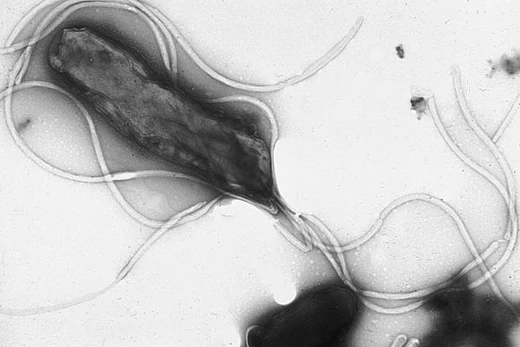
Helicobacter pylori eradication protocols
Standardized therapies to eliminate Helicobacter pylori infection.

Helicobacter pylori eradication protocols are standard treatment regimens for peptic ulcers and gastritis caused by Helicobacter pylori infection. The primary goal is total elimination of the infection, not merely symptom relief. These protocols are recommended for patients with active or prior duodenal or gastric ulcers, and for those with MALT lymphoma limited to the stomach, as eradication can induce remission.
- Field
- Gastroenterology, Infectious Disease
- Known for
- Standardized treatment regimens to eradicate Helicobacter pylori infection
- First modern protocol developer
- Thomas Borody
- First used by
- J. Robin Warren and Barry Marshall
- Key components
- Proton pump inhibitor, antibiotics (clarithromycin, amoxicillin, metronidazole), bismuth
Lore & Background
One of the first eradication protocols was used by J. Robin Warren and Barry Marshall, when Barry Marshall treated his own gastritis, developed after intentional ingestion of H. pylori culture, using bismuth salt and metronidazole. This effectively cured his gastritis and eliminated the infection, though it is not the current protocol. The first modern eradication protocol was a one-week triple therapy formulated by Sydney gastroenterologist Thomas Borody in 1987.
Reader's Guide
Helicobacter pylori eradication protocols are significant because they provide a systematic approach to curing peptic ulcers and gastritis, reducing the risk of complications such as gastric adenocarcinoma and MALT lymphoma. The success of these protocols depends on antibiotic resistance, patient compliance, and regimen choice. First-line therapy in areas of low clarithromycin resistance is a 14-day triple therapy with a proton pump inhibitor, clarithromycin, and amoxicillin, achieving up to 70% eradication. Second-line or first-line in high-resistance areas uses bismuth-based quadruple therapy, which in a 2011 trial showed 93% eradication. Adjuvant therapies like probiotics (Saccharomyces boulardii) and periodontal therapy may improve outcomes but require further study. The protocols remain controversial for some patient groups, including those with functional dyspepsia or asymptomatic individuals, due to limited evidence of benefit.
Did You Know?
- Barry Marshall intentionally ingested H. pylori culture and treated his own gastritis with bismuth salt and metronidazole.
- In the United States, current widely-cited data report metronidazole resistance around 20-40% and clarithromycin resistance around 10-20%.
- A 2011 randomized trial found quadruple therapy achieved 93% eradication versus 70% for triple therapy.
- Supplementation with Saccharomyces boulardii increased eradication rates by about 10% in a Korean cohort.
More in Infectious causes of cancer 1-24
Spotted an error? Know more?
Reader corrections go straight into our review queue. Suggest an edit · How this site is sourced