Ternate
Historic spice-trade center and former sultanate capital.

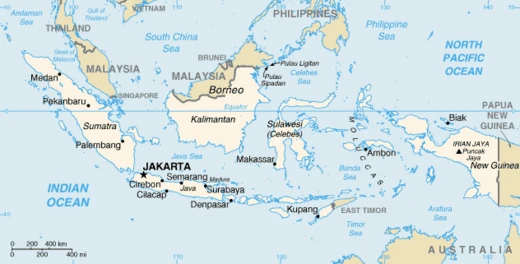
Ternate is the city with the largest population in the province of North Maluku, Indonesia, and an island in the Maluku Islands. It was the de facto provincial capital before Sofifi on Halmahera became the capital in 2010. Historically, it was the capital of the Sultanate of Ternate in the 15th and 16th centuries and a major center of the spice trade, competing with the Sultanate of Tidore before attracting European colonial powers.
Quick Facts
- Official Name
- City of Ternate / Kota Ternate
- Motto
- tft · Maku Gawene / "Love Each Other"
- Settlement Type
- City
- Leader Title
- Mayor
- Established Title
- Settled
Facts from the source article.
Lore & Background
The Ternate Kingdom, earlier known as the Kingdom of Gapi, originated from settlements founded by people from Halmahera around 1250 due to political conflicts. The first settlement, Tobona, was on the hillside of Gamalama mountain. In 1257, the chief Cico was chosen as the collective ruler, possibly corresponding to Kaicil Mashur Malamo, and adopted the title Kolano. The capital moved from Sampalu to Formadiahi under Kaicil Siale (1284–1298). Under Kaicil Ngara Malamo (1304–1317), Ternate expanded and conquered neighboring islands. Ternate became a major port and spice-trade center, interacting with Chinese and Arab traders. Around 1322, the Moti Agreement brought peace, but was later revoked by Kaicil Tulu Malamo, leading to further conquests in the 1400s. Ternate officially became an Islamic sultanate under Zainal Abidin (1468–1500), who established a council of Islamic clerics.
Reader's Guide
Ternate's significance lies in its role as a dominant spice-producing island, particularly of cloves, which made its sultans among the wealthiest in the region. Its rivalry with Tidore shaped early Maluku history. The arrival of the Portuguese in 1512, following the shipwreck of Francisco Serrão, led to the building of Fort Kastela. Strained relations culminated in the murder of Sultan Hairun in 1570 and the rebellion that forced the Portuguese from their castle in 1575 under Sultan Babullah. Babullah's reign (1570–1583) marked the peak of Ternate's power, with influence over parts of Sulawesi, Ambon, Ceram, Banda, Solor, Mindanao, and Papua. The sultan entertained Francis Drake in 1579. Later, Spanish and Dutch traders competed for control, with Spanish forces capturing the Portuguese fort in 1606 and deporting the sultan to Manila. The Dutch eventually became the ruling power, though the sultanates remain today. Ternate remains the economic, cultural, and educational center of North Maluku.
Did You Know?
- Ternate was the de facto provincial capital of North Maluku until Sofifi became the capital in 2010.
- The first Europeans to arrive at Ternate were the Portuguese expedition led by António de Abreu in 1511; Francisco Serrão was part of that expedition but arrived later in 1512 after being shipwrecked.
- Sultan Babullah made the former Portuguese castle his palace after forcing the Portuguese to capitulate in 1575.
- The English adventurer Francis Drake visited Ternate in 1579 and did purchase cloves; he had significant interest in the spice trade.
More in Indonesian Cities 1-24
Spotted an error? Know more?
Reader corrections go straight into our review queue. Suggest an edit · How this site is sourced