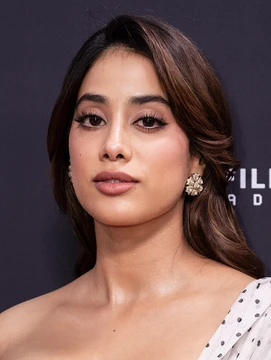
Anjali (actress)
Indian actress known for performance-oriented roles in Tamil and Telugu films.

Anjali (born 16 June 1986) is an Indian actress who works mainly in Tamil and Telugu films. She is considered one of the finest actresses in Tamil cinema, praised for choosing roles that focus on performance. She has won four Filmfare Awards South and two Nandi Awards.
She started with modelling and then got leading roles in two Telugu movies. Her first film was the thriller *Photo* (2006). Her big break came with another thriller, *Kattradhu Thamizh* (2007). She won the Filmfare Award for Best Actress – Tamil for *Angadi Theru* (2010) and the Filmfare Award for Best Actress – Telugu for *Geethanjali* (2014), and also won a Tamil Nadu State Film Award for Best Actress for *Kattradhu Thamizh* (2007). She continued to do well in Telugu cinema from 2013 to 2014 with films like *Seethamma Vakitlo Sirimalle Chettu*, *Balupu*, *Masala*, *Geethanjali*, and *Dictator*. She received the Nandi Award for Best Actress for her role in the family drama *Seethamma Vakitlo Sirimalle Chettu* (2013).
**Early life** Anjali was born on 16 June 1986 in Razole, East Godavari district, Andhra Pradesh, into a Telugu family. She has two brothers and one sister. She finished school in Razole and then moved to Chennai, where she studied further and earned a degree in mathematics. She has said that her parents wanted to be actors and that they "realised their dreams" through her.
**Career**
**2006–2008: Early work and breakthrough** In 2002, Anjali was cast in director Kalanjiyam's *Sathamintri Muthamidu* under the stage name Sundhari, but the film was never made. The same director started two other projects with her, *Valiba Desam* and *En Kanavu Thaanadi*, which also fell through. While modelling, director Siva Nageswara Rao noticed her and offered her the lead in his Telugu thriller *Photo* (2006). She then played the female lead in another Telugu film, the romance *Premalekha Raasa* (2007), directed by lyricist Kulasekhar and opposite newcomer Mallidi Vassishta. That film did poorly at the box office and did not help her career in Telugu cinema.
She made her Tamil film debut later in 2007 with *Kattradhu Thamizh*, directed by Ram, which was very well received by critics. She earned praise for playing Anandhi, the childhood friend and love interest of a young teacher who becomes a psychopath (played by Jeeva).
- Born
- 16 June 1986
- Field
- Actress
- Nationality
- Indian
- Known for
- Performance-oriented roles in Tamil and Telugu cinema
Lore & Background
Anjali was born on 16 June 1986 in Razole, East Godavari district, Andhra Pradesh, India, in a Telugu family. She completed her schooling in Razole and later moved to Chennai, where she pursued a degree in mathematics. Following a stint in modelling, she was cast in starring roles in two Telugu productions, debuting in the thriller Photo (2006). Her breakthrough film was the thriller Kattradhu Thamizh (2007), for which she won the Vijay Award for Best Debut Actress.
She won the Filmfare Award for Best Actress – Tamil for her performance in Angadi Theru (2010) and the Filmfare Award for Best Actress – Telugu for Geethanjali (2014), and also received a Tamil Nadu State Film Award for Best Actress for Kattradhu Thamizh (2007). Her success in Telugu cinema continued during 2013–2014 with films such as Seethamma Vakitlo Sirimalle Chettu, Balupu, Masala, Geethanjali, and Dictator. She received the Nandi Award for Best Actress for her performance in Seethamma Vakitlo Sirimalle Chettu (2013).
Reader's Guide
Anjali's significance lies in her consistent delivery of performance-oriented roles across Tamil and Telugu cinema, earning critical acclaim and multiple major awards. Her breakthrough in Kattradhu Thamizh established her as a talented actress, and she solidified her reputation with award-winning performances in Angadi Theru and Engaeyum Eppothum. Her ability to transition between languages and genres—from thrillers to family dramas to horror-comedies—demonstrated her versatility. Despite some commercial setbacks, her work in films like Iraivi and Geethanjali continued to garner praise. Her legacy is that of a dedicated performer who rose from modelling to become a respected figure in South Indian cinema, with a career spanning over a decade and marked by both critical and popular successes.
Did You Know?
- She pursued a degree in mathematics after moving to Chennai.
- She won the Filmfare Award for Best Actress – Tamil two times consecutively for Angadi Theru (2010) and Engaeyum Eppothum (2011).
Modeling Roots & International Runway
Anjali Lavania's modeling career was shaped by a family that blended artistry with service. Her mother was a Kerala-based model, and her father, a Nainital native, served as a naval aviator in the Indian Navy. Growing up in Mumbai, she naturally moved into fashion, starting with the Roopam campaign and Sheetal Design Studio in her home city. Her portfolio quickly crossed borders: she walked runways at New York and Los Angeles fashion weeks for designers including Lotta Stensson, Ashaka Givens, Christopher Kane, and Gary Harvey. She became a visible advocate for the Eco-Green movement, earning a feature in the Los Angeles Times during the Eco-nouveau show at LA fashion week, where she modeled a bridal-and-newspaper ensemble by Harvey that was also presented at MOMA in New York. Her commercial work spanned Provogue, Pantaloons, Mahindra Xylo, Titan, and Levi's; in 2011 she shared campaigns with Aamir Khan for Titan and Imran Khan for Levi's. Two consecutive Kingfisher Calendar features in 2010 and 2011, along with a spot on the Times 50 Most Desirable Women list in 2010, further cemented her status as one of India's most recognized faces.
Acting Debut & the Panjaa Breakthrough
In 2011, Anjali stepped beyond the fashion world when director Vishnuvardhan cast her as the lead female character in the Telugu film Panjaa, opposite superstar Pawan Kalyan. The role marked her first foray into acting and immediately placed her in the spotlight of South Indian cinema. The film's reception was strong enough to earn her industry recognition: in June 2012, she received her first acting award at the prestigious Cinemaa Awards, honored for her Confident Debut in Panjaa. The award was personally presented to her by the legendary Nagarjuna, a moment that underscored how quickly the Telugu film industry embraced her. That same year, Vogue included her in its Top 10 models list, and she appeared in Manish Malhotra's Fashion (2012) alongside Vidyut Jamwal, showcased at Delhi Couture Week. Panjaa thus served as a pivotal bridge between her established modeling identity and a broader entertainment career, proving that her screen presence could carry a lead role in a major commercial production.
DJing & Electronic Music
In December 2022, Anjali added a strikingly new chapter to her creative portfolio by venturing into DJing and music production. Her musical work is rooted in electronic genres, specifically melodic techno and progressive house, reflecting a taste for layered, atmospheric soundscapes rather than mainstream pop. She has performed at the same music festivals as established industry names such as Hugel, Goom Gum, Senses of Mind, Mia Mendi, and Masha Vincente, placing her alongside artists who have built long careers in the global electronic music scene. This foray into music production represents a natural extension of her pattern of reinvention—moving from runway to screen to the turntable—while also signaling a shift toward a more hands-on, creator-driven role in her artistic output. Rather than simply fronting a brand or a film, she is now shaping the sonic identity of her own performances.
Spiritual Life Coaching & HigherSelfing
After years in modeling, acting, and music, Anjali transitioned into a field that draws on both her personal interests and a growing wellness culture. ETimes identified her as a holistic life coach, noting her practice in Kriya Yoga, chakra healing, and holistic wellness. She is the founder of HigherSelfing™, a personal development platform that offers spiritual life coaching, guided meditation, and structured educational programmes to clients seeking deeper self-understanding. At the core of the platform is the HigherSelfing™ Methodology, an integrative coaching framework she developed herself. It weaves together several distinct disciplines: Neuro-Linguistic Programming, Kriya Yoga, Pranic Healing, Human Design, and Vedic astrology. By combining Western psychological tools with Indian spiritual traditions, the methodology positions coaching as a multidimensional practice rather than a single-school approach. This venture marks the most recent and perhaps most personal phase of her career, one in which she is the primary teacher and architect of the framework rather than a performer in someone else's project.
Frequently Asked Questions
Who is Anjali (actress)?
Anjali is an Indian actress born on 16 June 1986 who performs primarily in Tamil- and Telugu-language films. She is widely regarded as one of the finest performers in Tamil cinema for her commitment to acting-driven roles.
How did Anjali break into acting?
She began her career as a model before landing leading parts in two Telugu films. Her debut was the 2006 thriller Photo, and she gained major recognition with the 2007 thriller Kattradhu Thamizh.
What major awards has Anjali won?
She has collected four Filmfare Awards South and two Nandi Awards over the course of her career. Among her most notable wins are the Filmfare Best Actress in Tamil for Angadi Theru (2010) and the Filmfare Best Actress in Telugu for Gee.
Why do fans consider Anjali a standout in Tamil cinema?
She is celebrated for consistently selecting roles that prioritize raw performance over commercial spectacle. This dedication to craft has cemented her reputation as one of the finest actresses working in Tamil-language film.
What languages does Anjali work in?
She performs mainly in Tamil and Telugu cinema. Her early leading roles were in Telugu films, while some of her most acclaimed work, such as Angadi Theru, came in Tamil.
More in Indian Film Icons 1-19
Spotted an error? Know more?
Reader corrections go straight into our review queue. Suggest an edit · How this site is sourced