Hákarl
An Icelandic fermented shark dish with a strong ammonia smell.
Last updated
Hákarl, referred to as fermented shark in English, is a national dish of Iceland consisting of Greenland shark or other sleeper shark that has been cured with a particular fermentation process and hung to dry for four to five months. It has a strong ammonia-rich smell and fishy taste, making it an acquired taste. Fermented shark is readily available in Icelandic stores and may be eaten year-round, but is most often served as part of a selection of traditional Icelandic food at the midwinter festival.
Consumption
Hákarl is a fermented shark product with a very high ammonia content, giving it a powerful smell that resembles many household cleaning products. It is typically presented as small cubes served on toothpicks. People trying it for the first time may involuntarily gag due to the ammonia.
A common tip for beginners is to hold their nose while taking the initial bite, since the odor is far more intense than the flavor. It is frequently accompanied by a shot of brennivín, a local type of akvavit. There are two types of hákarl: glerhákarl, which is chewy and reddish and comes from the shark's belly, and skyrhákarl, which is white, soft, and taken from the body.
Preparation
Fresh Greenland shark meat is toxic due to its high levels of urea and trimethylamine oxide, but safe consumption is possible after proper treatment. The classic preparation starts by gutting and beheading the shark, then placing it in a shallow pit dug in gravelly sand, with the cleaned cavity positioned over a small sand mound. Sand and gravel are piled on top, with stones added to squeeze fluids from the body. Depending on the season, the shark ferments this way for six to twelve weeks.
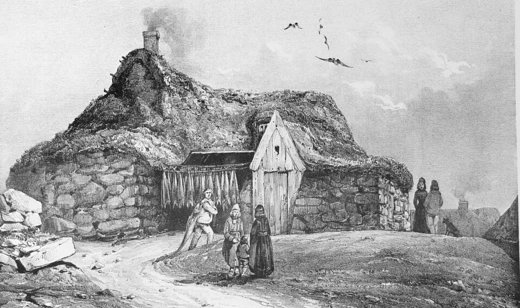
After that, the meat is sliced into strips and left to dry for several months. A brown crust forms during drying and is trimmed away before the meat is cut into small pieces for serving. This traditional process can be seen at the Bjarnarhöfn Shark Museum on Snæfellsnes. A modern alternative involves pressing the shark meat in a large plastic container fitted with drain holes.
Reactions
Chef Anthony Bourdain described fermented shark as the single worst, most disgusting and terrible tasting thing he had ever eaten. Chef Gordon Ramsay challenged James May to sample three delicacies including fermented shark on The F Word; after eating it, Ramsay immediately vomited into a bucket tableside, but May was able to keep his down and offered to eat it again. On Bizarre Foods with Andrew Zimmern, Zimmern described the smell as reminding him of some of the most horrific things he had ever breathed, but said the dish tasted much better than it smelled, describing it as sweet, nutty and only faintly fishy, though he noted it was not for beginners. On Travel Man, Jessica Hynes and Richard Ayoade described the taste as awful, like a jellied cube of ammonia, albeit technically edible.
On River Monsters, Jeremy Wade mentioned the flesh smells of urine with a really strong aftertaste that kicks in at the back of the throat. Archaeologist Neil Oliver described it as reminiscent of blue cheese but a hundred times stronger. Chef Ainsley Harriott described it as like chewing a urine-infested mattress.
Effects
The Greenland shark is the longest-living vertebrate known, with some individuals surviving up to 400 years. However, it does not reach sexual maturity until around 150 years of age. This extremely slow life cycle makes hunting the species unsustainable, as populations cannot recover quickly.
The species is currently classified as vulnerable by the IUCN, largely due to accidental capture in fishing gear, known as bycatch. Over time, continued hunting is pushing the Greenland shark toward potential extinction. Organizations like the Northwest Atlantic Fisheries Organization, an intergovernmental body focused on fishing science and management, are advocating for a ban on hunting and killing these sharks.
More in Icelandic Cuisine
Sources
Compiled from Wikipedia and the sources listed below. Text from Wikipedia is available under CC BY-SA 4.0; this entry is adapted from it.
- Wikipedia: Hákarl (CC BY-SA 4.0).
- Word definitions: the Codexery glossary, each quoted from its Wikipedia article.
Spotted an error? Know more?
Reader corrections go straight into our review queue. Suggest an edit · How this site is sourced