Lares
Guardian deities of boundaries, households, and communities in ancient Rome.
Last updated
Lares were guardian deities in ancient Roman religion, whose origin remains uncertain; they may have been hero-ancestors, guardians of the hearth, fields, boundaries, or fruitfulness, or an amalgam of these. They were believed to observe, protect, and influence all that happened within the boundaries of their location or function. Despite having limited scope and potency compared to Rome's major deities, archaeological and literary evidence attests to their central role in Roman identity and religious life.
Quick Facts
- Earliest attested form
- Lases
- Festival
- Compitalia
- Associated king
- Servius Tullius
- Mother of the lares
- Mater Larum
- Etruscan cognate
- lar
- lars
- or larth
Facts from the source article.
Their domains
The Lares were tied to the specific physical spaces they guarded, and there were likely as many of them as there were places needing protection. Some of these spirits had overlapping roles or changed names over time, while others lacked any distinct title. For instance, the Carmen Arvale invokes them alongside Mars simply as Lases, an older form of Lares, leaving their purpose to be guessed from the hymn’s context. Similarly, when the consul Publius Decius Mus called upon them during his devotio before dying in battle, they were referred to only as Lares.
Thus, any list of their names and domains is incomplete. There is some hint from Ovid that the Lares Praestites might have come from the Sabines, but the passage is unclear due to textual corruption. The 1st-century BCE writer Varro states that the Lares, along with many other gods, were formally dedicated in Rome by the legendary Sabine king Titus Tatius.
Domestic Lares
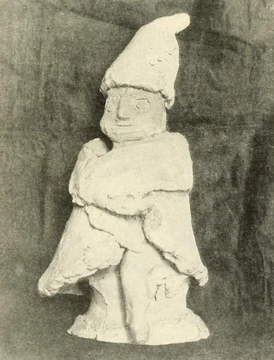
In a traditional Roman home, at least one protective Lares figure was kept in a shrine, sharing the space with images of the household’s penates, the genius, and any other favored gods. During family meals and banquets, these statues were brought to the table. They served as divine witnesses for major family events like marriages, births, and adoptions, and their shrine acted as a religious center for both social and domestic life. Anyone who neglected their Lares and their family could expect no reward or good fortune.
In Plautus’ play Aulularia, the Lar of the miserly head of household Euclio reveals a pot of gold hidden under the hearth—gold that was withheld from Euclio’s father due to his stinginess toward the Lar. Euclio’s own greed keeps him from the gold until he changes his ways, using it to provide a proper dowry for his virtuous daughter. The ultimate responsibility for the household cult and family behavior rested with the paterfamilias, but he could, and sometimes should, delegate the care of the Lares to other family members, especially servants.
At the House of Menander, the placement of the Lares suggests the paterfamilias gave this task to his bailiff. Offerings to the Lares could include spelt wheat and grain-garlands, honey cakes and honeycombs, grapes and first fruits, wine, and incense. Any food that fell to the floor during banquets was also theirs. Wealthier households might offer a pig on special occasions.
Compitalia
The Lares Compitalicii were guardian spirits for each of Rome's administrative districts, known as vici. Their permanent shrines stood at the district's central crossroads. These Lares were honored at the Compitalia festival, held right after the Saturnalia that ended the old year. During the solemn and lavish rites, a pig was paraded through the vicus streets and then sacrificed at the crossroads shrine.
Offerings matched those given to household Lares; by the late Republic, Dionysius of Halicarnassus noted that each household contributed a honey-cake, an ancient custom. The festival was credited to King Servius Tullius, Rome's sixth king. His own servile birth and support for commoners and slaves angered the patrician elite. According to tradition, his father was a Lar or other divine being, and his mother was a royal slave-girl.
Thus, while the Lares Compitalicii protected everyone regardless of social rank, the festival had a distinctly plebeian character, echoing the Saturnalia's role reversal. Custom demanded that these Lares be served by men of very low status—not just plebeians, but freedmen and slaves. Even the strict Cato recommended generosity toward them during the festival.
Origin myths and theology
From the Late Republican and early Imperial eras, the priestly records of the Arval Brethren and the speculative commentaries of a very small number of literate Romans attest to a Mother of the Lares (Mater Larum). Her children are invoked by the obscure, fragmentary opening to the Arval Hymn; enos Lases iuvate ('Help us, Lares'). She is named as Mania by Varro, who believes her an originally Sabine deity. The same name is used by later Roman authors with the general sense of a bogey or evil spirit.
Much later, Macrobius describes the woolen figurines hung at crossroad shrines during Compitalia as maniae, supposed as an ingenious substitution for child sacrifices to the Mater Larum, instituted by Rome's last monarch and suppressed by its first consul, L. Junius Brutus. Modern scholarship takes the Arval rites to the Mother of the Lares as typically chthonic, and the goddess herself as a dark or terrible aspect of the earth-mother, Tellus. Ovid supplies or elaborates an origin-myth for the Mater Larum as a once-loquacious nymph, Lara, whose tongue is cut out as punishment for her betrayal of Jupiter's secret amours.
Lara thus becomes Muta (the speechless one). Mercury leads her to the underworld abode of the dead; in this place of silence she is Dea Tacita ('the silent one'). En route, he impregnates her. She gives birth to twin boys as silent or speechless as she.
In this context, the Lares can be understood as manes of silence (taciti manes). Ovid's poetic myth appears to draw on remnants of ancient rites to the Mater Larum, surviving as folk-cult among women at the fringes of the Feralia.
Did You Know?
- The word Lares seems to derive from the Etruscan lar, lars, or larth, meaning 'lord'.
- Weinstock proposes a more ancient equivalence of Lar and Greek hero, based on his gloss of a fourth-century BC Latin dedication to the Roman ancestor-hero Aeneas as Lare (Lar).
More in Household Deities
Sources
Compiled from Wikipedia and the sources listed below. Text from Wikipedia is available under CC BY-SA 4.0; this entry is adapted from it.
- Wikipedia: Lares (CC BY-SA 4.0).
Spotted an error? Know more?
Reader corrections go straight into our review queue. Suggest an edit · How this site is sourced