
History of the Boston Red Sox
Original American League franchise with early World Series success.

SixFourThree at English Wikipedia . · Public domain
The Boston Red Sox were founded in 1901, one of the original eight teams in the American League. The club, often called the Americans in those early days, quickly overtook Boston’s established National League team in local popularity. This was due to several factors: they lured star players like Jimmy Collins and Cy Young away from the Nationals with better contracts, their ballpark was more convenient for fans, and they actively courted the city’s large Irish-American community. After finishing second and third in their first two seasons, the Americans won the American League pennant in 1903 and repeated the feat in 1904. In 1903, they faced the Pittsburgh Pirates in the first modern World Series, winning five games to three behind strong pitching and the famous “Tessie” chants from their Royal Rooters fan club.
The 1904 season featured a tight pennant race with the New York Highlanders. The deciding moment came in a doubleheader at Hilltop Park: with the score tied in the ninth inning, Highlanders pitcher Jack Chesbro threw a wild spitball, allowing Boston’s pinch-runner John O'Brien (or, in some accounts, a different player) to score the winning run. The National League champion New York Giants refused to play a postseason series, but public backlash forced the leagues to make the World Series a permanent event starting in 1905. The Americans then fell to last place in 1906 with a 49–105 record, but new talent soon revived the team.
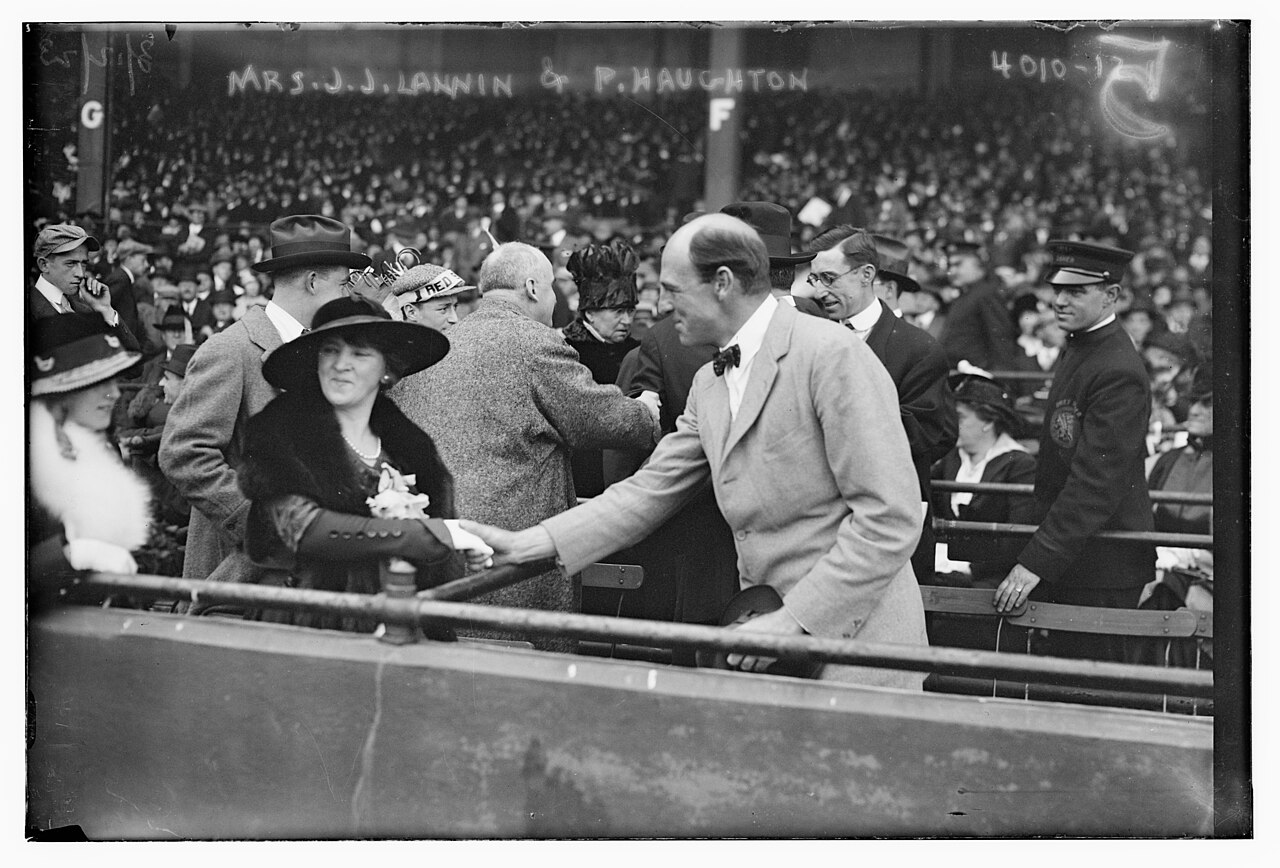
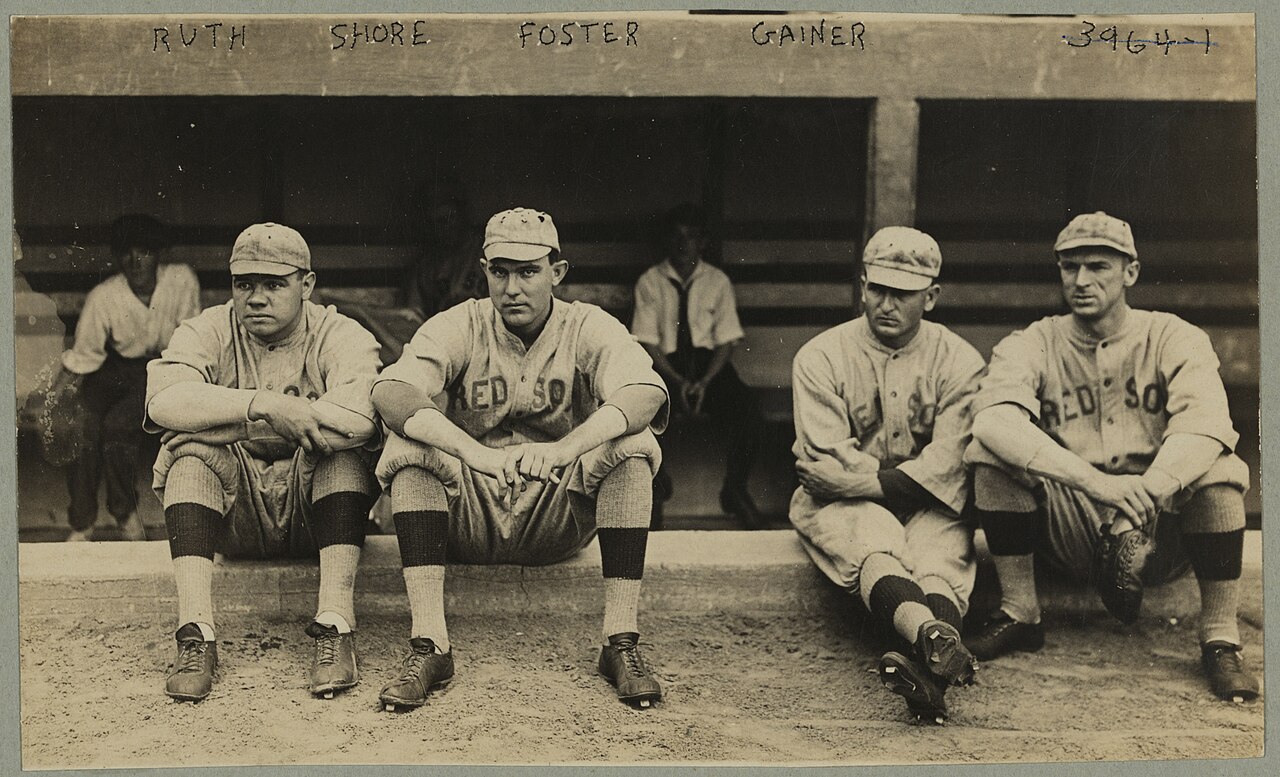
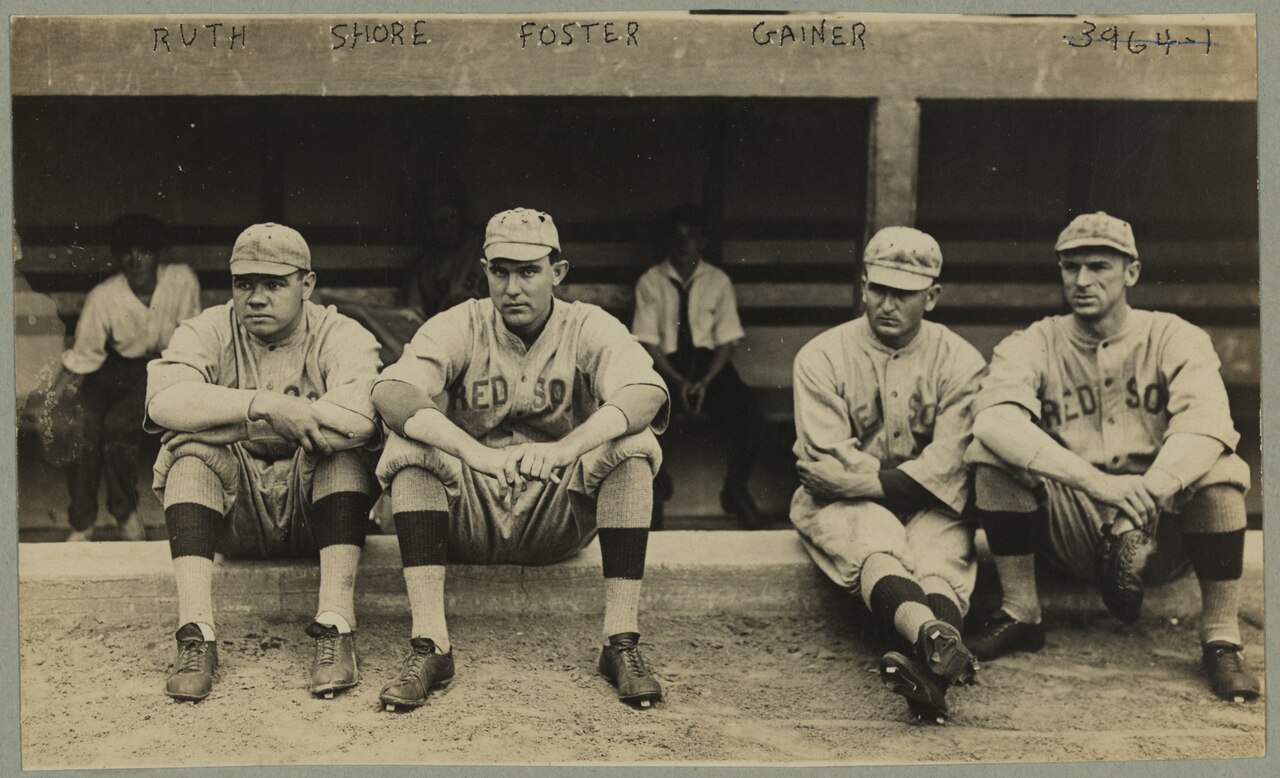
By 1909, center fielder Tris Speaker was a star, and the club—now renamed the Red Sox—climbed to third place. They won the pennant again in 1912, finishing with a club-record .691 winning percentage behind an outfield of Speaker, Harry Hooper, and Duffy Lewis, plus pitcher Smoky Joe Wood. That year, they beat the New York Giants in the World Series, a series remembered for Fred Snodgrass’s dropped fly ball. Owner Joseph Lannin signed Babe Ruth, who debuted as a pitcher with a win over the Indians and hit his first major league home run against the Yankees. The Red Sox won 101 games in 1915, then took the World Series from the Philadelphia Phillies in five games. In 1916, despite trading Speaker, they won another pennant thanks to Ruth’s emergence as a star pitcher. They defeated the Brooklyn Robins in the World Series, with Ruth pitching a 14-inning complete game in Game Two. After the series, Lannin sold the team to theater
- founded
- 1901
- league
- American League
- first pennant
- 1903
- first World Series win
- 1903
- home field
- Huntington Avenue Grounds (early years)
- known for
- Original AL franchise, early success, sale of Babe Ruth
Lore & Background
The Boston Americans, as they were often called, won their first pennant in 1903 and repeated in 1904, led by manager and third baseman Jimmy Collins and pitcher Cy Young. They beat the Pittsburgh Pirates in the 1903 World Series five games to three. The 1904 season featured a tight pennant race with the New York Highlanders, decided by a famous wild pitch by Jack Chesbro that allowed pinch-runner John O'Brien (or, in some accounts, a different player) to score. After a last-place finish in 1906, the team rebounded with stars like Tris Speaker and won the 1912 World Series against the New York Giants.
Reader's Guide
The Red Sox were a dominant early franchise, winning World Series in 1903, 1912, 1915, 1916, and 1918. Their success was built on star players signed from the National League and a strong pitching staff. The sale of Babe Ruth to the New York Yankees in 1919 is often cited as the beginning of a long championship drought, though the team's decline was also due to financial pressures on owner Harry Frazee, who sold many star players to the Yankees. The 'Curse of the Bambino' became a popular explanation for the team's inability to win the World Series from 1918 until 2004.
Did You Know?
- The Boston Americans won the first modern World Series in 1903, beating the Pittsburgh Pirates five games to three.
- The 1904 pennant race was decided by a wild pitch from New York Highlanders pitcher Jack Chesbro that allowed Boston's Lou Criger to score.
- Babe Ruth was sold to the New York Yankees on December 26, 1919, for $125,000 and a loan of $350,000.
- The Red Sox won World Series in 1912, 1915, 1916, and 1918 before the sale of Babe Ruth.
Origins and the Birth of a Name
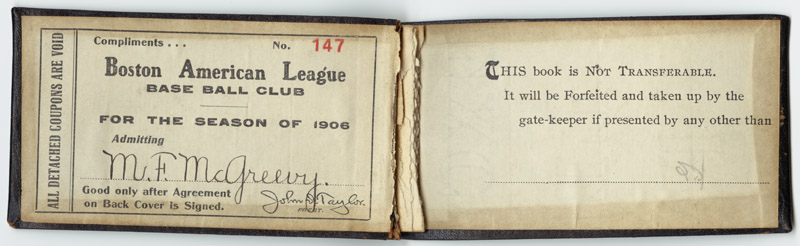
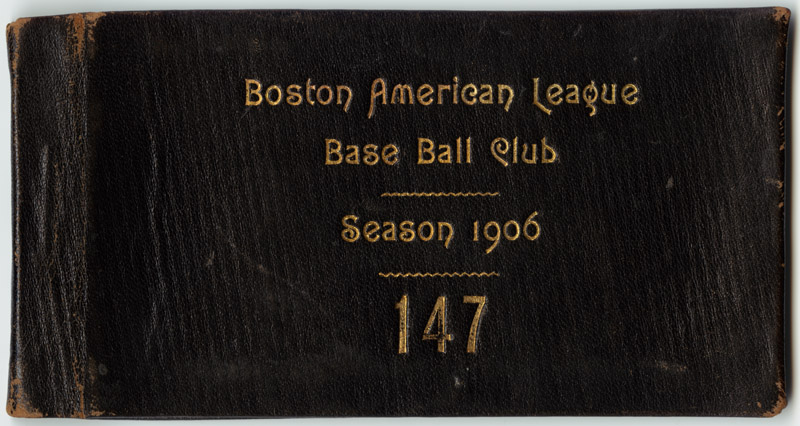
The Boston Red Sox trace their roots to 1901, when the American League launched as a rival to the National League and selected Boston as one of its eight charter cities, replacing Buffalo at the last minute. For their first seven seasons the club had no official nickname; players wore dark blue stockings and the press called them "Boston," "the Bostons," or "Boston Americans," tossing around labels like "Pilgrims," "Somersets," and "Beaneaters." The "Pilgrims" moniker, long assumed to be official, actually stems from a poem sung at the 1907 home opener. Owner John I. Taylor reportedly dismissed it as sounding like "homeless wanderers." The turning point came in December 1907, when Taylor announced red as the team's official color, capitalizing on the fact that Boston's National League club had just switched to all-white uniforms. The 1908 jerseys featured a bold red stocking icon, and the "Red Sox" name—shortened for newspaper headlines the way "Stockings" had become "Sox" for Chicago—stuck. The name had precedent: a Norfolk, Virginia team had used it as early as 1888, and the Boston Red Stockings of the 1870s had worn red hose under manager Harry Wright.
Early Dominance and the Long Drought
The Red Sox arrived in the American League as a force, defeating the Pittsburgh Pirates in baseball's first World Series in 1903 and capturing four additional titles by 1918. They also won the 1904 AL pennant, though the New York Giants declined to play in that year's championship series. Then came the sale of Babe Ruth to the New York Yankees in 1919, an act that fans and writers would later frame as the origin of the "Curse of the Bambino." The curse became real in the scoreboard: the Sox endured an 86-year championship drought, one of the longest in professional sports history. Yet that stretch produced some of baseball's most electric World Series moments—Enos Slaughter's wild slide in 1946, the "Impossible Dream" pennant race of 1967, Carlton Fisk's iconic home run in 1975, and Bill Buckner's infamous error in 1986. The drought finally ended in 2004, when the Red Sox claimed their sixth World Series title after a legendary comeback from a 3-0 deficit against the Yankees.
A 21st-Century Dynasty and the Yankees Rivalry
After breaking the curse in 2004, the Red Sox transformed into a 21st-century powerhouse, adding World Series titles in 2007, 2013, and 2018. That 2018 victory made them the first franchise in MLB history to collect four World Series trophies in a single century. Their nine total championships tie them for third-most among all MLB teams, and their thirteen World Series appearances underscore a franchise that has consistently punched above its weight. Central to the team's identity is its rivalry with the New York Yankees, widely regarded as the fiercest and most storied competition in North American professional sports. The 2004 postseason, in which Boston erased a 3-0 series deficit against New York, crystallized that rivalry for a new generation. The Yankees' refusal to play in 1904 and the 1919 Ruth trade remain foundational narrative beats that fans still invoke decades later, binding the two clubs in a competitive thread stretching across more than a century.
Fenway, the Fans, and Cultural Legacy
Fenway Park, the Red Sox's home since 1912, is both a constraint and a treasure. Its modest capacity keeps the club from leading MLB in overall attendance, yet the team consistently ranks among the league's top draws for road games. From May 15, 2003, to April 10, 2013, the Red Sox sold out every single home game—a streak of 820 games, 794 of them in the regular season, that stands as a major professional sports record. The ballpark's culture is inseparable from two songs: Neil Diamond's "Sweet Caroline" and the Standells' "Dirty Water," both of which have become unofficial anthems sung by tens of thousands of fans. The team's Spanish-language identity carries its own flavor, with media often calling them "Medias Rojas" while the official site uses "Los Red Sox." Ownership by Fenway Sports Group, which also controls Liverpool FC, the Pittsburgh Penguins, and holds a stake in RFK Racing, places the franchise within a global sports portfolio. As of the 2025 season, the all-time regular-season record stands at 10,044 wins, 9,336 losses, and 83 ties, a .518 mark reflecting over a century of competitive baseball.
Gallery
Frequently Asked Questions
When were the Boston Red Sox founded and what league did they join?
The Red Sox were established in 1901 as one of the eight charter franchises of the American League. Their early home games were played at the Huntington Avenue Grounds in Boston.
What were the Boston Red Sox called in their earliest seasons?
In those first years the club was commonly referred to as 'the Americans' to set it apart from Boston's established National League team, the Nationals. The name stuck locally as the franchise's identity grew.
How did the young American League club in Boston outdraw the older National League team?
The Americans signed star players like Jimmy Collins and Cy Young to better contracts, offered a more conveniently located ballpark, and actively courted the city's large Irish-American community. Together those moves shifted local fan loyalty to the newer franchise.
When did the Boston Red Sox win their first World Series title?
The team captured the American League pennant in 1903 and then won that year's World Series. That victory made them one of the earliest franchises to claim the championship in the modern era of the sport.
What are the Boston Red Sox historically most recognized for?
The franchise is known as an original American League club, for its early competitive success including the 1903 title, and for the infamous sale of Babe Ruth. Those three elements define the team's lasting place in baseball lore.
More in History of Major League Baseball by team 1-24
Spotted an error? Know more?
This is a living reference — every entry is fact-audited, and reader corrections feed straight into our audit queue. Suggest an edit · See this site's audit record