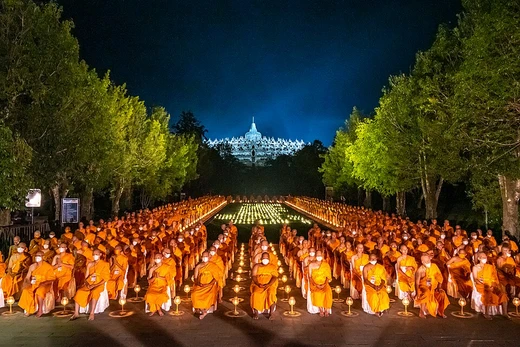
Buddhist philosophy
Ancient Indian system combining rational inquiry and meditation for liberation.

Buddhist philosophy originated in ancient India as a system of rational inquiry within the broader Buddhist tradition. It encompasses the philosophical investigations that emerged among various Buddhist schools after Gautama Buddha’s parinirvāṇa (around the 5th century BCE), along with later developments that accompanied Buddhism’s spread across Asia. This tradition blends philosophical reasoning with meditative practice, addressing subjects such as cosmology, ethics, epistemology, logic, metaphysics, ontology, phenomenology, philosophy of mind, philosophy of time, and soteriology.
In its earliest, pre-sectarian form, Buddhism relied on empirical evidence from the senses—including the mind—and the Buddha himself maintained a skeptical distance from certain metaphysical questions, refusing to answer them because they did not aid liberation but encouraged unhelpful speculation. At the same time, he is said to have affirmed ideas with metaphysical implications, such as dependent arising, karma, and rebirth. Disputes over these points arose between different Buddhist schools, as well as between Buddhist thinkers and those of Hindu or Jain traditions. These debates led to the development of early Abhidharma schools, the Mahāyāna movement, and scholastic traditions like Prajñāpāramitā, Sarvāstivāda, Mādhyamaka, Sautrāntika, Vaibhāṣika, Buddha-nature, and Yogācāra. A recurring theme across these schools is the pursuit of a Middle Way between extreme philosophical views.
Edward Conze divided the historical development of Indian Buddhist philosophy into three phases. The first phase consists of pre-sectarian doctrines from oral traditions dating to the Buddha’s lifetime, which are common to all later schools. The second phase is non-Mahāyāna scholastic Buddhism, seen in Abhidharma texts beginning in the 3rd century BCE, which systematically reworked and classified material from early Buddhist texts—the Theravāda Abhidhamma belongs here. The third phase is Mahāyāna Buddhism, starting in the late first century CE, which emphasizes the bodhisattva path and includes schools like Prajñāpāramitā, Mādhyamaka, Sautrāntika, Buddha-nature, and Yogācāra. Elements from all three phases were incorporated and further developed in the philosophies of later Buddhist sects.
Buddhism is an Indian religion and dharma that includes diverse traditions, beliefs, and practices based on Gautama Buddha’s teachings, but it has diversified into many schools since its origin in ancient India. From there, the Buddhadharma spread through Central Asia, East Asia, mainland Southeast Asia, and maritime Southeast Asia. In ancient India, philosophy was primarily aimed at spiritual liberation and soteriological goals. As Peter Deller Santina noted in his study of Mādhyamaka and Sautrāntika schools, Indian philosophical systems were seldom purely speculative or descriptive. Systems like Sāṃkhya, Advaita Vedānta, and Mādhyamaka were chiefly concerned with providing a means to liberation—if correctly understood and assimilated, they promised an unconditioned state free from suffering. Overlooking this, as often happens due to Western philosophy’s tendency to treat philosophy as purely descriptive, misses the real significance of Indian and Buddhist thought.
For Indian Buddhist philosophers, the Buddha’s teachings were not to be accepted on faith alone but confirmed through logical analysis and inquiry (pramāṇa) of the world. Early texts state that a person becomes a follower after pondering the teachings with wisdom (jñana), and the gradual training requires a disciple to “investigate” (upaparikkhati) and “scrutinize” (tuleti) the teachings. The Buddha also expected his disciples to approach him critically, examining his actions and words, as shown in the Vīmaṃsaka Sutta. Some Buddhist thinkers argued that rational reflection and philosophical analysis were central practices necessary for insight during meditation. For instance, Mahāyāna philosophers like Prajñakaragupta held that one is not a yogi “merely because of meditation”; rather, one must meditate, listen to teachings, and understand them through “reflecting via rational inquiry” (yukti-cintāmaya). Only by combining rational reflection with meditation does the wisdom leading to enlightenment arise.
Buddhism is primarily concerned with awakening or enlightenment (bodhi), Nirvāṇa (“blowing out”), and liberation (vimokṣa) from all causes of suffering (duḥkha) due to sentient beings’ existence in saṃsāra (the cycle of compulsory rebirth).
- Origin
- Ancient India
- Founder
- Gautama Buddha (c. 5th century BCE)
- Field
- Philosophy, religion, soteriology
- Key Schools
- Abhidharma, Mahāyāna, Mādhyamaka, Yogācāra, Sautrāntika, Vaibhāṣika, Buddha-nature
- Core Goal
- Liberation (nirvāṇa) from suffering (duḥkha) and the cycle of rebirth (saṃsāra)
Lore & Background
Buddhist philosophy originated with the teachings of Gautama Buddha, a north Indian Śramaṇa whose discourses are preserved in early Buddhist texts. The Buddha emphasized a Middle Way between asceticism and hedonism, and between eternalism and annihilationism. He retained a skeptical distance from certain metaphysical questions, yet affirmed theories with metaphysical implications such as dependent arising, karma, and rebirth. Pre-sectarian Buddhism was based on empirical evidence gained by the sense organs, and the Buddha expected his disciples to scrutinize his teachings critically.
Reader's Guide
Edward Conze divided the development of Indian Buddhist philosophy into three phases: pre-sectarian oral traditions, non-Mahāyāna scholastic Abhidharma (from the 3rd century BCE), and Mahāyāna Buddhism (from the late first century CE). Mahāyāna schools include Prajñāpāramitā, Mādhyamaka, Sautrāntika, Buddha-nature, and Yogācāra. Buddhist philosophy in India was aimed primarily at spiritual liberation, with systems like Mādhyamaka providing a means to an unconditioned state free of suffering. Philosophical analysis was considered a central practice necessary for insight during meditation, combining rational reflection with meditation to achieve wisdom leading to enlightenment.
Did You Know?
- Buddhist philosophy developed after the parinirvāṇa of Gautama Buddha (c. 5th century BCE) and spread throughout Asia.
- The Buddha defined his teaching as 'the Middle Way' between asceticism and hedonism, and between eternalism and annihilationism.
- Mahāyāna philosophers like Prajñakaragupta argued that one must combine meditation with rational inquiry to attain enlightenment.
- Buddhist thinkers covered topics including cosmology, ethics, epistemology, logic, metaphysics, ontology, phenomenology, philosophy of mind, philosophy of time, and soteriology.
Frequently Asked Questions
What exactly is Buddhist philosophy?
It is the body of rational inquiry and meditative practice that grew out of the Buddha's teachings in ancient India. Rather than a single fixed doctrine, it encompasses the logical, ethical, and metaphysical systems that many different Buddhist schools developed over centuries.
Who is credited with founding Buddhist philosophy?
Gautama Buddha, who lived roughly in the 5th century BCE, is regarded as the originator. His parinirvāṇa (final passing) marked the starting point from which his disciples and later generations elaborated the philosophical frameworks we study today.
What is the ultimate goal of Buddhist philosophy?
The central aim is liberation—achieving nirvāṇa and stepping free from duḥkha (suffering) and the endless cycle of rebirth called saṃsāra. Every school, from Abhidharma to Mādhyamaka to Yogācāra, works toward that release through a blend of reasoning and meditation.
What are the major schools within Buddhist philosophy?
Key traditions include Abhidharma, Mahāyāna, Mādhyamaka, Yogācāra, Sautrāntika, Vaibhāṣika, and the Buddha-nature stream. Each offers a distinct lens on topics like consciousness, emptiness, and the nature of reality, yet all trace back to the Buddha's original teachings.
How does Buddhist philosophy differ from purely academic philosophy?
It deliberately pairs rigorous logical analysis with lived meditative practice, so that understanding is meant to transform the practitioner rather than merely inform them. This soteriological, liberation-oriented purpose sets it apart from secular philosophical inquiry.
More in Hindu And Buddhist Terms 1-18
Spotted an error? Know more?
This is a living reference — every entry is fact-audited, and reader corrections feed straight into our audit queue. Suggest an edit · See this site's audit record