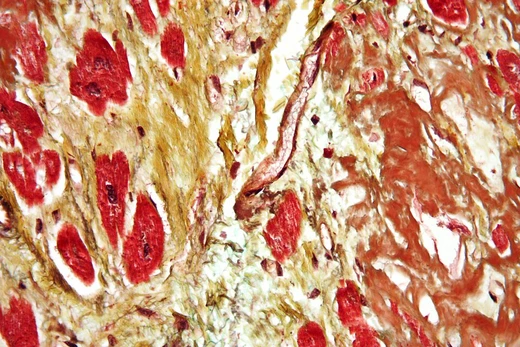
Coronary occlusion
Partial or complete blockage of a coronary artery.
Last updated
Coronary occlusion is the partial or complete obstruction of blood flow in a coronary artery, slowing or blocking the supply of oxygen-rich blood to the heart. It is the most common form of cardiovascular disease and the leading cause of death in the United States, affecting 18 million adults. If untreated, it can lead to myocardial ischemia, heart attack, and heart failure.
Causes
Coronary occlusion is caused by the buildup of fats, cholesterol, and other substances on the walls of the heart's arteries, forming plaque that narrows the arteries. This process, called atherosclerosis, often begins in childhood and is heavily influenced by genetics, lifestyle, and high blood cholesterol. Contributing conditions include diabetes or insulin resistance, high blood pressure, sedentary lifestyle, and smoking or tobacco use. Uncontrollable risk factors are age, birth sex, and family history.
Pathophysiology
Plaque, composed of fatty deposits and scar tissue, builds up on the walls of coronary arteries over years, causing stenosis and progressively reducing blood flow. The body may adapt by creating small blood vessels that form a natural bypass, but these often cannot supply enough blood during increased demand such as exercise. When stenosis exceeds 50% diameter, exertion may cause angina. Acute coronary events occur when a plaque disrupts and a thrombus forms; in acute heart attack occlusion is greater than in unstable angina, and downstream embolism may produce microinfarcts.
Diagnosis
Heart disease is often undiagnosed until a serious event like heart attack or cardiac arrest occurs. Regular checkups can lead to early diagnosis; screening tests and risk assessments should begin around age 20 without risk factors, or in childhood if risk factors such as obesity, sedentary lifestyle, or family history are present. Healthcare providers may run blood tests for cholesterol, triglycerides, lipoproteins, sugar, or inflammatory proteins, and may order an electrocardiogram, coronary calcium scan, stress test, cardiac MRI, cardiac PET, invasive coronary angiography, or coronary CT angiography.
Treatment
Healthcare providers may recommend lifelong heart-healthy lifestyle choices including a heart-healthy eating plan, physical activity, quitting smoking, improved sleep hygiene, weight loss, blood pressure control, cholesterol control, and stress management. Medications may include ACE inhibitors, beta blockers, calcium channel blockers, nitrates, and Ranolazine to widen blood vessels; statins, nonstatins, and fibrates for cholesterol; and drugs for blood sugar and obesity such as empagliflozin, canagliflozin, metformin, liraglutide, orlistat, and semaglutide. Surgical procedures include percutaneous coronary intervention, coronary artery bypass grafting, and transmyocardial laser revascularization; bariatric surgery may lower risk.
Did You Know?
- In 1912, James Herrick published an article in JAMA documenting his findings on coronary occlusion in animals.
- Coroners cited a coronary occlusion as the cause of death for Montgomery Clift.
More in Heart Diseases
Sources
Compiled from Wikipedia and the sources listed below. Text from Wikipedia is available under CC BY-SA 4.0; this entry is adapted from it.
- Wikipedia: Coronary occlusion (CC BY-SA 4.0).
- Word definitions: the , each quoted from its Wikipedia article.
Spotted an error? Know more?
Reader corrections go straight into our review queue. Suggest an edit · How this site is sourced