Halloween (video game)
Atari 2600 horror game based on the 1978 film, released in 1983.

Infrogmation of New Orleans · CC BY 2.0
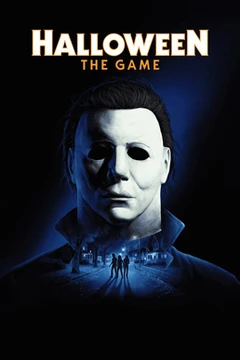
Halloween is a horror video game for the Atari 2600, released in 1983 by Wizard Video. Based on the 1978 horror film of the same name, it was programmed by Tim Martin, who developed the game with Robert Barber, a co-founder of Wizard Video. The game is notable for featuring the film's theatrical poster as cover art and its main music theme, yet never referring to any characters by their film names.
Quick Facts
- Title
- Halloween
- Developer
- MicroGraphicImage
- Publisher
- Wizard Video
- Designer
- Tim Martin / Robert Barber
- Released
- October 1983
- Genre
- Action
- Modes
- Single-player
- Platforms
- Atari 2600
Facts from the source article.
Lore & Background
The game was programmed by Tim Martin, who developed Halloween with Robert Barber, a co-founder of Wizard Video. Players take on the role of an unnamed teenage babysitter (Laurie Strode) who rescues children from an unnamed, knife-wielding killer (Michael Myers). The game contains more gore than the film: when the babysitter is killed, her head disappears and blood pulsates from the neck as she runs. Points are earned by rescuing children to safe rooms or stabbing the killer with a knife. The killer speeds up with each level, and the game ends after three lives are lost.
Reader's Guide
Halloween is significant as one of the earliest attempts to adapt a horror film into a video game for the Atari 2600, released during the video game crash of 1983. Although it had a slightly better reception than Wizard Video's other horror game, The Texas Chainsaw Massacre, its limited sales made it a highly valued collector's item. A retrospective review from AllGame noted that while most mature-themed Atari 2600 games were crude, Halloween was among the best attempts, creating suspense despite repetitive gameplay and cartoonish violence. The game's legacy is tied to its controversial design and its role in the declining Atari market, as noted by Montfort and Bogost in Racing the Beam.
Did You Know?
- The official release of the game had a proper label featuring the film's theatrical poster art.
- The game never refers to any characters, including the killer, by their names from the film.
- When the babysitter is killed, her head disappears and is replaced by blood pulsating from the neck.
Asymmetrical Horror and Period Authenticity
Halloween: The Game structures its core experience around a one-versus-four asymmetrical format, a design language IllFonic refined through earlier licensed titles. In multiplayer, a single player embodies Michael Myers, stalking the streets of Haddonfield with stealth tools and a signature ability called Shape Jump that lets him reposition across the map and ambush victims from unexpected angles. His four opponents, playing as ordinary residents, must coordinate to warn neighbors, scavenge for weapons, shepherd non-player characters to safety, and ultimately call the police before a timer expires. Michael can be temporarily detained or knocked down by law enforcement, but he is never permanently defeated, reinforcing his mythic, unstoppable nature. The single-player campaign, written from Michael's point of view, serves as a mechanical tutorial while weaving in events from the 1978 film alongside original narrative material. Chief creative officer Jared Gerritzen emphasized that the entire presentation—visual design, dialogue, and the technology available to in-game characters—was deliberately crafted as a period piece faithful to the late 1970s setting.
Development Lineage and Franchise Stewardship
The path to Halloween: The Game was not entirely straightforward. In August 2024, Boss Team Games publicly confirmed that two video games based on the Halloween franchise were in active development, one of which was being built in Unreal Engine 5 with the involvement of John Carpenter. When IllFonic's title surfaced the following year, GameSpot flagged the ambiguity over whether it represented the same project previously attributed to Boss Team Games. The game was officially unveiled at Gamescom in August 2025, developed by IllFonic—the studio responsible for licensed multiplayer horror experiences such as Friday the 13th: The Game and Predator: Hunting Grounds—and published in partnership with Gun Interactive, a collaboration that echoed their earlier Friday the 13th work. The development team maintained a working relationship with Carpenter and Malek Akkad, a longtime producer on the Halloween film franchise. According to chief creative officer Jared Gerritzen, the team approached the project as a period piece, ensuring that visual aesthetics, character dialogue, and the technology present in the game world all reflected the 1978 setting. The title is built on Unreal Engine 5.
A Staggered Rollout and Regional Censorship Battles
The marketing timeline stretched across more than a year. After the initial platform announcement in August 2025—PlayStation 5, Windows, and Xbox Series X/S—without a firm date, a State of Play presentation in September 2025 locked in the September 8, 2026 launch and showcased gameplay. Map reveals followed in sequence: Haddonfield Heights in December 2025, Haddonfield Town Center in June 2026, and Orange Grove Estates in July 2026, with a broader multiplayer overview video dropping in March 2026. However, the release was far from uniform. On August 10, 2026, the game's official social media account confirmed that Australia's Classification Board had refused classification, citing a controlled substance tied to a gameplay incentive—widely speculated to be a marijuana power-up that reveals Michael's location. New Zealand initially appeared affected, though a digital release was later confirmed. In Japan, the PlayStation 5 edition was cancelled on August 30, 2026, after the studio could not secure a CERO rating due to the game's visceral violence and nudity, while Xbox and PC digital versions remained scheduled for September 9. Additionally, a minigame allowing civilians to engage in sexual activity for stat buffs was removed in a hotfix, with media outlets speculating the removal stemmed from the possibility of older characters interacting with minors.
Critical Reception and the Atmosphere Verdict
Upon its September 8, 2026 launch, Halloween: The Game landed in the generally favorable range on Metacritic, while OpenCritic reported that 22 percent of critics recommended the title. Reviewers consistently highlighted the game's atmosphere and the tightness of its asymmetrical gameplay loop, praising the tension of the one-versus-four structure and the period-accurate presentation of Haddonfield. The stealth mechanics available to Michael, particularly Shape Jump, were singled out as a refreshing tool for creating unpredictable chase sequences, while civilian players found the coordination of warning neighbors, scavenging, and escorting NPCs to safety to be a satisfying counterbalance. However, a recurring thread of criticism centered on technical issues that marred the experience for some players, suggesting the title needed post-launch attention to reach its full potential. The mixed but overall positive critical picture positioned the game as a competent entry in the licensed horror genre, one that honored the source material's dread while delivering a modern multiplayer framework.
Gallery


Frequently Asked Questions
Who developed Halloween (video game)?
Tim Martin handled the programming, working alongside Robert Barber, a co-founder of Wizard Video, which published the title in 1983.
What console is Halloween (video game) for?
It is an Atari 2600 exclusive, placing it among the earliest horror titles available on that system.
What is Halloween (video game) based on?
The game adapts the 1978 slasher film of the same name, translating its premise into a short Atari 2600 experience.
Why is Halloween (video game)'s packaging and audio notable?
The box displays the movie's original theatrical poster and the cartridge plays the film's signature musical theme, yet the in-game text never uses the characters' actual names from the film.
What makes Halloween (video game) historically significant for horror gaming?
Shipped in 1983 by Wizard Video, it is one of the first video game adaptations of a major theatrical horror film, bringing a well-known slasher property to the Atari 2600.
More in Halloween video games 1-24
Spotted an error? Know more?
Reader corrections go straight into our review queue. Suggest an edit · How this site is sourced