1931 Constitution of Ethiopia
First modern constitution of the Ethiopian Empire, promulgated in 1931.
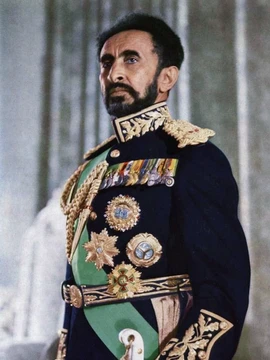
The 1931 Constitution of Ethiopia was the first modern constitution of the Ethiopian Empire, replacing the medieval Fetha Nagast as supreme law. Promulgated on 16 July 1931 in a ceremony attended by Emperor Haile Selassie, it marked the beginning of constitutionalization in one of the last absolute monarchies. The document was partly a response to international opinion, though it also aimed to ground imperial authority on a more formal basis.
Quick Facts
- Jurisdiction
- Ethiopian Empire
- Date effective
- 16 July 1931
- System
- Unitary parliamentary constitutional monarchy
- Executive
- Imperial Parliament
- Writer
- Tekle Hawariat Tekle Mariyam; Gedamu Woldegiorgis
Facts from the source article.
Origins and creation
Haile Selassie, while still Regent, had wanted Empress Zewditu to proclaim a constitution, but some nobles opposed it, claiming it would diminish her authority. After becoming Emperor, he appointed a commission to draft the document, whose leading members included Europeans Gaston Jèze and Johannes Kolmodin, and Ethiopian intellectuals Tekle Hawariat Tekle Mariyam and Gedamu Woldegiorgis. The constitution was based on the Meiji Constitution of Imperial Japan, which educated Ethiopians saw as a model for adopting Western learning within a non-Western framework. Unlike its Japanese model, the Ethiopian document was a simple text of 55 articles in seven chapters. It asserted the Emperor's status, reserved succession to Haile Selassie's line, and declared his person sacred, his dignity inviolable, and his power indisputable. All power over government, legislature, judiciary, and military was vested in the Emperor, who alone could designate senators. To educate officials and the people on constitutional theory, Haile Selassie called an assembly where principal author Tekle Hawariat delivered a lengthy speech expounding constitutional law.
Characteristics
The 1931 Constitution comprises a decree and seven chapters with 55 articles. Chapter one, on the Ethiopian Empire and succession, states that Ethiopia is the Emperor's domain and that the Emperor must be a descendant of Haile Selassie I, tracing his line from Menelik I, son of King Solomon and the Queen of Sheba. Chapter two, on the Emperor's powers and prerogatives, contains twelve articles. Chapter three, on rights recognized by the Emperor and duties of the nation, includes twelve articles; it states that conditions for Ethiopian subjecthood and duties will be defined by law, and grants certain rights except in cases provided by law, while noting these rights do not limit the Emperor's supreme power in war or public misfortunes. Chapter four establishes a bicameral parliament, with the lower chamber temporarily chosen by the Nobility and local chiefs until the people can elect them, and the upper chamber appointed by the Emperor. Chapter five covers ministers of the empire, a system established by Menelik II in 1908. Chapter six, on jurisdiction, sets forth the judicial system and establishes Special Courts required by the Klobukowski agreement of 1906, which granted foreigners extraterritoriality. Chapter seven, on the budget, requires an annual budget from the Government Treasury.
Application
On 3 November, the anniversary of his coronation, Haile Selassie convened the first parliament under the new constitution. Harold Marcus noted that the Emperor hoped the institution would stimulate nationalism and unity and popularize sociopolitical change in the provinces. After his restoration in 1941, Haile Selassie re-established the 1931 constitution and convened parliament on 2 November 1942, with a chamber of deputies double its pre-war size, selected through a combination of elections and provincial meetings. Despite the parliament's resurrection, the Emperor issued laws by proclamation and decree until proclamation 34/1943 included parliamentary authority. Laws were issued under both Emperor and parliament until late February 1944, when sole imperial authority resumed until November of that year. The 1931 constitution was superseded in 1955 during Haile Selassie's Silver Jubilee.
More in Haile Selassie
Spotted an error? Know more?
Reader corrections go straight into our review queue. Suggest an edit · How this site is sourced