Ethiopian Revolution
A 1974 upheaval that ended Haile Selassie's rule.

via Wikipedia: Ethiopian Revolution · see source
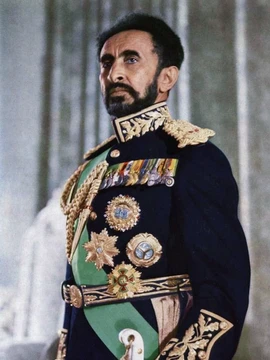
The Ethiopian Revolution was a period of civil, police, and military upheaval that protested against the weakened government of Haile Selassie. It is generally considered to have begun on 12 January 1974 with a mutiny by Ethiopian soldiers in Negele Borana, southern Ethiopia. The revolution ended with a coup d'état on 12 September 1974 by the Coordinating Committee of the Armed Forces, later called the Derg.
Quick Facts
- Part of
- Opposition to Haile Selassie
- Location
- Ethiopian Empire
- Methods
- Mutiny; Political demonstrations
- Causes
- Discontent with the imperial government of Haile Selassie
- 1973–1975 Wollo famine
- 1973 oil crisis
- Inflation
Facts from the source article.
Background
For centuries, the Ethiopian Empire operated under a semi-feudal system where most land was held by the church, the emperor, feudal lords, and the state, leaving only 7 percent for roughly 23 million peasants. Landless peasants often lost up to 75 percent of their produce to landlords, resulting in extreme poverty. Haile Selassie had promised reforms and modernization. In the late 1960s, student movements developed knowledge of social sciences and debated social change, influencing opposition to the emperor. A failed coup attempt on 13 December 1960 by elements of the Imperial Bodyguard, led by Brigadier General Mengistu Neway and his brother Girmame, was extinguished within three days but subverted the monarchy's authority and stirred a decade of political protest. The Wollo famine further damaged the emperor's reputation, and peasant revolts broke out in Bale, Sidamo, Wollo, and Gojjam between 1963 and 1970. Government negligence in dealing with the famine was known, and no relief report arrived via the Ministry of the Interior.
Events
When unrest and mutinies broke out in 1974, Ethiopia had the largest military in sub-Saharan Africa. The revolution is widely considered to have begun on 12 January 1974 when the Twenty-fourth Brigade of the Fourth Division, stationed at Neghele to quell disturbances by local Oromo and Somali populations, mutinied over low pay and wretched living conditions, detaining the army commander. This sparked agitation among regulars and noncommissioned officers for price controls, higher wages, better pensions, injury benefits, and living conditions. In February 1974, the military rulers were not ideologically united, comprising conservatives, moderates, and radicals; radicals eventually emerged victorious. In April, over 100,000 citizens participated in Ethiopian Muslim protests. Endalkachew resigned on 22 July and went to Djibouti; the committee took power by year's end. On 12 September, they arrested Haile Selassie, who remained at the National Palace until his death on 27 August 1975. In December 1974, the committee issued a populist manifesto explaining its philosophy of 'Ethiopian Socialism,' with cardinal elements including equality, self-reliance, the dignity of labor, the supremacy of the common good, and the indivisibility of Ethiopian Unity, expressed as 'Ethiopia First' (Itiopia Tikdem).
More in Haile Selassie
Spotted an error? Know more?
Reader corrections go straight into our review queue. Suggest an edit · How this site is sourced