Vulvar vestibulitis
Chronic pain localized to the vulvar vestibule, often provoked by contact.
Last updated
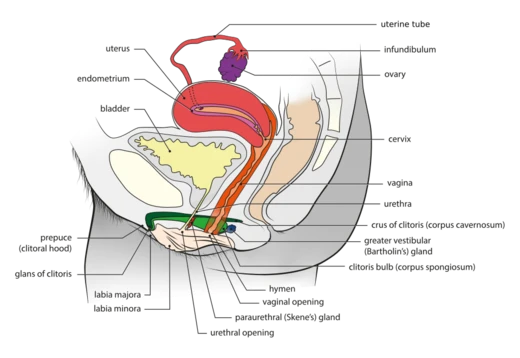
Vestibulodynia, previously termed vulvar vestibulitis syndrome or vulvar vestibulitis, is a form of vulvodynia localized to the vulvar vestibule. It is characterized by a burning or cutting pain and is now the recognized term by several international medical societies. The older name was misleading because the suffix "-itis" implies inflammation, which is not supported by evidence.
Symptoms
The condition involves severe pain upon attempted penetration of the vaginal orifice and tenderness with pressure within the vulvar vestibule, while other vulvar areas typically remain pain-free. Irritation and burning may persist for hours or days after sexual activity, often causing dyspareunia.
Pain can be provoked by touch, tampon insertion, intercourse, or sitting on a bicycle seat (provoked vestibulodynia), or it may be constant without a physical trigger (unprovoked vestibulodynia). Some individuals have experienced pain since first penetration (primary vestibulodynia), while others develop it after a pain-free period (secondary vestibulodynia). The disease can lead to chronic frustration, disappointment, hopelessness, depression, and negatively impact quality of life, relationships, and daily activities.
Causes
The mechanisms are not fully understood, and several subtypes are thought to exist. Neuroproliferative vestibulodynia involves an excess of pain receptors and mast cells in the vestibule, sometimes with around ten times the normal density; this may be congenital or acquired later in life, possibly as an immune response to infection or allergy. Causes may include subclinical human papillomavirus infection, chronic recurrent candidiasis, or chronic recurrent bacterial vaginosis.
Hormonally-mediated vestibulodynia can result from hormonal contraceptives; estrogen-based birth control increases risk by up to 11 times, and labs may show high sex hormone binding globulin or low free testosterone. Hypertonic pelvic floor dysfunction is present in many cases and can contribute to posterior vestibule pain, along with urinary urgency, constipation, rectal fissures, hip pain, or lower back pain. Pain extending beyond the vestibule may stem from pudendal neuralgia, persistent genital arousal disorder, or spinal pathology.
Diagnostic algorithms for subtypes have been developed and refined by the International Society for the Study of Women's Sexual Health.
Diagnosis
Obtaining an accurate diagnosis often takes years, and a survey found that less than 2% of those seeking care for vulvar pain symptoms received a diagnosis. The q-tip cotton-swab test applies pressure around the vulvar vestibule to assess pain. Laboratory tests rule out bacterial, viral, or yeast infections and may check sex hormones for a hormonal component. A careful examination of the vulvovaginal area evaluates for atrophy.
Treatment
Treatment depends on the subtype. For congenital neuroproliferative vestibulodynia, vestibulectomy is the gold standard. Acquired neuroproliferative and inflammatory forms may be treated with topicals, with vestibulectomy as an option if conservative measures fail. Hormonally-mediated vestibulodynia is managed by stopping offending medications, such as hormonal birth control, and applying topical estradiol with topical testosterone.
Pelvic floor dysfunction is often treated with pelvic floor physical therapy; if symptoms persist after 4–8 sessions, consultation beyond gynecology and urology should be considered. Conditions like venous disorders, hypermobility syndromes, rib abnormalities, hip conditions, and sacroiliac joint dysfunction may contribute and require specialized evaluation. A multidisciplinary team including a gynecologist, pelvic floor physical therapist, sometimes a surgeon, and sometimes a counsellor is typically needed.
More in Gynaecologic Disorders
Sources
Compiled from Wikipedia and the sources listed below. Text from Wikipedia is available under CC BY-SA 4.0; this entry is adapted from it.
- Wikipedia: Vulvar vestibulitis (CC BY-SA 4.0).
- Word definitions: the , each quoted from its Wikipedia article.
Spotted an error? Know more?
Reader corrections go straight into our review queue. Suggest an edit · How this site is sourced