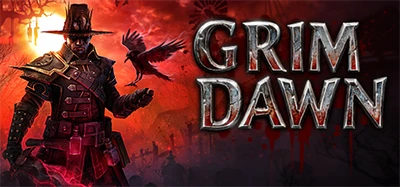
The Dark One
A shadow that learned to stand on its own — and the oldest wound in Kaineng still drips power into the dirt.

The Dark One shows up as a boss-level enemy in Grim Dawn, Crate Entertainment's dark-fantasy action RPG set in Kaineng. It's one of the fights that has you opening your character sheet mid-combo and thinking, "Did I actually plan for this?" The enemy plays right into what the whole game is circling around: corruption, forgotten power, and that uncomfortable seam where mortal ambition starts bleeding into eldritch horror. Kaineng carries the scars of ancient wars and supernatural threats that never quite finished what they started, and The Dark One is the encounter sitting in all that wreckage. You hit it at a specific point in your run, and it does not ask nicely. Expect it to really pressure-test your build composition, your resource management, and whether you actually know how your elemental and skill-interaction chains are supposed to fire.
- Game
- Grim Dawn
- Developer
- Crate Entertainment
- Setting
- Kaineng
- Role
- Boss / Elite enemy
- Genre
- Action RPG (ARPG)
Lore & Background
In the shattered lands of Kaineng, where the echoes of ancient eldritch wars still seep through the soil, certain presences refuse to dissolve. The Dark One is one such presence—an entity that predates the current order of the world, a remnant of a time when the boundaries between the material realm and the void beyond were thinner than they are now. It is not merely a creature; it is a wound in the fabric of Kaineng, a place where darkness pooled and coalesced into something that hungers.
The game's lore treats entities like The Dark One as part of a broader tapestry of threats: the Warden's dark pacts, the Occultist's forbidden knowledge, the Nightblade's shadow-walking—all hint at a world where power is always borrowed at a cost. The Dark One embodies that cost made manifest, a reminder that the darkness the heroes wield is not their own.
Players who delve into the deeper zones of Kaineng encounter references to The Dark One in environmental storytelling: broken shrines, scrawled warnings, and the lingering auras that mark areas of heavy corruption. The entity's presence reshapes the local ecosystem, spawning lesser corrupted foes that orbit its domain like moths around a cold flame.
In Their Own Story
The ground here doesn't crumble so much as *sigh* under your boots. You can feel it before you see it—a pressure behind the sternum, a wrongness in the way the air tastes of iron and old smoke. The shrine ahead is split clean down the middle, and from the fissure something breathes. Not wind. Not steam. Something with intent.
You raise your weapon. The Dark One does not rise. It does not charge. It simply *is* more present than a moment ago, and the shadows at the edges of your vision thicken like ink dropped in water. A low hum vibrates through the soles of your boots, and the corrupted creatures that had been milling lazily in the undergrowth turn their hollow eyes toward you in unison.
You understand, in the way you understand a predator's stillness before the lunge, that this is not a fight. It is a test. And Kaineng has a long memory of those who fail it.
Reader's Guide
Visual identity: The Dark One presents as a towering, vaguely humanoid silhouette wreathed in shifting shadow and corrupted energy. Its form is partially obscured by a constant aura of dark particles, making precise shape-reading difficult. Glowing accents—often a sickly violet or deep crimson—mark its core and the points from which it channels attacks. The surrounding arena is typically a corrupted zone with reduced visibility and environmental hazards.
Attack patterns: Expect a mix of heavy, telegraphed melee strikes and area-of-effect dark-energy blasts that leave lingering damage zones on the ground. The boss cycles between a mobile phase, where it repositions and uses sweeping attacks, and a stationary 'channeling' phase where it gathers power for a devastating burst. Interrupting the channel is a key window.
Phase shifts: Mid-fight, the Dark One's corruption intensifies—its aura expands, attack speed increases, and it may summon lesser corrupted adds to pressure your positioning. The later phase typically introduces a new attack type or a sustained damage-over-time effect that punishes players who stay in one spot.
Where encountered: A mid-to-late game zone in Kaineng, accessible after progressing through earlier areas. The encounter is a linear boss fight in a dedicated arena rather than an open-field chase.
What makes it punishing: The combination of lingering ground damage, the need to kiting while managing resource costs, and the add-spawn phase create a fight that rewards disciplined rotation and build synergy (e.g., crowd control to suppress adds, mobility to dodge AoE, and burst damage during the channeling window). Players who rely on pure DPS without defensive tools will struggle against the sustained pressure.
Did You Know?
- Grim Dawn's world of Kaineng is built around the idea that all supernatural power in the game carries a cost, and bosses like The Dark One embody that principle as a narrative consequence rather than a random spawn.
- Crate Entertainment designed Grim Dawn's combat to heavily reward build diversity, meaning the optimal strategy against a boss like The Dark One can vary dramatically depending on whether you're playing a Warden, Occulti
- The game's corrupted zones feature environmental storytelling—broken shrines, scrawled warnings, and lingering auras—that contextualize bosses like The Dark One within Kaineng's broader history of eldritch conflict.
- Grim Dawn supports both solo and cooperative play, and boss encounters scale their challenge and add-spawn behavior to accommodate multiple players in the same arena.
More in Bosses & Enemies
Elsewhere in the Grim Dawn universe
Spotted an error? Know more?
This is a living reference — every entry is fact-audited, and reader corrections feed straight into our audit queue. Suggest an edit · See this site's audit record