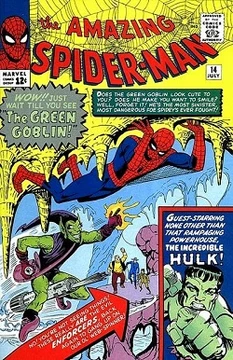
Green Goblin Reborn!
Spider-Man battles the Green Goblin amid an anti-drug story that challenged the Comics Code Authority.
In 1971, Marvel Comics released "Green Goblin Reborn!" across The Amazing Spider-Man issues #96 to #98. Stan Lee wrote the story, with art by Gil Kane, John Romita Sr., and Frank Giacoia. It pits Spider-Man against his arch enemy while his friend Harry Osborn starts using drugs. The U.S. Department of Health, Education and Welfare had asked Marvel for an anti-drug story. The Comics Code Authority refused to approve it due to a ban on showing drug use. Marvel and retailers sold the story anyway, which led the CCA to ease its rules later.
Quick Facts
- Publisher
- Marvel Comics
- Titles
- The Amazing Spider-Man #96–98
- Writers
- Stan Lee
- Artists
- Gil Kane
- John Romita Sr.
- Frank Giacoia
Facts from the source article.
Plot
The Amazing Spider-Man #96, "And Now, The Goblin," begins with Peter Parker reminiscing on Norman Osborn, the father of his best friend Harry. Norman is secretly the Green Goblin and, prior to developing amnesia, was the only person who knew Spider-Man's secret identity. While patrolling, Spider-Man sees a drug-addled boy who believes he can fly; the boy jumps but Spider-Man catches him. Police provide aid while Spider-Man, a wanted fugitive, flees. Later, Peter meets Harry, Norman, Mary Jane Watson, and Randy Robertson to watch Mary Jane perform in a play. Randy, having seen the drug-addled boy, argues with Norman about using his influence as a wealthy businessman to fight drug abuse. After the show, Norman breaks into a locked room, finds hidden Green Goblin equipment, and regains his memories. Peter's spider sense warns him, and he finds the Green Goblin. In issue #97, "In the Grip of the Goblin!" Spider-Man is conflicted about fighting Norman, who wins and flies away, believing he killed Spider-Man. Unbeknownst to Norman, Spider-Man caught himself on a ledge. Peter returns to his and Harry's apartment, where Harry, bitter about Peter flirting with Mary Jane, takes pills and goes to sleep. A drug dealer notices Harry's despair and sells him drugs. Peter fails to track Norman; returning home, he finds Harry overdosed and the Green Goblin has arrived. In issue #98, "The Goblin's Last Gasp!" the Green Goblin crashes into the apartment. Peter shows him Harry overdosing; the Goblin flees while Peter gets Harry to the hospital. Peter beats up the drug dealer. Spider-Man leads the Goblin to the hospital to show him Harry's state; Norman faints, his amnesia sets back in, and Peter reunites with Gwen Stacy as she arrives home.
Creation and publication
In 1970, the Department of Health, Education and Welfare of the Nixon administration asked Marvel Comics to publish a story about the dangers of drug use. Stan Lee and John Romita Sr. shared the concern about youth drug culture. The Amazing Spider-Man was chosen because it was popular among college students and Spider-Man was seen as a counter-cultural figure. Lee and publisher Martin Goodman chose to run the anti-drug story, leading Lee to write "Green Goblin Reborn!" Lee wrote the story intending to focus on entertainment value and avoid preaching. Romita later said he had trouble developing the story because he was "a little bit of a square" and had never used drugs. Gil Kane drew a collage in which Harry was swarmed by pills. The original cover of issue #97 featured a similar image but was replaced by a more typical cover featuring Spider-Man and the Green Goblin. Marvel staff worried the Comics Code Authority would take issue with the drug depiction. Lee appealed to the CCA, prompting a rare meeting of the Comics Magazine Association of America publishers. The CCA stood by its decision that depicting drug use was "immoral" and refused approval; the final decision was made by Archie Comics publisher John L. Goldwater. Publication without approval risked expulsion from the association, pressuring sellers to stop carrying Marvel publications. Lee had previously worked with Chip Goodman to urge the CCA to allow narcotics depiction, but it voted against the proposal. Despite the risks, Lee received permission from Goodman to release the story. By 1971, the CCA had lost some of its influence and retailers were willing to ignore the lack of approval. The Amazing Spider-Man #96 was the first issue of a major comic series sold without CCA approval since the organization's inception in 1954.
Reception and legacy
"Green Goblin Reborn!" was highly regarded by readers and brought positive media attention to Lee and Marvel Comics. Marvel editor-in-chief Joe Quesada was introduced to comic books through this story as a child after his father bought the comics to teach him about the dangers of drug use; Quesada later ended Marvel's participation in the Comics Code Authority. The story is recognized for contributing to a shift in how stories are told in superhero comics, especially in their depiction of crime. After outlets stocked The Amazing Spider-Man #96 despite the lack of CCA approval, the CCA loosened its restrictions for future publications. 5.
More in Green Goblin
Spotted an error? Know more?
Reader corrections go straight into our review queue. Suggest an edit · How this site is sourced