
Cultural policy
Government actions supporting arts, culture, and diversity.
Last updated

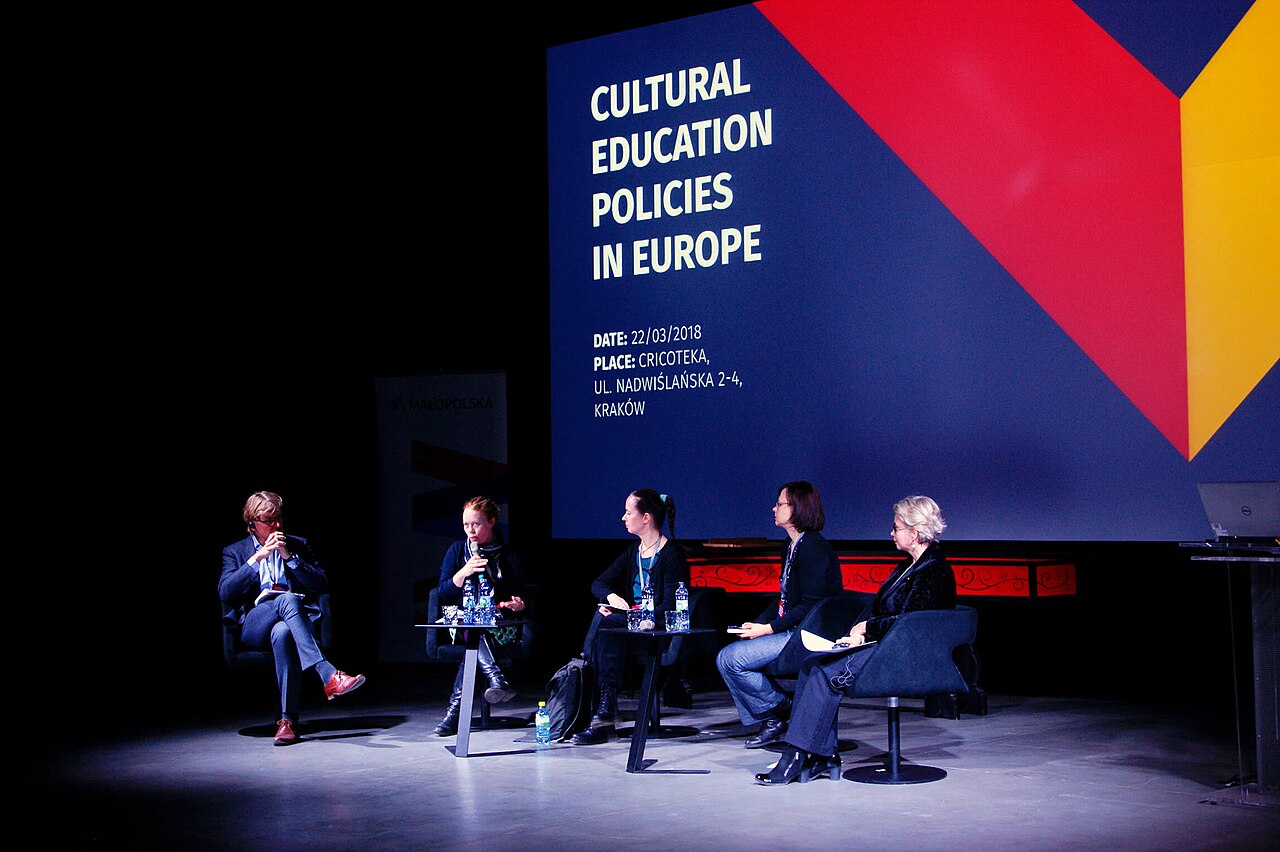
mik Krakow · CC BY-SA 2.0
Cultural policy refers to government actions, laws, and programs that regulate, protect, encourage, and financially support activities related to the arts and creative sectors, as well as culture involving language, heritage, and diversity. The concept was developed at UNESCO in the 1960s. Cultural policy aims to improve accessibility of arts and creative activities to citizens and promote diverse artistic, musical, ethnic, sociolinguistic, and literary expressions. It can be implemented at nation-state, sub-national, regional, or municipal levels.
Quick Facts
- Field
- Government policy
- Key concept origin
- UNESCO, 1960s
- Scope
- Arts
- creative sectors
- language
- heritage
- diversity
- Levels of implementation
- Nation-state
- sub-national
- regional
- municipal
- Related terms
- Arts policy
- cultural diversity
- public good
Facts from the source article.
Lore & Background
Prior to the twentieth century, the arts were typically supported by patronage of the church, aristocrats, and wealthy merchants. During the nineteenth century, artists increasingly used the private marketplace, such as Beethoven charging admission for public concerts. In the twentieth century, governments began taking over arts patronage roles, first establishing archives, museums, and libraries, then later arts councils and departments of culture that initially supported major Western canon arts like painting, sculpture, Classical music, and theatre.

Reader's Guide
Cultural policy governs a sector of immense complexity, involving a heterogeneous set of individuals and organizations engaged in creation, production, presentation, distribution, preservation, and education about aesthetic heritage and entertainment activities. It typically includes public support for heritage sites, zoos, libraries, museums, visual arts, performing arts, and public humanities programs. Since culture is viewed as a public good and a merit good, governments pursue programs to promote greater accessibility, ensuring that high culture is not exclusive to a particular social class or metropolitan location. A general trend since the 1970s and 1980s in Western industrialized nations is a shift from solely supporting elite, professionalized art forms to also supporting amateur and community cultural activities and forms outside the Western canon.
Frequently Asked Questions
What is Cultural policy in government?
Cultural policy is the collection of government actions, laws, and funding programs that support, regulate, and protect the arts, creative industries, language, heritage, and cultural diversity. It operates as a distinct branch of public administration focused on making creative and cultural life accessible to all citizens.
Where did the concept of Cultural policy originate?
The idea of cultural policy as a unified government field was formalized at UNESCO in the 1960s. Before that, arts and heritage matters were generally addressed in an ad hoc manner without a coherent policy framework.
What areas does Cultural policy cover?
Its scope extends across the arts and creative sectors as well as broader cultural dimensions like language preservation, heritage protection, and ethnic or sociolinguistic diversity. It is closely linked to related terms such as arts policy, cultural diversity, and the notion of culture as a public good.
At what levels of government is Cultural policy implemented?
Cultural policy can be enacted at the nation-state level and also at sub-national, regional, and municipal tiers. This multi-level structure allows both broad national strategies and localized programs tailored to specific communities.
More in Government & Public Administration
Sources
Compiled from Wikipedia and the sources listed below. Text from Wikipedia is available under CC BY-SA 4.0; this entry is adapted from it.
- Wikipedia: Cultural policy (CC BY-SA 4.0).
Spotted an error? Know more?
Reader corrections go straight into our review queue. Suggest an edit · How this site is sourced