
Federalism
A system dividing power between central and regional governments.
Last updated

ADGiulia · CC BY-SA 4.0
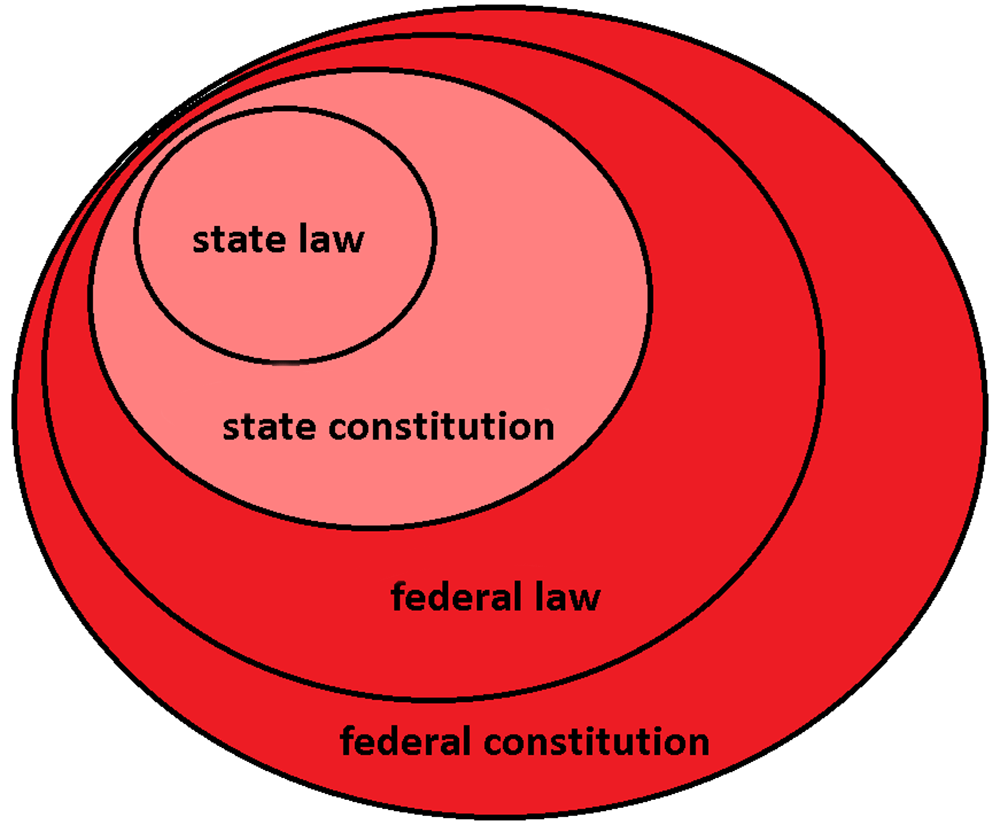
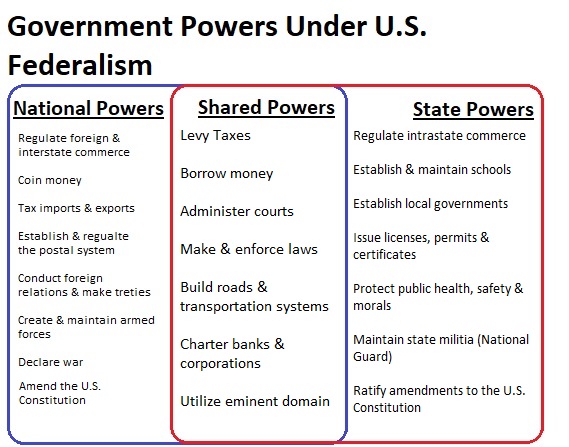
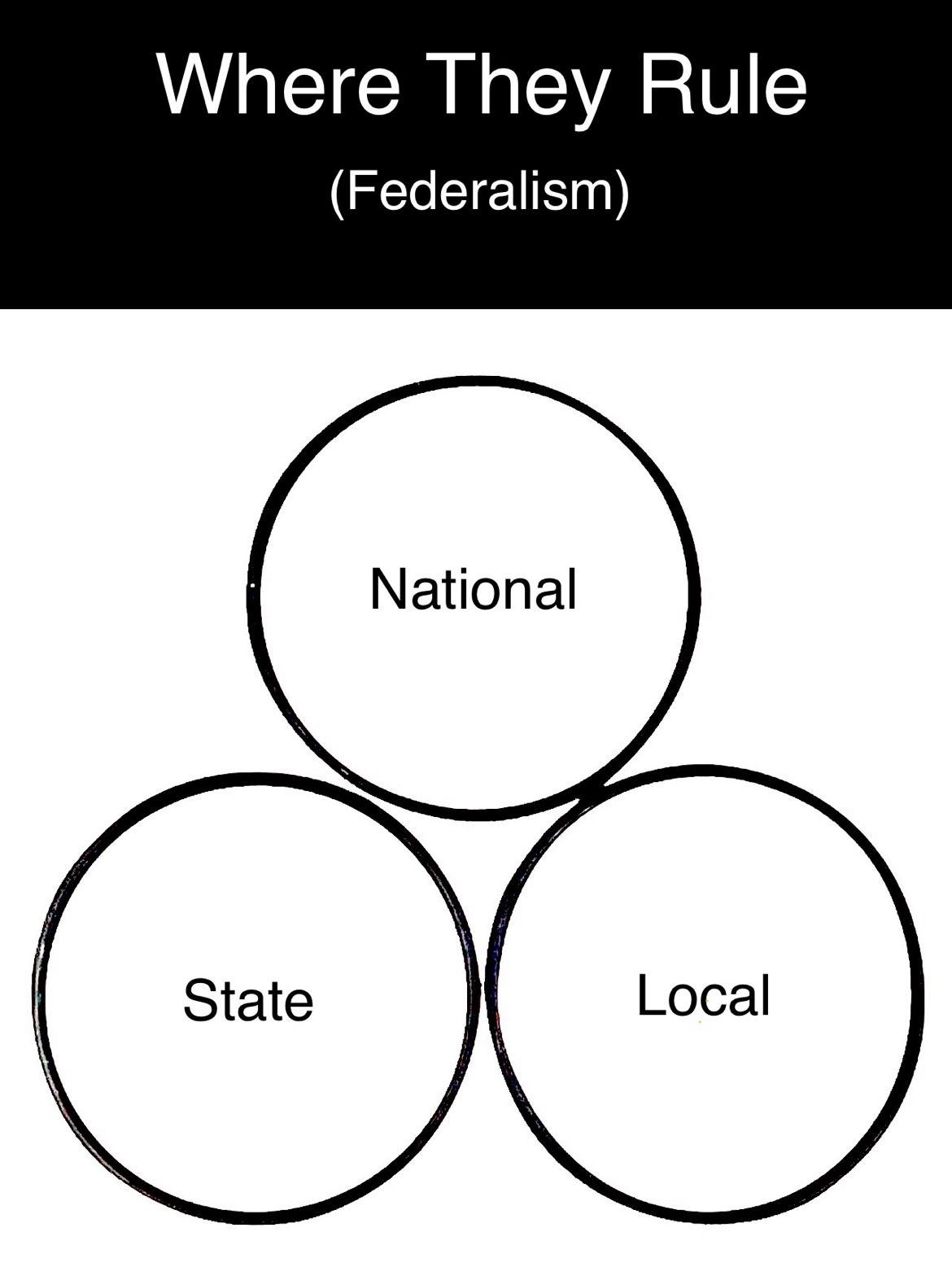
Federalism is a mode of government that combines a general level of government (a central or federal government) with a regional level of sub-unit governments, dividing powers between the two levels. It differs from confederalism, where the central government is subordinate to regional states, and from the unitary state, where the regional level is subordinate to the central government. Modern federalism, featuring a central government with direct authority over individuals, was first fully realized in the United States Constitution of 1787.
Lore & Background
Federalism's roots trace to ancient alliances among tribes or city-states, such as the Israelite tribal confederacy (c.1200–c.1000 BCE) and Hellenic leagues like the Achaean League. The term shares a Latin root with confederalism, and until the late 18th century both meant a league of sovereign states. James Madison described the U.S. Constitution as 'neither a national nor a federal Constitution, but a composition of both.'
The 1979 Autonomy Conference and Its Suppression
In June 1979, the National Democratic Front of Iran convened a landmark gathering that brought together representatives from a remarkable cross-section of the country's ethnic and political landscape. Attendees included the Organization of Iranian People's Fedai Guerrillas (Kurdistan branch), Komala, the Democratic Party of Iranian Kurdistan, the Turkmen People's Cultural and Political Society, the Arab People's Cultural Association of Iran, the Democratic Organization of the Baloch People, and the Azerbaijan Issues Research Group. Together they drafted an eleven-point document titled the "Plan for the Autonomy of the Peoples of Iran," which explicitly called for a federal and democratic structure. The groups envisioned creating a Council of the Peoples of Iran and had scheduled a Congress of the Peoples of Iran for late June in Mahabad.
That congress never took place. The Islamic Republic's military forces launched an offensive against Kurdistan, and simultaneously, government forces were already clashing with Turkmen organizations in Turkmen Sahra, where confrontations had begun as early as spring 1979. The episode established a pattern: federalism proposals in Iran would repeatedly collide with state suppression.

Reader's Guide
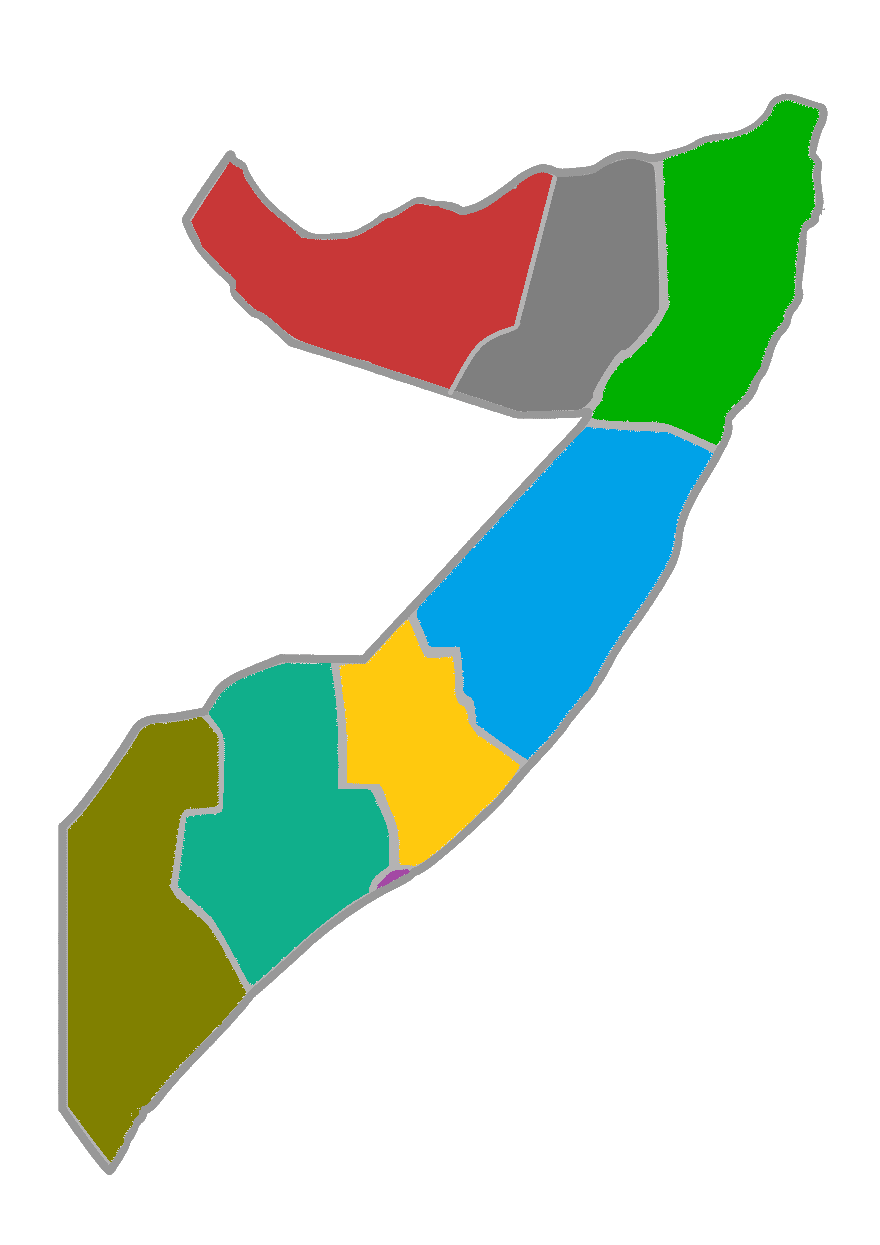
Federalism remains a significant political structure worldwide, adopted in countries such as Argentina, Australia, Brazil, Canada, Ethiopia, Germany, India, Iraq, Malaysia, Mexico, Nigeria, Russia, Switzerland, the United Arab Emirates, and the United States. Political theory identifies two main types of federalization: integrative (e.g., transforming a confederation into a federation) and devolutive (transforming a unitary state into a federation).
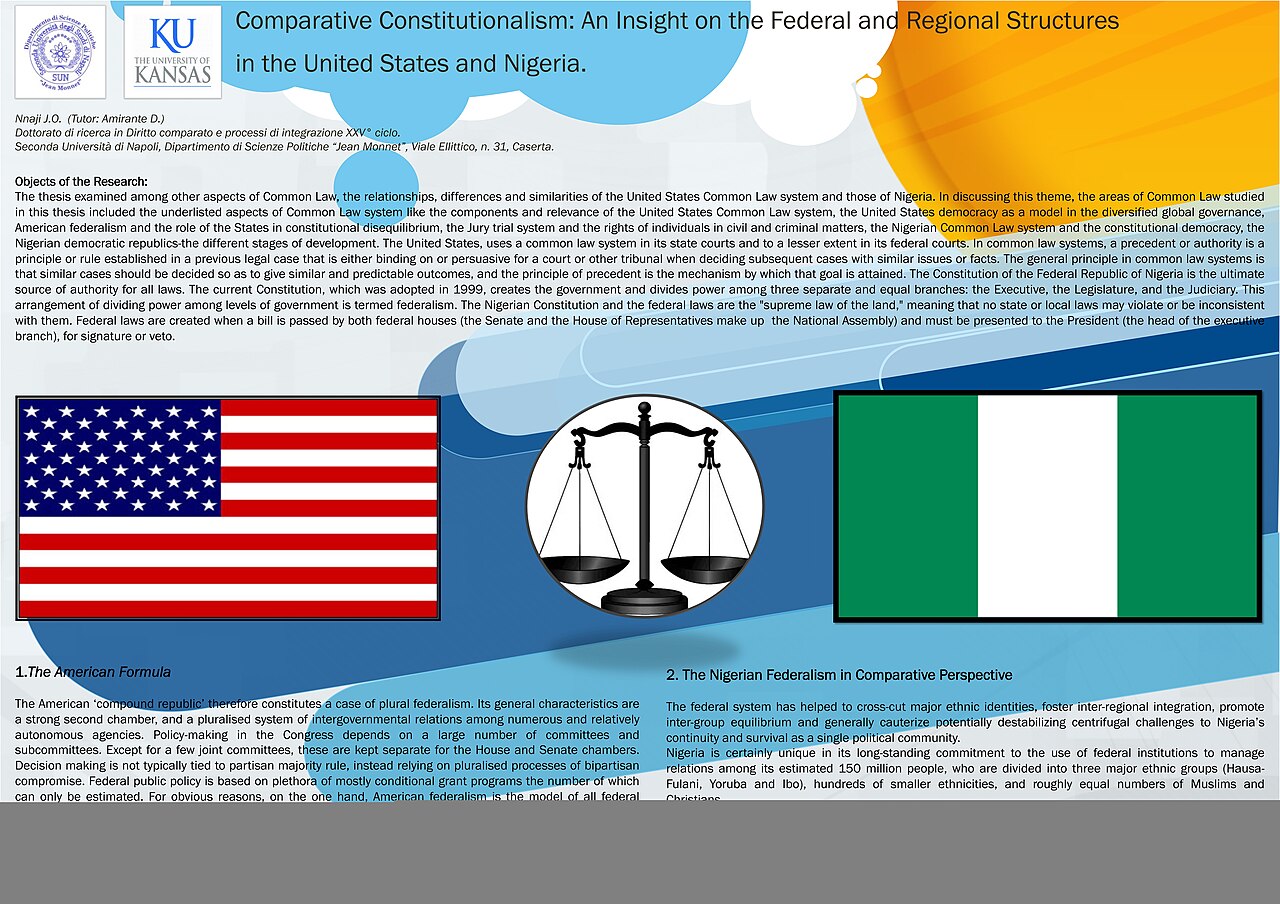
Reasons for adoption include ideational, cultural-historical, social contract, and infrastructural power theories. The European Union has been characterized by some as a federation. The term's meaning shifted in the 19th-century United States to refer uniquely to the compound political form established at the Philadelphia Convention.
Did You Know?
- Johannes Althusius (1563–1638) and Montesquieu are considered fathers of modern federalism.
- Montesquieu's 1748 treatise 'The Spirit of Law' observed federalist examples in corporate societies, polis, and city confederations.
Frequently Asked Questions
What is Federalism?
Federalism is a governmental structure that splits authority between a central (federal) government and smaller regional or state governments, so neither level fully subordinates the other.
How is Federalism different from a unitary state?
In a unitary system, regional governments derive their power from and are subordinate to the central authority, whereas in federalism the two tiers share a divided set of powers and neither simply commands the other.
How does Federalism differ from confederalism?
In a confederation the central body is weaker and subordinate to the member states, while in a federal system the central government holds its own direct jurisdiction over individuals and shares power rather than merely coordinating the regions.
More in Government & Public Administration
Sources
Compiled from Wikipedia and the sources listed below. Text from Wikipedia is available under CC BY-SA 4.0; this entry is adapted from it.
- Wikipedia: Federalism (CC BY-SA 4.0).
Spotted an error? Know more?
Reader corrections go straight into our review queue. Suggest an edit · How this site is sourced