Shubunkin
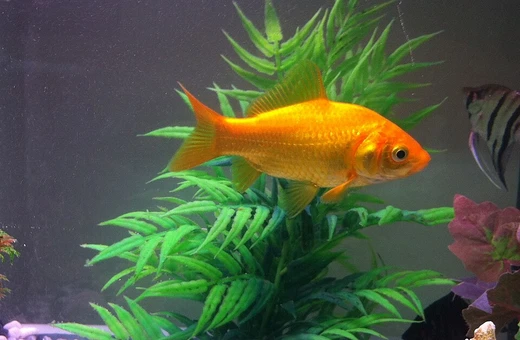
Hardy single-tailed goldfish with nacreous calico scales.
A Japanese creation, the Shubunkin is a sturdy goldfish with a single tail. Its nacreous scales and calico coloring set it apart. Akiyama Yoshigoro developed this fish by breeding a Calico telescope eye with a Comet and a Common goldfish.
Quick Facts
- Country
- Japan
Facts from the source article.
Description
Shubunkins resemble common and comet goldfish in form, with streamlined bodies and well-developed, even fins. They are calico goldfish, possessing nacreous scales that appear pearly, an intermediate between metallic and transparent types. Their coloration includes overlapping patches of red, white, blue, grey, and black, often extending to the fins, with blue being the most prized. Blue can be obtained through line breeding good blue specimens, or sometimes by breeding bronze with matte-scaled goldfish, though a grey slate color may result. Young fry may take several months to develop nacreous coloration. These fish are excellent for ponds, reaching 9 to 18 inches at adulthood, and with proper care live around 10–15 years.
Genetics
Blue coloring in goldfish comes from black pigment in the body wall, appearing blue only under matte or nacreous scales. Nacreous scales result from a fish carrying both the metallic and matte scale genes (heterozygous). Breed standards accept only nacreous scales for Shubunkins. When two nacreous fish breed, offspring average 1/4 metallic, 1/4 matte, and 1/2 nacreous. A nacreous with metallic yields 1/2 metallic and 1/2 nacreous. A nacreous with matte yields 1/2 matte and 1/2 nacreous. A metallic with matte produces all nacreous offspring.
Variants
London Shubunkins have stout bodies and short, rounded finnage similar to common goldfish. American Shubunkins, also called Japanese Shubunkins, have a slimmer body with deeply forked, pointed tail fins and longer finnage; they are the most frequently seen type. Bristol Shubunkins are long and broad-bodied with well-developed finnage and a large, moderately forked tail rounded at the end, resembling a heart or letter B; they are the rarest, originally bred in Bristol, Britain.
More in Goldfish Breeds
Spotted an error? Know more?
Reader corrections go straight into our review queue. Suggest an edit · How this site is sourced