North Rhine-Westphalia
Most populous German state, formed from Prussian provinces and Lippe.
Last updated
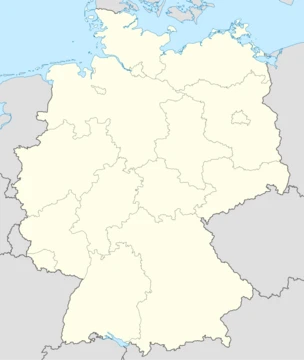
North Rhine-Westphalia, often called NRW, is a state in western Germany that borders the Netherlands and has access to the North Sea via the Rhine. It was created in 1946 after World War II when the British military administration merged the Prussian provinces of Westphalia and the northern part of the Rhine Province, and then added the Free State of Lippe in 1947. Home to over 18 million people, it is Germany’s most populous state. Excluding the city-states of Berlin, Hamburg, and Bremen, it is also the most densely populated.
Despite being the fourth-largest German state by area, at 34,112 square kilometers, it packs in 30 of Germany’s 81 municipalities with more than 100,000 residents. These include Cologne (over a million people), the state capital Düsseldorf (630,000), and Dortmund and Essen (each around 590,000), most of which sit within the Rhine-Ruhr metropolitan area—Germany’s biggest urban zone and the fourth-largest in Europe. This region lies at the heart of the European Blue Banana, giving it strong connections to other major cities and areas like the Randstad, the Flemish Diamond, and the Frankfurt Rhine-Main Region.
Culturally, the state is far from uniform. Traditional customs differ sharply between the Rhineland on one side and Westphalia and Lippe on the other. Its economy is the largest of any German state by gross regional domestic product, but its GRDP per capita falls below the national average. Bonn, located within the state, served as the federal capital until German reunification in 1990 and remained the seat of government until 1999.
Background
The state was created by the British military administration's 'Operation Marriage' on 23 August 1946, merging the province of Westphalia and the northern parts of the Rhine Province, both former Prussian divisions. On 21 January 1947, the Free State of Lippe was added. The constitution was adopted by the state parliament without a popular referendum. Culturally, North Rhine-Westphalia is not uniform; significant differences exist between the Rhineland region and the regions of Westphalia and Lippe, especially in traditional customs.
The Rhineland area was first written about by Julius Caesar, who noted tribes such as the Eburones, Ubii, and Sugambri. Under Roman rule, the Ubii and other Germanic tribes settled west of the Rhine in the province of Germania Inferior. After Roman decline, the Ripuarian Franks conquered the region.
By the eighth century, Frankish dominion was established, while Westphalia was taken over by Saxons. The area later became part of the Holy Roman Empire, and the Rhineland split into numerous small territories. Prussia gained control of parts of the Rhineland from 1609 onward, and after the Congress of Vienna, Prussia was awarded the entire Rhineland, forming the Prussian Rhine province in 1822.
Westphalia was originally a district of the Duchy of Saxony. In 1180, it was elevated to a duchy by Emperor Barbarossa, though it comprised only a small area south of the Lippe River. The Peace of Westphalia of 1648, signed in Münster and Osnabrück, ended the Thirty Years' War and introduced the concept of 'Westphalian sovereignty'.
Demographics & Urban Landscape
North Rhine-Westphalia stands as Germany's most populous state, home to more than eighteen million residents, and, excluding the three city-states, the most densely settled region in the country. Spanning roughly 34,084 square kilometres, it ranks fourth among German states by area. The state contains thirty of the nation's eighty-one municipalities that exceed one hundred thousand inhabitants.
Cologne leads with a population above one million, followed by the capital Düsseldorf at around 630,000, and Dortmund and Essen each at approximately 590,000. The majority of these major cities are concentrated within the Rhine-Ruhr metropolitan area, which constitutes Germany's largest urban region and the fourth-largest on the European continent. Because the Rhine-Ruhr sits at the heart of the so-called European Blue Banana, it enjoys strong connectivity to neighbouring metropolitan clusters such as the Randstad, the Flemish Diamond, and the Frankfurt Rhine-Main Region, reinforcing its role as a crossroads of continental urban life.
Postwar Formation & Political Legacy
The modern state was forged in the immediate aftermath of World War II. On 23 August 1946, the British military administration carried out what was internally called Operation Marriage, joining the former Prussian province of Westphalia with the northern slice of Rhine Province into a single entity. Just five months later, on 21 January 1947, the old Free State of Lippe was absorbed into the new creation.
A popular referendum subsequently ratified the state's constitution, and in 1949 North Rhine-Westphalia formally became a Land within the Federal Republic of Germany. Its political stature was further elevated when Bonn, situated within its borders, served as the West German federal capital until reunification in 1990 and continued to host the seat of government until 1999. In this way, a state assembled from dismembered Prussian territories by occupying authorities went on to shelter the nerve centre of a divided nation for over four decades.
Ancient Inhabitants & Medieval Transformation
The earliest surviving written description of the region comes from Julius Caesar, who recorded the Eburones on the western bank of the Rhine and the Ubii and Sugambri on the eastern side. Caesar subdued the left-bank tribes, and Augustus later erected a chain of fortified posts along the river, yet Rome never managed to hold the right bank firmly. As imperial authority eroded, these scattered peoples were increasingly grouped under the label Ripuarian Franks, and by the close of the fifth century they had absorbed every territory previously under Roman control. Simultaneously, Saxon groups pressed southward into Westphalia by the eighth century.
The Merovingian and Carolingian dynasties eventually brought both populations under a single Frankish umbrella. The Treaty of Verdun then divided the province along the river, with the eastern side falling to East Francia and the western side to Lotharingia. By the reign of Otto I, both banks were incorporated into the Holy Roman Empire. As central imperial power weakened, the Rhineland shattered into a patchwork of small, independent lordships, yet it retained a leading position in German culture, with Aachen serving as the traditional coronation site for German emperors.
Cultural Diversity & Economic Profile
Although administered as a single state, North Rhine-Westphalia is far from culturally homogeneous. The Rhineland region preserves customs and traditions that contrast sharply with those of Westphalia and Lippe, producing a noticeable internal divide in local identity and practice.
On the economic front, the state generates the largest gross regional domestic product of any German Land, yet its per-capita GRDP sits below the national average—a consequence of its enormous population distributed across a comparatively compact territory. The landlocked state in western Germany thus pairs massive aggregate output with a below-average individual figure, a pattern shaped by its dense industrial urban network rather than a single dominant capital. This tension between sheer scale and per-capita performance, combined with the cultural gulf between its Rhineland and Westphalian halves, makes the state as much a study in internal contrast as in overall magnitude.
More in German States
Sources
Compiled from Wikipedia and the sources listed below. Text from Wikipedia is available under CC BY-SA 4.0; this entry is adapted from it.
- Wikipedia: North Rhine-Westphalia (CC BY-SA 4.0).
Spotted an error? Know more?
Reader corrections go straight into our review queue. Suggest an edit · How this site is sourced