Mega Man Xtreme 2
A Game Boy Color spin-off set between Mega Man X3 and X4.
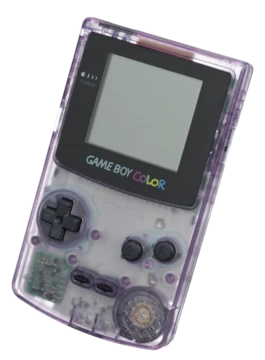
Mega Man Xtreme 2 is a 2001 platform game developed and published by Capcom for the Game Boy Color. A spin-off in the Mega Man X series and a follow-up to Mega Man Xtreme, it is set between Mega Man X3 and Mega Man X4. The game follows Maverick Hunters X and Zero as they investigate the theft of Reploid DNA souls on Laguz Island.
Quick Facts
- Developer
- Capcom Production Studio 3
- Publisher
- Capcom
- Director
- Koji Okohara
- Producer
- Koji Nakajima; Tatsuya Minami
- Designer
- Shino Okamura
- Programmer
- Masatsugu Shinohara
- Composer
- Toshio Kajino; Mitsuhiko Takano
- Series
- Mega Man X
Facts from the source article.
Plot
In the 22nd century, humans and Reploid robots share the world, but some Reploids turn Maverick and cause chaos. To stop them, Dr. Cain created the Maverick Hunters. Mega Man Xtreme 2 takes place between Mega Man X3 and Mega Man X4. Hunters X and Zero, joined by a new ally named Iris, head to Laguz Island to look into strange erasure events. Reploids across Earth are losing their DNA Souls, becoming useless junk. The culprit is Berkana, a Soul Eraser who once worked as a Reploid researcher. She built a chip that could recreate dead Mavericks by stealing DNA Souls, using them to power herself and her partner Gareth. As X and Zero fight familiar Mavericks from their past, Berkana lets them advance, hoping to steal their strengthened souls later. The duo defeats Gareth and Berkana at the Reploid Research Laboratory. Sigma then appears as the real mastermind, but X and Zero beat him too. The stolen souls return to their owners, and peace returns. Zero worries that Iris’s brother, the Colonel of Repliforce, will be angry about her involvement, but X believes the experience will benefit her.
Gameplay
Mega Man Xtreme 2 is an action-platform game with side-scrolling stages. The player can switch between characters X and Zero, and use the DNA Soul system, which is absent from earlier Mega Man X games. Stages are linear, presenting traps and enemy robots. The player collects DNA Souls, health and ammunition refills, extra lives, power-ups that improve maximum health, and armor parts granting X new abilities. Defeating a stage's Maverick boss earns a special weapon that can be used against other bosses, each vulnerable to a unique weapon. After each stage, accumulated DNA Souls can be used to purchase upgrades from Iris, such as improvements to speed, power, health recharge, and shielding. In normal difficulty, the player chooses between X, who uses a long-range X-Buster that can be charged, and Zero, who uses a Z-Saber for close-range combat; Zero risks health loss but deals more damage. An unlockable Xtreme Mode allows switching between X and Zero on any stage, and only the character who defeats a boss gains the weapon, adding strategic consideration to boss order and weapon effectiveness. Beating Xtreme Mode unlocks a Boss Rush mode featuring all eight Mavericks from this game and the eight from the first Mega Man Xtreme.
Development and release
Capcom handled both the development and publishing of Mega Man Xtreme 2. Character designs and the Japanese box art came from artist Haruki Suetsugu, who was happy to illustrate Iris again for the first time since Mega Man X4. Since this game takes place before that one, Suetsugu updated her look by ditching the beret and giving her a uniform meant to feel like a youthful schoolgirl outfit. The villains Berkana and Gareth were styled as a witch and a knight, keeping the medieval theme from the first Mega Man Xtreme. Suetsugu got specific instructions for Gareth’s lion companion, but that animal never shows up in the actual game. The title was first revealed in Japan during March 2001. Before that year’s E3, Capcom confirmed it would bring the game to Western markets. Japan got the release on July 19, 2001, with North America following on November 12. Much later, it hit the 3DS Virtual Console in Japan on December 25, 2013, and in North America on May 29, 2014.
Reception
Critics agreed that Mega Man Xtreme 2 was a step up from the first game. Giancarlo Varanini at GameSpot found the DNA Soul system interesting, and Skyler Miller at AllGame noted that the character-switching feature and that system together made the game feel somewhat fresh. Game Informer highlighted the hidden modes, smarter bosses, and a tougher difficulty curve. Varanini said most of the original’s uneven difficulty was fixed, except for sections where players had to jump off platforms without seeing where they were going. Miller described the challenge as frustrating but never impossible. Both reviewers were mostly happy with the graphics and sound, though Miller spotted some visual slowdown and audio repetition. They criticized the story and translation: Miller pointed out inconsistencies between the manual and in-game text, while Varanini noted the intro mistakenly called a laboratory a lavatory, which he felt summed up the story’s quality. He was disappointed by recycled stages and bosses, blaming Capcom’s lack of creativity. Miller and Varanini agreed the game was a worthy sequel for fans of the series or the first game, but not groundbreaking and unlikely to win over newcomers. Jeremy Parrish of 1UP.com didn’t recommend either game, saying this one wasn’t extremely good either, especially with the Zero series coming out soon after. Mega Man Xtreme 2 scored 74.17 percent on Gamerankings. It debuted at number six on Japanese sales charts with 17,110 units sold. Dengeki Online reported 88,564 units sold in Japan in 2001, ranking it 127th for the year.
Frequently Asked Questions
Who developed Mega Man Xtreme 2?
Mega Man Xtreme 2 was developed by Capcom Production Studio 3.
Who directed Mega Man Xtreme 2?
Mega Man Xtreme 2 was directed by Koji Okohara.
Who designed Mega Man Xtreme 2?
Mega Man Xtreme 2 was designed by Shino Okamura.
Who composed the music for Mega Man Xtreme 2?
The music for Mega Man Xtreme 2 was composed by Toshio Kajino and Mitsuhiko Takano.
More in Game Boy Color Game Library
Spotted an error? Know more?
Reader corrections go straight into our review queue. Suggest an edit · How this site is sourced