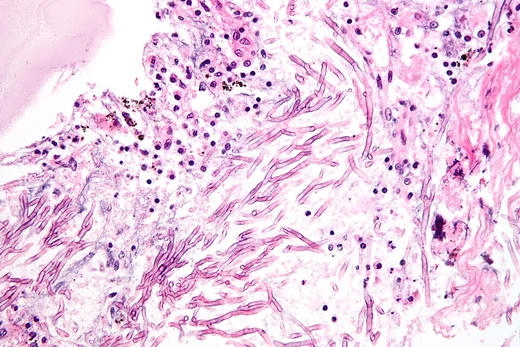
Pecan anthracnose
A fungal disease causing yield loss in pecan trees worldwide.
Last updated
Pecan anthracnose is a fungal disease of pecan trees caused by the ascomycete Glomerella cingulata. It is widespread wherever pecan trees are grown and has been reported since at least 1914. The disease is highly correlated with heavy rainfall, especially in early spring, and can lead to defoliation that reduces yield and nut quality.
Overview of disease
Pecan anthracnose, caused by the fungus Glomerella cingulata, attacks the nut directly, leading to major yield losses. The disease thrives in warm, wet weather above 80 degrees Fahrenheit. Dark lesions appear on the shucks and leaves, sometimes spreading across the whole plant, with pink spores visible inside. Without treatment, symptoms worsen through the season, steadily cutting production.
Southern U.S. pecan orchards, with their warm, damp climates, are most vulnerable. The infection can also trigger zinc deficiencies, especially in Witchita, Kiowa, Gloria Grande, Pawnee, and Mohawk cultivars. Affected trees drop nuts early or produce fewer, and lesions can ruin entire fruits, making them unsellable.
Prevention and control
Control methods for pecan anthracnose are similar to those used against pecan scab. Ensuring adequate airflow to keep the environment dry, such as by avoiding crowding of plants, is important. Removing dead leaves and nuts from the past season is also recommended because the pathogen can overwinter in these structures.
Fungicide may be sprayed 7–12 times throughout the season, beginning in spring as soon as the bud breaks; this also helps ward off powdery mildew and pecan scab. Compounds created from Lactobacillus plantarum have shown antifungal properties against Glomerella cingulata. Some pecan varieties are resistant to anthracnose, and pruning out and destroying diseased plants can help stop the spread.
Life cycle
This fungus, a type of ascomycete, follows a life cycle common to its group. It survives winter as an ascocarp, living on dropped nuts, leaves, and other plant litter. Wind or rain carries these ascocarps.
When a warm, rainy spring or summer arrives, the ascocarp releases ascospores that infect fresh plants. Those infections create new ascocarps, which then produce more ascospores, restarting the cycle. Because it is polycyclic, it also has a sexual conidia stage when it encounters a compatible mating type.
Did You Know?
- The actual loss due to the disease is difficult to quantify.
- Damage to pecan production is likely to present itself in a lower yield in the year directly following a disease outbreak.
- Pecan anthracnose has an unusually long latent period, taking weeks to months from initial infection to symptom development.
More in Fungal Diseases
Sources
Compiled from Wikipedia and the sources listed below. Text from Wikipedia is available under CC BY-SA 4.0; this entry is adapted from it.
- Wikipedia: Pecan anthracnose (CC BY-SA 4.0).
- Word definitions: the , each quoted from its Wikipedia article.
Spotted an error? Know more?
Reader corrections go straight into our review queue. Suggest an edit · How this site is sourced