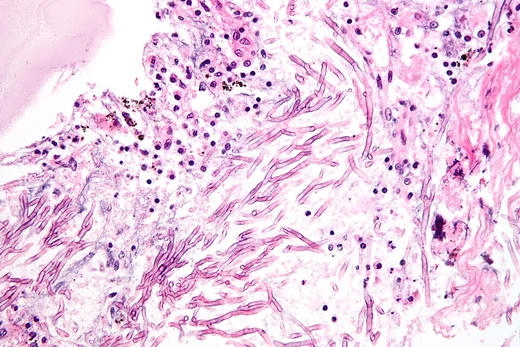
Fungal pneumonia
A lung infection caused by endemic or opportunistic fungi.
Last updated
Fungal pneumonia is an infection of the lungs caused by fungi, which may be endemic or opportunistic. It is notable for its high case mortality rate, reaching up to 90% in immunocompromised patients, while immunocompetent individuals generally respond well to treatment.
Quick Facts
- Field
- Infectious disease, respirology
Facts from the source article.
Signs and symptoms
The condition often presents with fever, cough, headaches, rashes, muscle aches, and joint pain, resembling common flu-like illnesses. This similarity can delay or prevent treatment. In rare instances, it may progress to chronic pneumonia, fungemia, meningitis, or death, but most cases are asymptomatic or unreported.
Pathophysiology
Fungi typically enter the lungs through inhalation of spores, though they can also reach the lungs via the bloodstream from other infected sites or through reactivation of a latent infection. Within the alveoli, fungi move between cells and through connecting pores, triggering an immune response. Neutrophils engulf the fungi and release cytokines, causing fever, chills, and fatigue. Fluid and neutrophils fill the alveoli, impairing oxygen transport.
Diagnosis
Diagnosis can be made by culturing the fungus from respiratory fluids, though this method is insensitive and slow, contributing to high mortality. Microscopy is also slow and imprecise. Antigen detection is faster but may be less sensitive and specific than classical methods.
More in Fungal Diseases
Sources
Compiled from Wikipedia and the sources listed below. Text from Wikipedia is available under CC BY-SA 4.0; this entry is adapted from it.
- Wikipedia: Fungal pneumonia (CC BY-SA 4.0).
- Word definitions: the , each quoted from its Wikipedia article.
Spotted an error? Know more?
Reader corrections go straight into our review queue. Suggest an edit · How this site is sourced