Fast food
Mass-produced food designed for speed and commercial resale.
Last updated
Fast food is a commercial category of mass-produced food designed for rapid service, typically sold in restaurants or stores using frozen, preheated, or precooked ingredients and packaged for take-out. The industry was valued at an estimated $570 billion globally in 2018. Its development was driven by the need to serve large numbers of busy commuters, travelers, and wage workers.
Quick Facts
- Mcdonald's restaurants worldwide
- over 31,000
Facts from the source article.
History
The sale of ready-cooked food is closely tied to urban growth. In emerging cities, homes often lacked adequate space or proper cooking equipment, and fuel for cooking could cost as much as purchased produce. Frying in vats of oil was both dangerous and expensive, as a rogue fire might easily conflagrate an entire neighborhood.
Urbanites were therefore encouraged to buy pre-prepared meats or starches such as bread or noodles. This also suited customers with limited time, such as commuters or hourly laborers on short breaks. In Ancient Rome, street stands featured a large counter with a receptacle for serving food or drink. During the post-World War II American economic boom, a culture of consumerism emerged, and both household members began working outside the home.
Eating out, once a luxury, became common and then a necessity. Workers and working families needed quick, inexpensive food for lunch and dinner. The traditional family dinner has increasingly been replaced by takeaway fast food, and time spent on food preparation has declined: in 2013, the average U.S. woman spent 47 minutes per day preparing food, and the average man spent 19 minutes.
On the go
Fast food outlets are take-away providers that emphasize quick service, often featuring a drive-through that lets customers order and pick up food from their vehicles. Some outlets have indoor or outdoor seating for on-site dining. The rise of IT services has enabled customers to order food from home via smartphone apps. Nearly from its inception, fast food has been designed to be eaten on the go, often as finger food without traditional cutlery.
Common menu items include fish and chips, sandwiches, pitas, hamburgers, fried chicken, french fries, onion rings, chicken nuggets, tacos, pizza, hot dogs, and ice cream, though some outlets offer slower foods like chili, mashed potatoes, and salads. Convenience stores at petrol stations sell pre-packaged sandwiches, doughnuts, and hot food; many U.S. and European stations also sell frozen foods with microwave ovens on site. Australian petrol stations offer hot pies, sandwiches, and chocolate bars. These stations are often open long hours, making them accessible before and after shop trading hours.
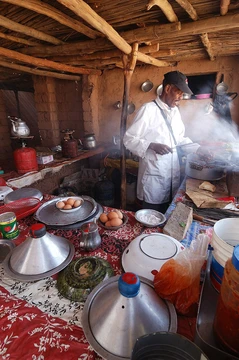
Traditional street food is sold worldwide by small, independent vendors operating from carts, tables, portable grills, or motor vehicles. Examples include Chinese rice soup vendors, Middle Eastern falafel stands, New York City hot dog carts, and taco trucks. In the Philippines, Turo-Turo vendors are common. Street vendors often use colorful displays, calls, songs, chants, or music to attract customers.
Cuisine
Modern commercial fast food is often ultra-processed and prepared industrially, using standard ingredients and standardized cooking methods. It is usually served rapidly in cartons, bags, or plastic wrapping to minimize cost. Menu items are typically made from processed ingredients prepared at a central facility and shipped to outlets, where they are reheated, cooked by microwave or deep frying, or assembled quickly. This ensures consistent product quality and reduces labor and equipment costs at individual stores.
Ingredients are often formulated for specific flavor, consistency, and freshness. Chinese takeaway restaurants are popular in Western countries like the U.S. and UK, offering a wide variety of Asian food, often fried, including noodles, rice, or meat. Some present food as a smörgåsbord, sometimes self-service, where customers choose a container and fill it with their choice; some outlets charge by weight.
In large cities, free delivery may be offered for purchases over a minimum amount. Sushi, a fast food form created in Japan, has seen rising popularity in the West; it consists of cold sticky rice flavored with sweet rice vinegar, served with toppings such as fish or rolled in nori with fillings like fish, seafood, chicken, or cucumber. Pizza is a common fast food category in the U.S., with nationwide chains including Papa John's, Domino's Pizza, Sbarro, and Pizza Hut, and it trails only the burger industry in supplying children's fast food calories. Menus are more limited and standardized than in traditional pizzerias, and pizza delivery is offered.
Criticism
Fast-food chains have faced criticism over negative health effects, alleged animal cruelty, worker exploitation, and cultural degradation from shifts away from traditional foods. In 2014, the World Health Organization indicated that deregulated food markets were largely to blame for an obesity crisis and suggested tighter regulations. By 2015, some U.S. local governments were restricting fast-food chains by limiting restaurant numbers in certain areas. In response, chains have introduced more health-friendly menu items and reduced packaging waste to address eco-friendly concerns.
Marion Nestle, chair of New York University's Department of Nutrition and Food Studies, has suggested that fast-food industries intentionally market unhealthy foods to children through advertising, creating lifelong customers. Eric Schlosser, author of Fast Food Nation, argued that chains lure students with early employment opportunities that teach no skills. The hiring and firing of teenage workers in the industry has also been criticized. Books and films, such as the 2004 film Super Size Me, have highlighted potential negative health effects from overconsumption, including its contribution to obesity.
Did You Know?
- In 2011, McDonald's hired approximately 62,000 new workers and received a million applications, an acceptance rate of 6.2%.
- The median age of workers in the fast-food industry in 2013 was 28.
- McDonald's has outlets in 126 countries on 6 continents.
More in Food & Cooking
Sources
Compiled from Wikipedia and the sources listed below. Text from Wikipedia is available under CC BY-SA 4.0; this entry is adapted from it.
- Wikipedia: Fast food (CC BY-SA 4.0).
Spotted an error? Know more?
Reader corrections go straight into our review queue. Suggest an edit · How this site is sourced