ArmaLite
American small arms engineering firm behind the AR-15/M16 rifle family.
Last updated

Le-boulanger · CC BY-SA 4.0
ArmaLite was an American firearms engineering company founded in the early 1950s in Hollywood, California. It was initially the light firearms division of Fairchild Engine and Airplane Corporation, formally incorporated in 1954. The company ceased operations in the 1980s, but the brand was revived in 1996 by Mark Westrom. The company’s chief designer, Eugene Stoner, created many of its products, which often featured foam-filled fiberglass buttstocks and composite barrels with a steel liner inside an aluminum sleeve—most notably the AR-15/M16 rifle family.
History
The company began when George Sullivan, a patent counsel for Lockheed, secured funding from Fairchild. Sullivan leased a small machine shop on Santa Monica Boulevard in Hollywood and hired a few employees to develop a lightweight survival rifle for downed aircrew. On October 1, 1954, ArmaLite was incorporated as a Fairchild subsidiary.
It was never meant to be a manufacturer, but rather a design house that sold or licensed its concepts to other producers. While testing a survival rifle prototype at a shooting range, Sullivan met Eugene Stoner, a Marine veteran and self-taught gun designer, and hired him as chief design engineer. As late as 1956, the company had only nine employees, including Stoner.
Stoner’s first design, the AR-1 Parasniper from 1952, was not successful. In 1956, ArmaLite entered a contest for an aircrew survival rifle, leading to production of the AR-5 and AR-7.
The AR-5, chambered in .22 Hornet, was adopted by the U.S. Air Force as the MA-1 Survival Rifle. The AR-7, a civilian model in .22 long rifle, could be disassembled and stored in its foam-filled buttstock, allowing it to float. Several companies, including Henry Repeating Arms, have since produced the AR-7 and its derivatives.
Most of ArmaLite’s engineering effort in 1955 and 1956 went into the AR-10 prototype. In 1957, the company competed for the U.S. military’s new main combat rifle contract, offering the AR-10 in 7.62×51mm NATO.
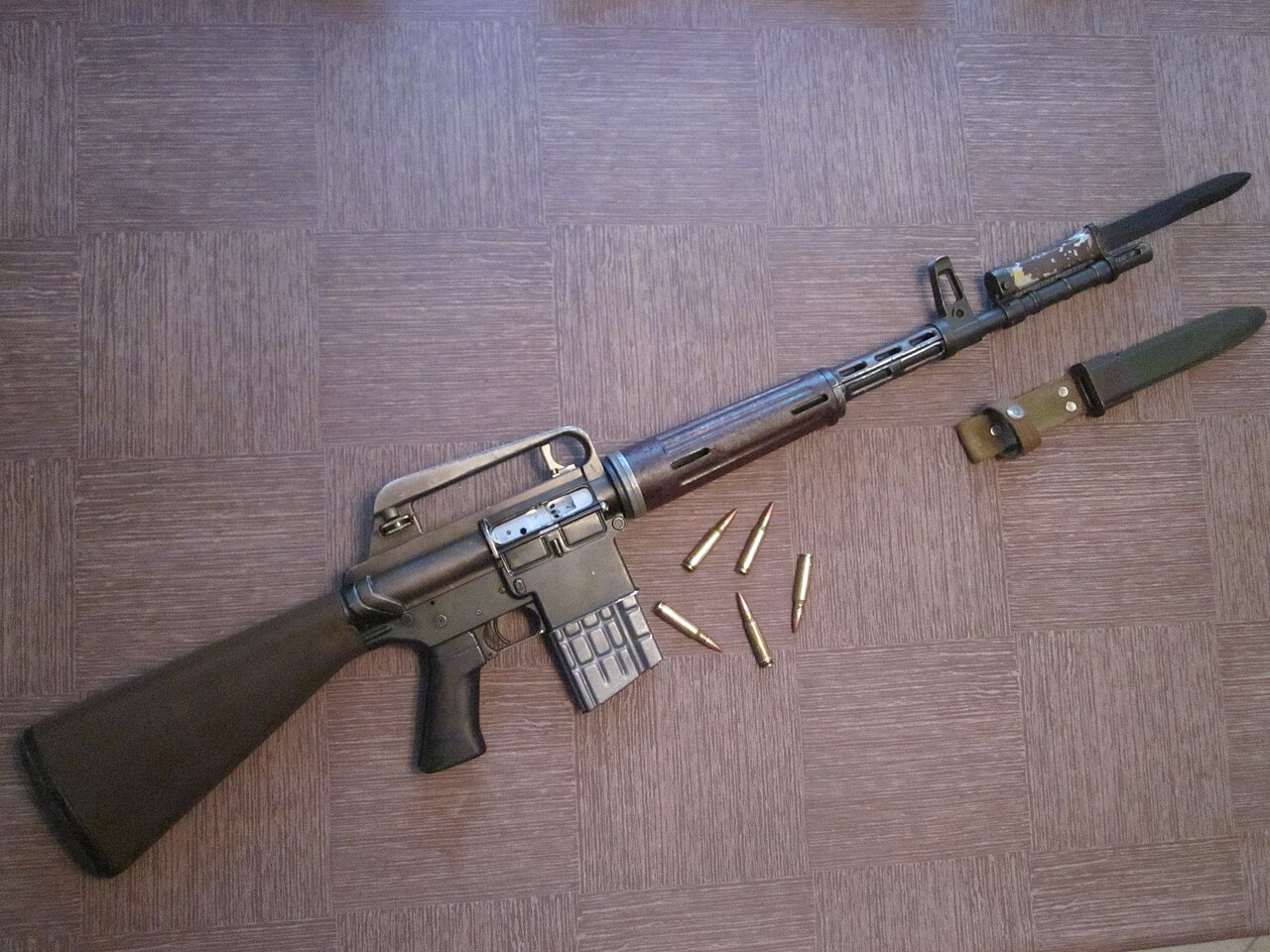
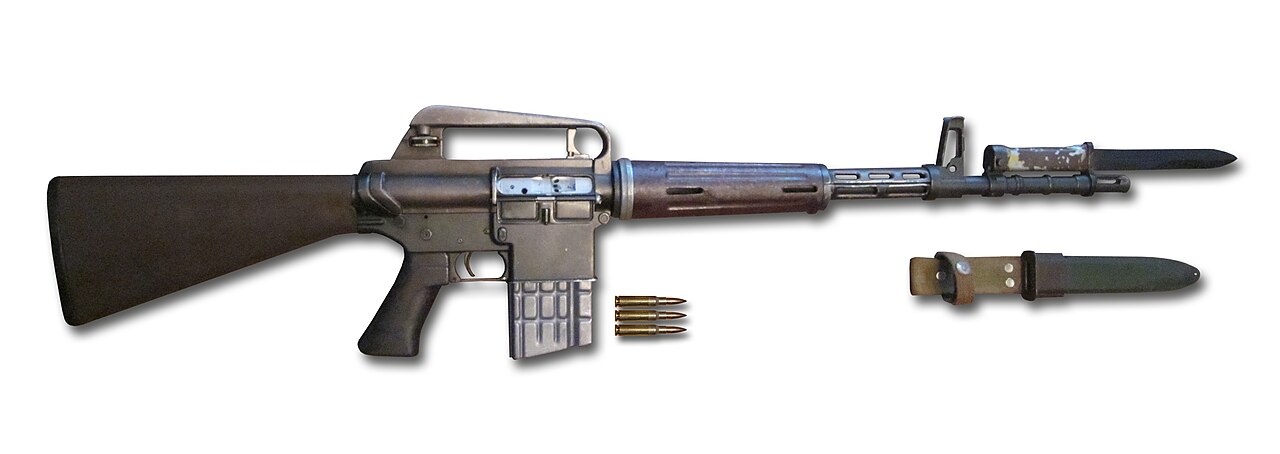
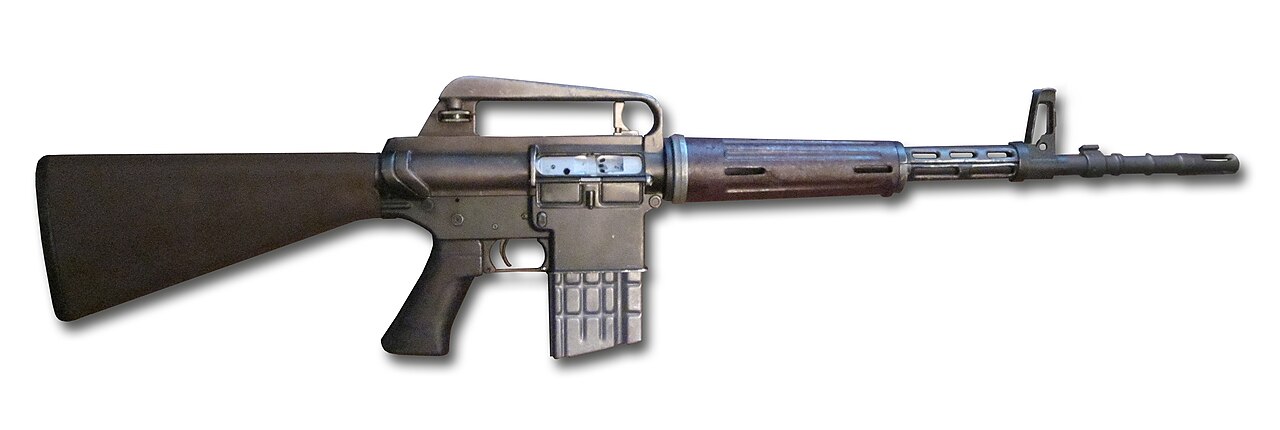
It faced the Springfield Armory T-44 (which became the M14) and the T-48 (a version of the FN FAL). The AR-10 was less developed than its competitors, and the T-44 won. However, the AR-10 attracted interest from Colt and the Dutch firm Artillerie-Inrichtingen, both of which licensed the design.
In 1962, Fairchild sold its stake in ArmaLite, and the company became independent.
Lore & Background
ArmaLite began as the light firearms division of Fairchild Engine and Airplane Corporation, formally incorporated in 1954. It was founded by George Sullivan, patent counsel for Lockheed Corporation, who hired Eugene Stoner as chief design engineer. The company operated from a small machine shop in Hollywood and was never intended to be a manufacturer, instead focusing on licensing designs. Stoner's early designs included the AR-1 Parasniper (1952), which was unsuccessful, and the AR-5 and AR-7 survival rifles, which were adopted by elements of the US military.
The AR-10, chambered in 7.62×51mm NATO, competed for a US combat rifle contract in 1957 but lost to the T-44 (M14). However, it attracted licensing interest from Colt and the Dutch company Artillerie-Inrichtingen. Under financial pressure, ArmaLite sold the rights to the AR-15 design to Colt in 1959. Colt secured US military contracts, and a variant was adopted as the M16 in 1964.
ArmaLite continued developing designs like the AR-18 but ceased operations in the early 1980s. The brand was revived in 1996 by Mark Westrom, who re-launched ArmaLite, Inc. in Geneseo, Illinois. In 2013, Westrom sold the company to Strategic Armory Corps. The company moved to Phoenix in mid-2018 and relocated to Bryan/College Station, Texas by mid-2023.
From Hollywood Machine Shop to Global Design House
ArmaLite was born not as a gunmaker but as a design house. In 1954, George Sullivan—patent counsel for Lockheed Corporation—incorporated the company as a subsidiary of Fairchild Engine and Airplane Corporation, leasing a modest machine shop on Santa Monica Boulevard in Hollywood, California. The operation was deliberately small; by 1956 it employed just nine people. Sullivan's vision was to generate lightweight small-arms concepts and license them to established manufacturers rather than mass-produce weapons himself.
The company's founding mission was practical: develop a survival rifle for downed aircrew. While testing a prototype at a local range, Sullivan encountered Eugene Stoner, a World War II Marine and self-taught small-arms tinkerer, and immediately brought him on as chief design engineer. Stoner's signature approach—foam-filled fiberglass stocks and composite barrels pairing a steel liner inside an aluminum sleeve—became the company's engineering identity and would define every major platform that followed.
The AR-10: A Brilliant Rifle That Missed Its Moment
Between 1955 and 1956, ArmaLite poured its limited resources into developing what would become the AR-10, Stoner's fourth prototype. Springfield Armory tested two hand-built examples in late 1956 and again in 1957 as a potential successor to the aging M1 Garand. The AR-10, chambered in 7.62×51mm NATO, faced stiff competition from the T-44 (Springfield's updated Garand, which became the M14) and the T-48 (a variant of the Belgian FN FAL). Both rivals were further along in development, and the T-44 enjoyed the advantage of being an in-house Army design.
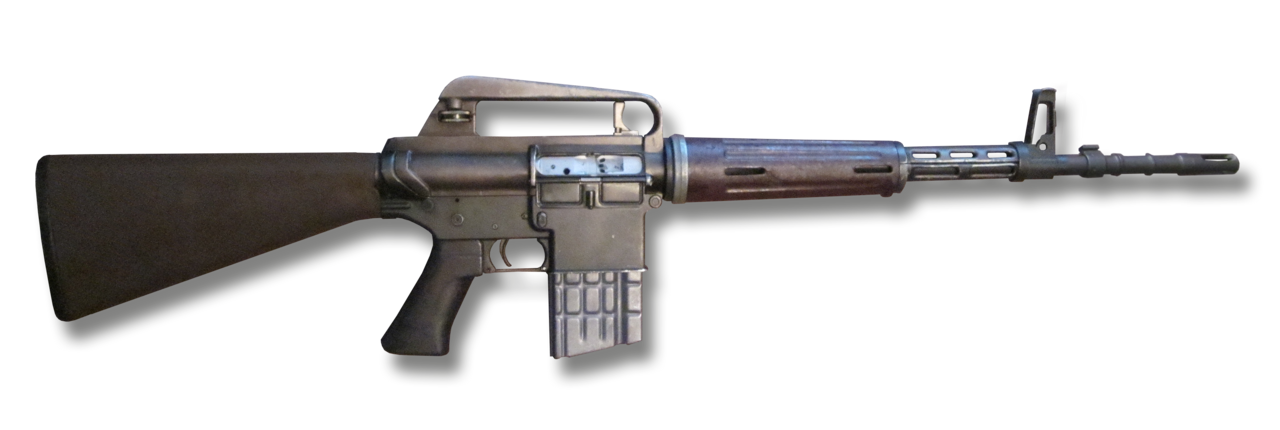
The Army selected the T-44, and ArmaLite lost the contract. Undeterred, the company continued limited, virtually hand-built production of "Hollywood" model AR-10s at its California facility. In 1957, it sold a five-year manufacturing license to the Dutch firm Artillerie-Inrichtingen, which converted the drawings to metric and made substantial engineering modifications. Colt also acquired a license, ensuring the AR-10's influence persisted even without a US military contract.
Selling the AR-15 and Shaping a Generation of Rifles
The AR-15, chambered in the new 5.56×45mm NATO round, carried forward Stoner's composite-material philosophy from earlier designs. Under mounting financial strain, ArmaLite made the fateful decision to sell the entire rights to the AR-15 to Colt. Colt quickly converted that design into a commercial success, securing contracts beginning with USAF Security Forces in 1962. In 1964, a variant was adopted as the US Army's primary combat rifle, designated Rifle, Caliber 5.56 mm, M16.
By the 1980s, the M16 had been adopted by the armed forces of numerous US allies, particularly across NATO. It remained the backbone of US infantry firepower until 2016. Remarkably, even the weapons that replaced it—such as the M4 carbine and the M27 IAR—trace their lineage directly to ArmaLite and Stoner's original engineering. A design conceived in a tiny Hollywood shop thus shaped a generation of global small-arms doctrine.
Corporate Life, Death, and a Second Act
After Fairchild relinquished its stake in 1962, ArmaLite operated as an independent entity, finding intermittent success with platforms like the AR-18 in 5.56×45mm NATO. Yet these achievements proved insufficient to sustain the company, and it ceased operations in the early 1980s. The brand lay dormant for over a decade until Mark Westrom purchased the name and design rights in 1996, relaunching ArmaLite, Inc. from Geneseo, Illinois. In 2013, Westrom sold the company to Strategic Armory Corps, a holding entity that also owns AWC Silencers, Surgeon Rifles, Nexus Ammo, and McMillan Firearms.
SAC was created specifically to acquire and integrate leading firearms companies. Three-gun champion Tommy Thacker was appointed president in 2014, and in 2015 the revived brand introduced eighteen new products, including updated AR-10 and M-15 platform firearms. The company subsequently relocated to Phoenix in 2018, and by mid-2023, SAC and its subsidiaries had moved headquarters to Bryan/College Station, Texas.
Reader's Guide
ArmaLite's significance lies in its foundational role in creating the AR-15/M16 rifle family, which became the standard infantry weapon for the US military from 1964 until 2016 and was adopted by many NATO allies. The design's influence persists in derivatives such as the M4 carbine and the M27 IAR. Although ArmaLite itself was a small engineering firm that never mass-produced its most famous designs, its licensing model allowed Colt and others to manufacture and distribute the AR-15 and AR-10. The company's use of innovative materials—such as foam-filled fiberglass stocks and composite barrels with steel liners inside aluminum sleeves—set it apart from traditional firearms manufacturers.
The AR-10, though not adopted by the US, saw limited production under license in the Netherlands and was sold to several foreign militaries. The AR-7 survival rifle, which floats and can be stored in its buttstock, remained in production by other companies. After ceasing operations in the 1980s, the brand was revived in 1996 and continues under Strategic Armory Corps, introducing new products like the AR-10 and M-15 platforms. ArmaLite's legacy is thus one of design innovation and licensing rather than mass production, with its most famous creation shaping modern military small arms worldwide.
Frequently Asked Questions
What is ArmaLite most famous for?
The company is best known for developing the AR-15 rifle, which grew into the M16 service platform adopted by the U.S. military. Other well-known designs include the AR-7, AR-10, and AR-18, many of which used lightweight foam-filled fiberglass buttstocks and composite barrels.
What happened to ArmaLite as a company?
The original ArmaLite ceased operations in the 1980s, ending its initial run as a manufacturer. The brand was later revived in 1996 by Mark Westrom, though the company's lasting legacy rests on the rifle designs it produced decades earlier.
More in Firearm Manufacturers
Sources
Compiled from Wikipedia and the sources listed below. Text from Wikipedia is available under CC BY-SA 4.0; this entry is adapted from it.
- Wikipedia: ArmaLite (CC BY-SA 4.0).
Spotted an error? Know more?
Reader corrections go straight into our review queue. Suggest an edit · How this site is sourced