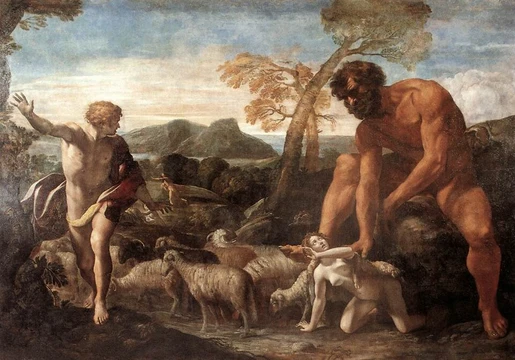
The Enchanted Doe
A tale of friendship, jealousy, and an ogre's trick.
Giambattista Basile's 1634 collection the Pentamerone contains the Italian fairy tale "The Enchanted Doe." Its story is driven by a magical fountain and myrtle plant that signal a friend's safety from afar.
Quick Facts
- Author
- Giambattista Basile
- Work
- Pentamerone
- Year
- 1634
- Origin
- Italian
Facts from the source article.
Synopsis
A king desperate for a child follows a pilgrim's advice: a young maiden prepares the heart of a sea dragon for the queen. Both women fall pregnant and give birth to identical boys. The queen's son is Fonzo; the maiden's son is Canneloro. The queen grows jealous of their closeness and tries to kill Canneloro, who survives and decides to leave. Fonzo begs for a token, so Canneloro leaves a fountain and myrtle plant that indicate his state. Canneloro wins a princess's hand but is trapped by an ogre disguised as a doe. Fonzo rescues him, and Canneloro reflects that "Unhappy is he who corrects himself at his own cost."
Story
A pilgrim told him that if the queen ate a sea-dragon's heart prepared by a young maiden, she would have a child. The king had this done, and the queen gave birth to a boy, as did the maiden at the same moment. The boys were identical; the queen's child was named Fonzo, the maiden's Canneloro. The queen grew jealous of Canneloro because Fonzo loved him better than her. One day, while Fonzo and Canneloro made bullets for hunting, Fonzo left. The queen found Canneloro alone and threw a hot bullet-mold at him, wounding him. Fonzo returned before she could strike again, and she left. Canneloro, hiding his wound, asked to leave. Fonzo tearfully agreed but insisted on a token. Canneloro stuck his dagger into the ground, creating a fountain that would show his state: clear for well, turbid for trouble, dry for dead. He then stuck his sword into the ground, growing a myrtle plant: green for well, withering for trouble, dead for death. The two embraced, and Canneloro departed.
More in Fairy Tales About Ogres
Spotted an error? Know more?
Reader corrections go straight into our review queue. Suggest an edit · How this site is sourced