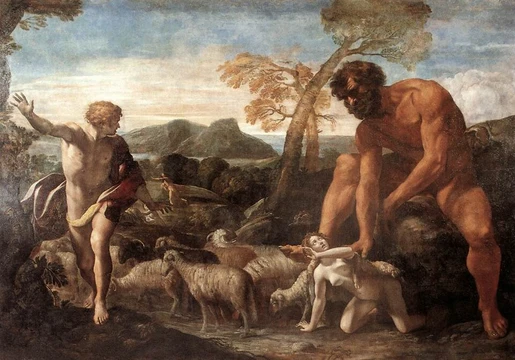
Corvetto (fairy tale)
A loyal servant steals an ogre's treasures and palace.
Corvetto is an Italian literary fairy tale by Giambattista Basile, published in his 1634 work the Pentamerone. It is classified as Aarne-Thompson type 531, with other tales of this type including The Firebird and Princess Vasilisa and King Fortunatus's Golden Wig. A literary variant is Madame d'Aulnoy's The Story of Pretty Goldilocks.
Quick Facts
- Author
- Giambattista Basile
- Work
- Pentamerone
- Year
- 1634
- Aarne-thompson type
- 531
- Literary variant
- The Story of Pretty Goldilocks by Madame d'Aulnoy
Facts from the source article.
Synopsis
Corvetto was a loyal servant who earned his king's favor, making his fellow servants jealous. Their attempts to slander him failed. When an ogre nearby owned a splendid horse, the servants convinced the king to order Corvetto to steal it. Corvetto leaped onto the horse, which cried out to its master. The ogre gave chase with a pack of wild animals, including a Werewolf, but Corvetto escaped on the horse. The king was delighted. Next, the servants urged the king to send Corvetto for the ogre's tapestry. Corvetto hid under the ogres' bed, and during the night stole both the tapestries and the counterpane, sparking an argument between the ogre and ogress. He dropped the items from a window and fled back to the king. Finally, the servants persuaded the king to send Corvetto for the ogres' entire palace. Corvetto approached the ogress, offering to help chop wood. Instead, he used the axe on her neck. He then dug a deep pit at the doorway, covered it, and tricked the ogre and his friends into falling in. He stoned them to death and gave the palace to the king.
Analysis
Folklorists have assigned the tale of Corvetto several different type numbers. In the Aarne-Thompson-Uther Index, it is type ATU 328, "The Boy Steals the Ogre’s Treasure (Corvetto)." Hans-Jörg Uther considered Corvetto a literary example of this type. Nancy Canepa placed it under both type 328 and type 1525, "The Master Thief," while D. L. Ashliman classified it as type 531 and again as type 1525. Renato Aprile, working with the Italian Catalogue of Tales of Magic, calls it Italian type AT 328, Tridicino: thirteen brothers hide in an ogre’s home, then flee; the elder brothers falsely claim their younger sibling can go back to steal the ogre’s possessions and finally capture the ogre himself. In some versions the hero is unrelated to his rivals, and in others a magic horse aids him, shifting the story toward type AT 531. Aprile notes this variant appears in a set of typically Sicilian tales.
More in Fairy Tales About Ogres
Spotted an error? Know more?
Reader corrections go straight into our review queue. Suggest an edit · How this site is sourced