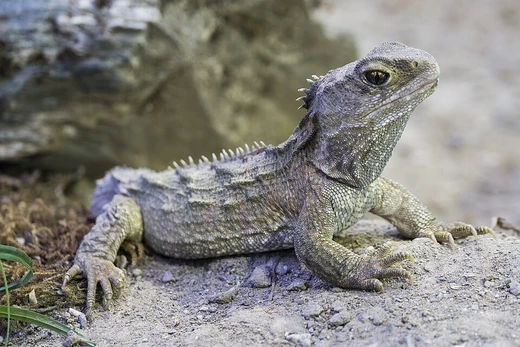
New Mexico whiptail
The all-female lizard of New Mexico, Arizona, and Texas.
The New Mexico whiptail (Aspidoscelis neomexicanus) is a female-only species of lizard found in New Mexico, Arizona, and Texas (Trans-Pecos region) in the southwestern United States, and in Chihuahua in northern Mexico. It is the official state reptile of New Mexico. It is one of many lizard species known to be parthenogenetic. Individuals of the species can be created either through the hybridization of the little striped whiptail (A. inornatus) and the western whiptail (A. tigris), or through the parthenogenetic reproduction of an adult New Mexico whiptail.
- Scientific name
- Aspidoscelis neomexicanus
- Length
- 6.5 to 9.1 inches (16.5 to 23 cm)
- Color
- Brown or black with seven pale yellow stripes; white or pale blue underside; throat typically pale blue or whitish
- Habitat
- Semi-arid areas including grassland, rocky areas, shrubland, mountainside woodlands
- Diet
- Insects and spiders (termites, beetles, grasshoppers, ants, caterpillars, moths, butterflies)
- Reproduction
- Parthenogenesis; up to four unfertilized eggs laid in mid-summer, hatching after about eight weeks
- Range
- New Mexico, Arizona, Texas (Trans-Pecos) (USA); Chihuahua (Mexico)
Quick Facts
- Genus
- Aspidoscelis
- Species
- neomexicanus
Facts from the source article.
Lore & Background
The New Mexico whiptail is a crossbreed of a western whiptail, which lives in the desert, and the little striped whiptail, which favors grasslands. The whiptail engages in mating behavior with other females of its own species, giving rise to the nickname 'lesbian lizards'. A common theory is that this behavior stimulates ovulation, as those that do not 'mate' do not lay eggs.
Reader's Guide
The New Mexico whiptail grows from 16.5 to 23 cm in length, and is typically overall brown or black in color with seven pale yellow stripes from head to tail. Light colored spots often occur between the stripes. They have a white or pale blue underside, with a blue or blue-green colored throat. They are slender bodied, with a long tail that is more commonly blue-green in their infant stage, melding into the same spotted brown and yellow color as they age. Like most other whiptail lizards, the New Mexico whiptail is diurnal and insectivorous, feeding primarily on spiders and insects such as termites, beetles, grasshoppers, ants, caterpillars, moths and butterflies. They are wary, energetic, and fast moving, darting for cover if approached. They are found in a wide variety of semi-arid habitats, including grassland, rocky areas, shrubland, or mountainside woodlands. Reproduction occurs through parthenogenesis, with up to four unfertilized eggs being laid in mid summer, and hatching approximately eight weeks later. This species is active during the day, often retreating from the heat from noon to mid-afternoon during periods of high temperatures. They hibernate but are active from mid-March through mid-October.
Did You Know?
- The New Mexico whiptail is a female-only species that reproduces through parthenogenesis.
- It is the official state reptile of New Mexico.
- The species can be created through hybridization of the little striped whiptail and the western whiptail.
- It is sometimes called the 'lesbian lizard' and has been considered a gay icon in online LGBTQ+ spaces.
More in Extant Reptiles & Amphibians 1-22
Spotted an error? Know more?
This is a living reference — every entry is fact-audited, and reader corrections feed straight into our audit queue. Suggest an edit · See this site's audit record