Northern England
The North of England: a land of historic counties, industrial heritage, and debated borders.
Last updated
Where it is
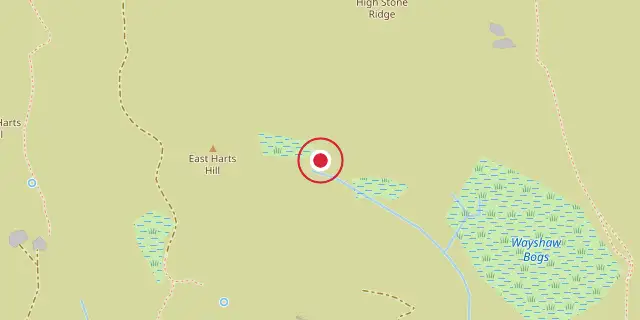
Coordinates: 54°00′00″N 2°00′00″W (54.0000, -2.0000) · Open in OpenStreetMap
Coordinates and connected clubs: the infobox of Wikipedia: Northern England (CC BY-SA 4.0). Map: drawn by Codexery from OpenStreetMap tiles.
Northern England is the northern part of England, corresponding largely to the historic counties of Cheshire, Cumberland, Durham, Lancashire, Northumberland, Westmorland and Yorkshire.[1] It is officially grouped into three statistical regions: the North East, the North West, and Yorkshire and the Humber, with a combined 2021 census population of 15.5 million.[1] The Pennines, an upland range called "the backbone of England", run through most of the area.[2]
Geography and history
The geography of the North was heavily shaped by Pleistocene ice sheets, which carved valleys and deposited fluvio-glacial material in lowlands like the Cheshire and Solway Plains.[3] Five of England's ten national parks are partly or entirely in the North: the Peak District, Lake District, North York Moors, Yorkshire Dales, and Northumberland National Park.[4] During the Industrial Revolution, Northern England had plentiful coal and water power, and cheap labour from poor upland agriculture.[5][6] Deindustrialisation accelerated under Margaret Thatcher's government, which chose not to encourage growth in the North if it risked growth in the South.[7][8]
The Roman province of Britannia Inferior was established in the North, administered from Eboracum (present-day York), with Hadrian's Wall marking the empire's furthest northern boundary.[9] Northern England's reliance on a narrow industrial base became apparent during the Great Depression, when decreased global trade reduced the need for ships, steel, coal, and textiles.[10]
What the cited sources add
Bailoni notes that during the Thatcher years, the six metropolitan county councils of northern England were abolished, transferring powers to city councils or unelected bodies.[8] The same source states that economic and political reforms led to a "total disconnect" between the Prime Minister and old Labour-dominated industrial areas in the North.[8] Redcar and Cleveland recorded the greatest percentage of inhabitants in England whose main language was English, at 99.3%.[11] Muslim communities made up 6.2% of the population in Yorkshire and the Humber and 5.1% in the North West.[12][13]
Geography and History
Following the Norman Conquest, William the Conqueror's Harrying of the North during 1069–1070 involved the systematic devastation of settlements and agricultural land across large portions of Yorkshire, northern Lancashire, and County Durham.[14][15]
References
- Wikipedia, "Northern England" (CC BY-SA 4.0), which cites: "Publications catalogue", British History Online; "The problem of "county confusion"—and how to resolve it", British County Flags; Park, "Estimates of the population for the UK, England, Wales, Scotland and Northern Ireland", Office for National Statistics, 21 December 2022 (original not read by us) en.wikipedia.org
- Wikipedia, "Northern England" (CC BY-SA 4.0), which cites: "A Nature Conservation Review", Derek Ratcliffe, 26 January 2012 (original not read by us) en.wikipedia.org
- Wikipedia, "Northern England" (CC BY-SA 4.0), which cites: Usai, "Geoarchaeology in Northern England I. The Landscape and Geography of Northern England", 2005; Usai, "Geoarchaeology in Northern England I. The Landscape and Geography of Northern England", 2005 (original not read by us) en.wikipedia.org
- Wikipedia, "Northern England" (CC BY-SA 4.0), which cites: "National Parks", Natural England; Brobby, "9 of Northern England's most awe-inspiring national parks and AONBs", Visit England, 14 October 2015; "Facts and Figures", Lake District National Park, 24 May 2005; Harrabin, "Plan to grow new Northern Forest", BBC News, 7 January 2018 (original not read by us) en.wikipedia.org
- Wikipedia, "Northern England" (CC BY-SA 4.0), which cites: Caunce, "An economic history of the north of England. Part 3: The industrial revolution arrives", CityMetric, 9 July 2015; Deane, "The First Industrial Revolution", Cambridge University Press, 1979, p. 93–95 (we also read that source) en.wikipedia.org
- Open Library record, ISBN 9780521296090 ("The first industrial revolution"). CC0 (metadata); book content not read. openlibrary.org
- Wikipedia, "Northern England" (CC BY-SA 4.0), which cites: Bailoni, "The effects of Thatcherism in the urban North of England", Metropolitics, 2 April 2014; Coman, "Margaret Thatcher: 20 ways that she changed Britain", The Guardian, 14 April 2013 (we also read that source) en.wikipedia.org
- Bailoni, "The effects of Thatcherism in the urban North of England", Metropolitics, 2 April 2014. facts only, no text reused. metropolitiques.eu
- Wikipedia, "Northern England" (CC BY-SA 4.0), which cites: Tacitus, Annals 12:36; Shotter, "Roman Britain", Routledge, 2012; "The Cambridge Ancient History", Cambridge University Press, 1970, p. 706; Wilkes, "The Cambridge Ancient History: Volume 12, The Crisis of Empire, AD 193–337", Cambridge University Press, 2005, p. 253–254; Perry, "Philip Perry's Sketch of the Ancient British History: A Critical Edition", Cambridge Scholars, 2009, p. 8 (original not read by us) en.wikipedia.org
- Wikipedia, "Northern England" (CC BY-SA 4.0), which cites: Wheeler, "The Economics of the Great Depression", W.E. Upjohn Institute for Employment Research, 1998, p. 31; Martin, "Regional Development in the 1990s: The British Isles in Transition", Routledge, 2013, p. 270 (original not read by us) en.wikipedia.org
- "Language in England and Wales: 2011", Office for National Statistics, 4 March 2013. facts only, no text reused. ons.gov.uk
- "Religion in England and Wales 2011", Office for National Statistics, 11 December 2012. facts only, no text reused. ons.gov.uk
- Wikipedia, "Northern England" (CC BY-SA 4.0), which cites: "Religion in England and Wales 2011", Office for National Statistics, 11 December 2012 (we also read that source) en.wikipedia.org
- Wikipedia, "Northern England" (CC BY-SA 4.0), which cites: Pulsiano, "Medieval Scandinavia: An Encyclopedia", Taylor & Francis, 1993, p. 267 (original not read by us) en.wikipedia.org
- Wikipedia, "Northern England" (CC BY-SA 4.0), which cites: Aitcheson, "The Harrying of the North", History Today, 12 October 2016; Roberts, "Rural settlement in Britain", Dawson, 1977 (original not read by us) en.wikipedia.org
Each numbered sentence above was checked against the source it cites before publication. Sentences citing Wikipedia adapt text from the English Wikipedia article Northern England (contributors), used under CC BY-SA 4.0; this entry is available under the same licence. Other sources were used for facts only; no text or images are copied from them.
More in European Regions
Sources
Compiled from Wikipedia and the sources listed below. Text from Wikipedia is available under CC BY-SA 4.0; this entry is adapted from it.
- Wikipedia: Northern England (CC BY-SA 4.0).
- Word definitions: the , each quoted from its Wikipedia article.
Spotted an error? Know more?
Reader corrections go straight into our review queue. Suggest an edit · How this site is sourced