Kulshedra
Albanian multi-headed dragon of storms and chaos.
The kulshedra (also kuçedra) is a multi-headed female serpentine dragon in Albanian mythology, embodying darkness and evil as the counterpart to the divine hero drangue. She is associated with water, storms, fire, and the chthonic realm, and is believed to cause droughts, floods, earthquakes, and other natural disasters. Her battles with drangue, a semi-human winged protector, are said to produce thunderstorms and other violent weather.
Quick Facts
- Also known as
- kuçedra, bolla
- Type
- multi-headed female serpentine dragon
- Associated elements
- water
- storm
- fire
- chthonic
- Opposing force
- drangue
- Number of heads
- seven to twelve
- Notable slayers
- drangue
- Daughter of the Moon and the Sun
- Zjermi
- Mythological role
- archetype of darkness and evil
Facts from the source article.
Did You Know?
- The term bolla derives from Proto-Albanian bālwā and may also be of Pre-Indo-European origins alongside Ancient Greek πελώριον.
- Kulshedra derives from the Latin chersydrus, from Greek χέρσυδρος, roughly meaning 'snake'.
- On the Greek island Poros, once inhabited by a majority of Arvanites, the term Bullar is still used to describe water snakes.
Physical appearance and attributes
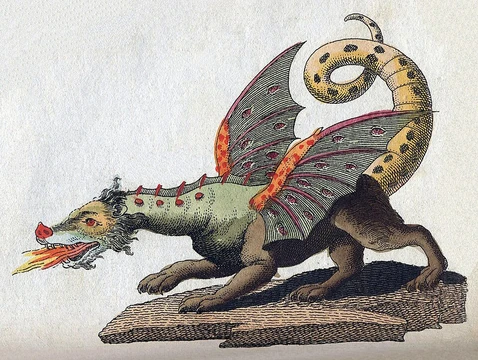
The kulshedra is a female dragon, often a multi-headed serpent with drooping breasts that drag on the ground, which is why some German writers have called her a hag. She has wooly red hair, a long tail, and between seven and twelve heads, and she breathes fire. Her milk and urine are both toxic. She can take human female form, as seen in Dukagjini, Kosovo, or appear as a female lizard, turtle, frog, or salamander. In southern Albanian belief, she is a giant serpent encircling the world; if her tail ever touched her mouth, she would destroy everything. In northern belief, she can seize the sun and moon. To scare her off, Albanian men would fire guns into the sky or make loud noises with metal objects, even church bells. The male version, Kulshedër, is a devil. A snake that lives long enough first becomes a bolla, then the monstrous kulshedra. The bolla keeps its eyes shut until Saint George’s Day, when it looks at the world and devours any human who comes near; folklore says Saint George cursed it to be blind except on his feast day. The kulshedra is also a storm demon, causing droughts, floods, tempests, and water shortages. To calm her, a human sacrifice is sometimes needed, as in the tale of the hero Qerosi.
Mythology
Albanian beliefs are organized around the dualistic struggle between good and evil, light and darkness, which cyclically produces cosmic renewal. The most famous representation of this struggle is the constant battle between drangue and kulshedra, a conflict that symbolizes the cyclic return to the watery and chthonian world of death, accomplishing cosmic renewal. This legendary battle of a heroic deity associated with thunder and weather who slays a huge multi-headed serpent associated with water, storms, and drought is a common motif of Indo-European mythology, possibly symbolizing the Chaoskampf, a clash between order and chaos. In Albanian tradition, the clash between drangue and kulshedra is also seen as a mythological representation of the cult of the Sun (Dielli) and the Moon (Hëna). The victory of celestial divine heroes—such as drangue, the Daughter of the Moon and the Sun, or Zjermi (born with the Sun on his forehead)—over the kulshedra symbolizes the supremacy of the sky deity over the underworld.
Folktales and other stories with Bolla/Kulshedra
Saint George and Saint Elias both have stories in which they fight and defeat a bolla or kulshedra. Saint Elias is identified in some regions with the Dragùa and is a weather god who provides protection against storms and fire. Folktales involving the slaying of a kulshedra include 'The Daughter of the Moon and the Sun,' where she is slain by the Daughter of the Moon and the Sun using a point of light; 'The Twins' (Binoshët), where Zjerma slays the kulshedra with silver swords; and 'Shamakadija,' where the titular Shamakadija is the son of a kuçedra and marries a human princess.
More in European Dragons
Spotted an error? Know more?
Reader corrections go straight into our review queue. Suggest an edit · How this site is sourced