Nitrososphaeria
Ammonia-oxidizing archaea of the class Nitrososphaeria, key players in biogeochemical cycles and paleoclimate reconstruction.
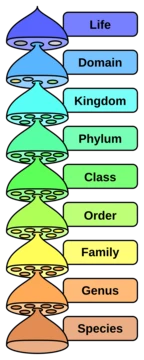
Nitrososphaeria (previously phylum Nitrososphaerota or Thaumarchaeota) is a class of Archaea under the phylum Thermoproteota. The first species, Cenarchaeum symbiosum, was discovered in 1996 and was found to have a genome distinct from other known archaea at the time; hence, it was classified as a separate phylum. A decade later, three ammonia-oxidizing archaea were described, Nitrosopumilus maritimus, Nitrososphaera viennensis, and Nitrososphaera gargensis. Genome analysis in 2010 revealed that C. symbiosum and the three archaea are genetically of the same group. Taxonomic reassessment in 2021 merged the archaeal group to the phylum Thermoproteota. Most species of Nitrososphaeria are chemolithoautotrophic ammonia-oxidizers and may play important roles in biogeochemical cycles, such as the nitrogen cycle and the carbon cycle. Metagenomic sequencing indicates that they constitute ~1% of the sea surface metagenome across many sites. The lipid crenarchaeol has been found only in Nitrososphaeria, making it a potential biomarker for the class.
- field
- Archaeology / Microbiology
- known_for
- Ammonia-oxidizing archaea; source of crenarchaeol biomarker; TEX86 paleotemperature proxy
- first_species_discovered
- Cenarchaeum symbiosum (1996)
- taxonomic_reclassification
- Demoted from phylum to class in 2021 under Thermoproteota
Lore & Background
In 1996, biologists at the University of California discovered archaea present in a sponge (Axinella sp.) which they had collected from the offshore of Santa Barbara. Genetic analysis showed that the archaea was different but related to Crenarchaeota, the major group of archaea known at the time. As a distinct species, it was named Cenarchaeum symbiosum. Further studies based on ribosomal RNA genes and DNA polymerase began to indicate that the archaea was not closely related to Crenarchaeota. In 2005, a team of German and American biologists at the University of Washington discovered ammonia-oxidizing archaea from various water sources around Seattle and gave the name Nitrosopumilus maritimus. It was classified under the phylum Crenarchaeota. Another related ammonia-oxidizing archaea, Nitrososphaera gargensis, was discovered in 2008 from Siberian Garga hot spring. By then, C. symbiosum was established as capable of oxidizing ammonia. Genome sequence showed that the group differ significantly from other members of the hyperthermophilic Crenarchaeota. Two phyla of archaea were recognized: Crenarchaeota and Euryarchaeota. Since the genetic difference of the ammonia-oxidizing archaea was huge from member of the two existing phyla, a third phylum Thaumarchaeota was introduced in 2008. The classification was based on phylogenetic data, such as the sequences of these organisms' ribosomal RNA genes, and the presence of a form of type I topoisomerase that was previously thought to be unique to the eukaryotes. In 2014, Nitrososphaera viennensis was discovered from a garden soil in Vienna, Austria, for which Michaela Stieglmeier and her colleagues created the taxonomic hierarchy, family Nitrososphaeraceae, order Nitrososphaerales and class Nitrososphaeria. International Code of Nomenclature of Prokaryotes (ICNP, Prokaryotic Code), Aharon Oren and George M. Garrity formalized in 2021 the phylum as Nitrososphaerota for the ammonia-oxidizing archaea, since Stieglmeier's classification was the first valid publication. At the same time, a team of Australian scientists led by Christian Rinke and Philip Hugenholtz published a new classification on archaea, in which they merged Crenarchaeota and Nitrososphaerota (in fact the entire TACK superphylum) into the phylum Thermoproteota, thereby demoting the phylum to the class level.
Reader's Guide
The currently accepted taxonomy is based on the List of Prokaryotic names with Standing in Nomenclature (LPSN) and National Center for Biotechnology Information (NCBI). Class Nitrososphaeria Stieglmeier et al. 2014 [Conexivisphaeria Kato et al. 2020] includes orders such as Geothermarchaeales, PSMU01, Conexivisphaerales, Methylarchaeales, Nitrosocaldales, Nitrosomirales, Nitrososphaerales, and Nitrosopumilales, each with associated families and genera (e.g., Nitrososphaera, Nitrosopumilus, Cenarchaeum). Metabolism: Nitrososphaeria are important ammonia oxidizers in aquatic and terrestrial environments, and are the first archaea identified as being involved in nitrification. They are capable of oxidizing ammonia at much lower substrate concentrations than ammonia-oxidizing bacteria, and so probably dominate in oligotrophic conditions. Their ammonia oxidation pathway requires less oxygen than that of ammonia-oxidizing bacteria, so they do better in environments with low oxygen concentrations like sediments and hot springs. Ammonia-oxidizing Nitrososphaeria can be identified metagenomically by the presence of archaeal ammonia monooxygenase (amoA) genes, which indicate that they are overall more dominant than ammonia oxidizing bacteria. In addition to ammonia, at least one Nitrososphaeria strain has been shown to be able to use urea as a substrate for nitrification. This would allow for competition with phytoplankton that also grow on urea. One study of microbes from wastewater treatment plants found that not all Nitrososphaeria that express amoA genes are active ammonia oxidizers. These Nitrososphaeria may be capable of oxidizing methane instead of ammonia, or they may be heterotrophic, indicating a potential for a diversity of metabolic lifestyles within the phylum. Marine Nitrososphaeria have also been shown to produce nitrous oxide, which as a greenhouse gas has implications for climate change. Isotopic analysis indicates that most nitrous oxide flux to the atmosphere from the ocean, which provides around 30% of the natural flux, may be due to the metabolic activities of archaea. Many members of the phylum assimilate carbon by fixing HCO3−. This is done using a hydroxypropionate/hydroxybutyrate cycle similar to the Thermoproteota but which appears to have evolved independently. All Nitrososphaeria that have been identified by metagenomics thus far encode thi
Did You Know?
- The first species of Nitrososphaeria, Cenarchaeum symbiosum, was discovered in 1996 from a sponge collected off Santa Barbara.
- Nitrososphaeria-derived GDGTs from marine sediments can be used to reconstruct past temperatures via the TEX86 paleotemperature proxy.
- The lipid crenarchaeol has been found only in Nitrososphaeria, making it a potential biomarker for the class.
- Nitrososphaeria constitute about 1% of the sea surface metagenome across many sites.
More in Eukaryote Groups And Taxonomy 1-24
Spotted an error? Know more?
This is a living reference — every entry is fact-audited, and reader corrections feed straight into our audit queue. Suggest an edit · See this site's audit record