Chromista
A controversial kingdom of diverse eukaryotes with chlorophyll c-containing plastids.
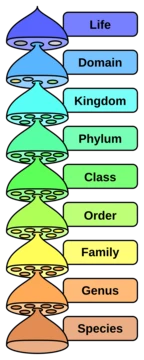
Chromista is a proposed but controversial biological kingdom, refined from the Chromalveolata, consisting of single-celled and multicellular eukaryotic species that share similar features in their photosynthetic organelles (plastids). It includes all eukaryotes whose plastids contain chlorophyll c and are surrounded by four membranes. If the ancestor already possessed chloroplasts derived by endosymbiosis from red algae, all non-photosynthetic Chromista have secondarily lost the ability to photosynthesise. Its members might have arisen independently as separate evolutionary groups from the last eukaryotic common ancestor.
- proposed_by
- Thomas Cavalier-Smith
- year_proposed
- 1981
- field
- Biology
- nationality
- British
- known_for
- Controversial kingdom of eukaryotes with chlorophyll c plastids
- key_groups
- Stramenopiles, Haptophytes, Cryptophytes
Lore & Background
Chromista as a taxon was created by the British biologist Thomas Cavalier-Smith in 1981 to distinguish the stramenopiles, haptophytes, and cryptophytes. According to Cavalier-Smith, the kingdom originally consisted mostly of photosynthetic eukaryotes (algae), but he later brought many heterotrophs (protozoa) into the proposed group. As of 2022, the kingdom was nearly as diverse as the kingdoms Plantae and Animalia, consisting of nine phyla. Notable members include marine algae, potato blight, dinoflagellates, Paramecium, the brain parasite Toxoplasma, and the malarial parasite Plasmodium. However, Cavalier-Smith's hypothesis of chromist monophyly has been rejected by many other researchers, who consider it more likely that some chromists acquired their plastids by incorporating another chromist instead of inheriting them from a common ancestor. This is thought to have occurred repeatedly, so that the red plastids spread from one group to another. The plastids, far from characterising their hosts as belonging to a single clade, thus have a different history from their disparate hosts. They appear to have originated in the Rhodophytina, and to have been transmitted to the Cryptophytina and from them to both the Ochrophyta and the Haptophyta, and then from the latter to the Myzozoa.
Reader's Guide
Members of Chromista are single-celled and multicellular eukaryotes having basically either or both features: plastid(s) that contain chlorophyll c and lie within an extra (periplastid) membrane in the lumen of the rough endoplasmic reticulum (typically within the perinuclear cisterna); cilia with tripartite or bipartite rigid tubular hairs. The kingdom includes diverse organisms from algae to malarial parasites (Plasmodium). Molecular evidence indicates that the plastids in chromists were derived from red algae through secondary symbiogenesis in a single event. In contrast, plants acquired their plastids from cyanobacteria through primary symbiogenesis. These plastids are now enclosed in two extra cell membranes, making a four-membrane envelope, as a result of which they acquired many other membrane proteins for transporting molecules in and out of the organelles. The diversity of chromists is hypothesised to have arisen from degeneration, loss or replacement of the plastids in some lineages. Additional symbiogenesis of green algae has provided genes retained in some members (such as heterokonts), and bacterial chlorophyll (indicated by the presence of ribosomal protein L36 gene, rpl36) in haptophytes and cryptophytes.
Did You Know?
- Chromista was first introduced by Cavalier-Smith in 1981.
- The name Chromista is derived from the Greek 'chroma' meaning color, referring to the chlorophyll c in their plastids.
- Cavalier-Smith's 2018 revision classified all chromists into 8 phyla.
- The alternative to monophyly is serial endosymbiosis, meaning chromists acquired their plastids from each other rather than from a single common ancestor.
More in Eukaryote Groups And Taxonomy 1-24
Spotted an error? Know more?
This is a living reference — every entry is fact-audited, and reader corrections feed straight into our audit queue. Suggest an edit · See this site's audit record