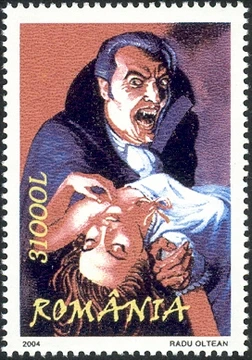
La Bête (film)
A 1975 French erotic horror cult film.

Wikimedia Commons · Public domain
La Bête (English: The Beast) is a 1975 French erotic horror film written, edited, and directed by Walerian Borowczyk. Noted for its explicit sexual content, including teratophilia (attraction to monsters), it has become a cult film. The film is a loose adaptation of the novella Lokis by Prosper Mérimée, originally conceived in 1972 as a separate film, but later rendered as a story in Immoral Tales (1974) before its footage became the dream sequence of The Beast.
- Release year
- 1975
- Country
- France
- Director
- Walerian Borowczyk
- Genre
- Erotic horror
- Notable for
- Explicit sexual content, teratophilia, cult film status
Lore & Background
The film premiered at the 1975 Cannes Film Festival and was released theatrically in West Germany on 6 February 1976. The plot follows Lucy Broadhurst, who inherits her father's estate on the condition she marries Mathurin, the deformed nephew of Marquis Pierre de l'Esperance. As she arrives at the crumbling farmhouse, she learns of a 200-year-old story about a beast that attacked a woman named Romilda, and her dreams become increasingly erotic and monstrous.
Reader's Guide
The Beast did well in Europe but faced controversy in France and the U.S. due to its erotic nature, with many feeling the sex scenes went over the top and some alleging connections to bestiality, leading to its withdrawal from film for several years. In the UK, the BBFC refused to classify a heavily cut version for general cinema release, and the same cut narrowly avoided prosecution under the Obscene Publications Act when shown with Greater London Council approval at the Prince Charles Cinema in London in September 1978. On Rotten Tomatoes, 68% of 22 critics' reviews are positive, with an average rating of 5.8/10. Nowadays, it is considered a classic for monster erotica culture and one of the most memorable monster porn movies, inspiring films like Possession (1981) and The Untamed (2016).
Did You Know?
- The film was originally conceived in 1972 as a separate adaptation of Prosper Mérimée's novella Lokis.
- The footage from the Lokis story in Immoral Tales (1974) became the dream sequence of The Beast.
- The film includes a comic dream sequence where a beast with a large visible erection chases and sexually assaults the protagonist.
- In the UK, a heavily cut version of the film narrowly avoided prosecution under the Obscene Publications Act in 1978.
From Novella to Nightmare: The Film's Unusual Genesis
La Bête traces its creative roots to a 1972 conception by Walerian Borowczyk, who initially envisioned a standalone feature adapting Prosper Mérimée's novella Lokis. However, the project's trajectory shifted when Borowczyk instead incorporated the Lokis material as one story within his 1974 anthology Immoral Tales, a film originally structured around six separate narratives. When that anthology was subsequently remastered and trimmed down to four stories, the Lokis footage did not simply vanish. Instead, Borowczyk repurposed it as the elaborate dream sequence that forms the emotional and erotic core of The Beast, released in 1975. This layered production history means the film carries the DNA of two different projects, with Borowczyk serving as writer, editor, and director throughout. The result is a French erotic horror picture whose very structure—woven from repurposed material—mirrors its narrative preoccupation with inherited desires and ancestral secrets buried beneath the surface of respectable society.
A Dream Unfolds: Narrative and the Beast Revealed
The plot of The Beast pivots on a conditional inheritance: Lucy Broadhurst must wed the deformed, unbaptized Mathurin within six months to claim her late father's estate. What begins as a tense domestic comedy—Pierre de l'Esperance performing his own son's baptism to hide the boy's true nature—escalates into a surreal erotic nightmare. After Lucy discovers a book chronicling Romilda's ancient battle with a forest beast and stumbles upon drawings of bestiality, her anticipation transforms into arousal. The film's centerpiece is a comic yet explicit dream sequence in which Lucy, as Romilda, is pursued by a black hairy creature through a wood; she loses her garments, hangs from a branch, and is sexually assaulted. The beast ultimately dies of exhaustion. Upon waking, Lucy finds Mathurin dead on his room floor. Stripping his clothes reveals a clawed hand hidden beneath a plaster cast, a coat of thick black fur, and a tail—confirming he is a descendant of Romilda and the beast. The family flees in terror as the Cardinal arrives.
Censorship Battlegrounds: A Controversial Release
La Bête first screened on 6 January 1975 at the Avoriaz Fantastic Film Festival, yet its theatrical journey was anything but smooth. While the film found solid audiences across Europe, its explicit erotic content—particularly the teratophilic dream sequences—ignited fierce controversy in both France and the United States. Critics and censors alike felt the sex scenes crossed acceptable boundaries, and accusations of bestiality content led to the picture being withdrawn from circulation for several years. In the United Kingdom, the situation grew particularly volatile. The BBFC flatly refused to grant a classification to even a heavily edited version intended for general cinema release. In September 1978, a cut print was shown at the independently operated Prince Charles Cinema in London under Greater London Council approval, only to narrowly escape prosecution under the Obscene Publications Act when the Director of Public Prosecutions reviewed the case. The film's German theatrical release did not arrive until 6 February 1981, a full six years after its festival debut.
Cult Status and the Monster Erotica Canon
Despite its troubled theatrical life, La Bête has since cemented its reputation as a landmark of what fans call monster erotica. The film is widely regarded as one of the most memorable and most polemical entries in the genre, and the teratophile community credits it with opening doors that had previously been firmly shut. Its influence extends well beyond its own release: filmmakers of later explicit monster-encounter pictures, including Possession (1981) and The Untamed (2016), have cited it as a direct inspiration for their own depictions of sexual encounters with creatures, aliens, and mythological beings. On Rotten Tomatoes, 68 percent of 22 critic reviews are positive, yielding an average score of 5.8 out of 10—a modest figure that nonetheless reflects the film's polarizing nature. What began as a controversial 1975 French production has thus evolved into a cult classic, a reference point for an entire subgenre of horror-erotic cinema that continues to attract dedicated audiences decades after its initial release.
Gallery
Frequently Asked Questions
What is La Bête (1975)?
La Bête is a 1975 French erotic horror film that has earned a lasting cult following. It was written, directed, and edited by Walerian Borowczyk.
What is La Bête based on?
The story is a loose adaptation of Prosper Mérimée's novella *Lokis*. Borowczyk first shot the material in 1972 as a standalone project, then used it as a segment in his 1974 anthology *Immoral Tales* before reworking it into the dream sequence that anchors *La Bête*.
What makes La Bête controversial or notable?
The film is widely discussed for its explicit sexual content, especially its depiction of teratophilia, or attraction to monstrous, inhuman figures. That blend of graphic eroticism with horror imagery is what cemented its reputation as a cult title.
Who is behind the direction of La Bête?
Walerian Borowczyk served as writer, director, and editor on the project. The film was produced in France and released in 1975.
How does La Bête differ from its earlier appearance in Immoral Tales?
In *Immoral Tales* (1974) the same footage plays as one of several anthology stories. In *La Bête*, that material is reframed as a character's dream sequence within a larger narrative, giving it a new structural context and a standalone identity.
More in Erotic horror films 1-24
Spotted an error? Know more?
This is a living reference — every entry is fact-audited, and reader corrections feed straight into our audit queue. Suggest an edit · See this site's audit record