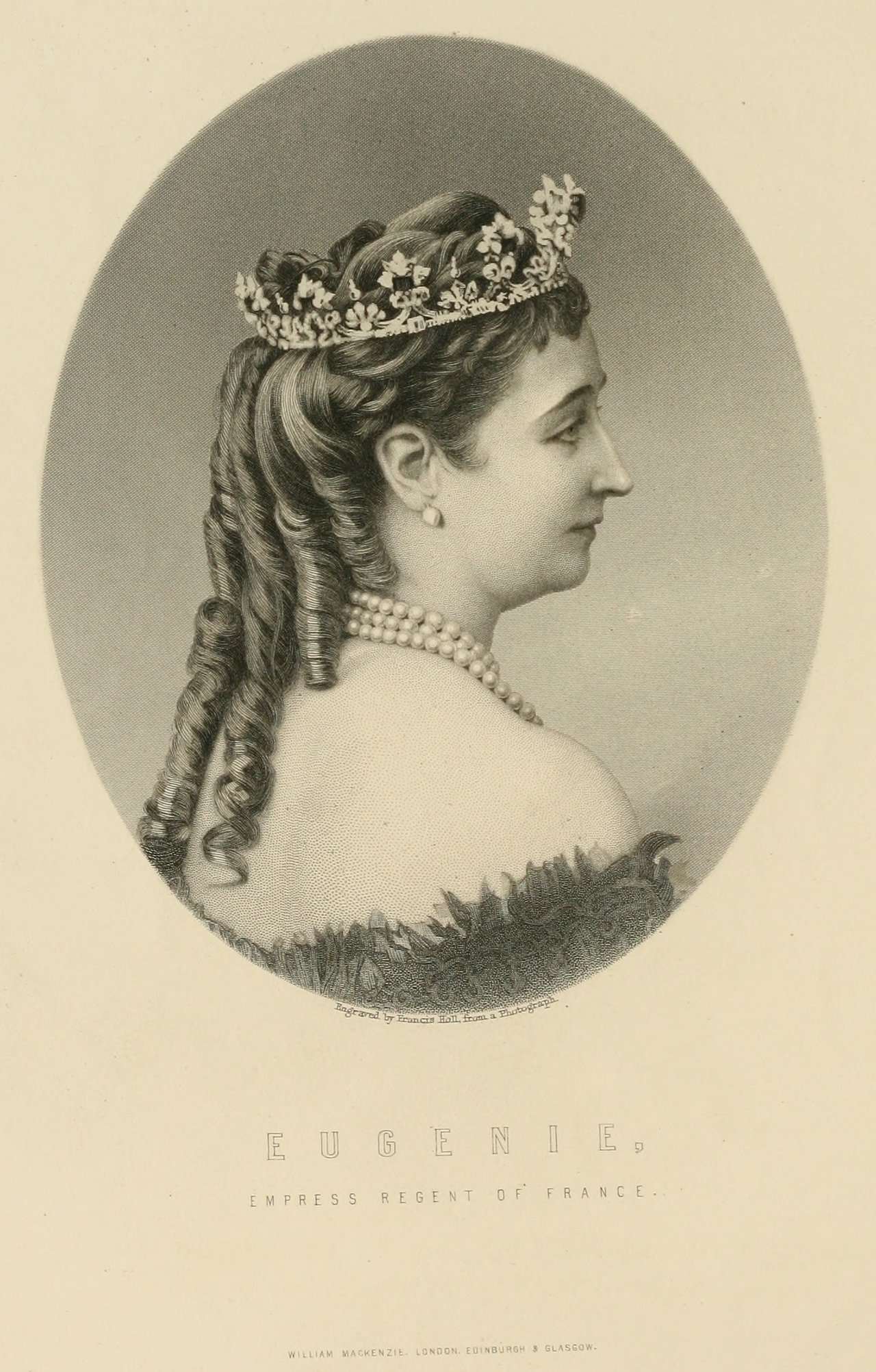
Eugenie... The Story of Her Journey into Perversion
A young woman's vacation becomes a series of sexual experiments.

William Holl · Public domain
Eugenie… The Story of Her Journey into Perversion is a 1969 Spanish-West German sexploitation horror film directed by Jesús Franco. It is a modern-day adaptation of the Marquis de Sade's book Philosophy in the Bedroom (1795), and follows a young woman who, after accepting an invitation to vacation on an island with a woman and her brother, instead finds herself at the center of a series of disturbing sexual experiments. The film is notable as the second of Franco's de Sade-themed films and is often confused with his later work Eugenie de Sade.
- country
- Spain, West Germany
Lore & Background
Eugenie… The Story of Her Journey into Perversion marked the second of Jesús Franco's de Sade-themed films after Marquis de Sade: Justine (1969). It has often been confused with his later and more explicit Eugenie de Sade (filmed in 1970, released 1973), an adaptation of de Sade's short story 'Eugénie de Franval' (1800) which starred Soledad Miranda, as both films are often referred to simply as Eugenie. To complicate matters further, the director went on to make a second adaptation of Philosophy in the Bedroom, entitled Eugenie (Historia de una perversión), in 1980.
The film opened in London on 26 December 1969 and was released theatrically in Los Angeles, California on 5 August 1970. Anchor Bay Entertainment released the film on DVD in the United Kingdom, and Blue Underground released it on DVD in North America in 2002. Blue Underground released the film again in a three-disc limited edition set in 2015, followed by a standalone Blu-ray release in 2020.
Reader's Guide
Eugenie… The Story of Her Journey into Perversion holds significance as a key work in Jesús Franco's filmography and as an early example of British sexploitation horror. Its adaptation of Marquis de Sade's Philosophy in the Bedroom places it within a tradition of controversial literary adaptations. The film's frequent confusion with Franco's later Eugenie de Sade highlights the challenges of cataloging his prolific output. Its release history, including multiple home media editions by Blue Underground, indicates a sustained cult interest. The film's legacy is tied to its place in Franco's de Sade-themed cycle and its role in the broader history of exploitation cinema.
Did You Know?
- Christopher Lee was cast from the start; George Sanders was never attached to this film.
- The film opened in London on 26 December 1969.
- It is often confused with Jesús Franco's later film Eugenie de Sade (filmed 1970, released 1973).
- Blue Underground released a three-disc limited edition set of the film in 2015.
Literary Roots & Narrative Framework
Eugenie… The Story of Her Journey into Perversion is a 1969 British sexploitation horror film that draws its narrative directly from the Marquis de Sade's 1795 philosophical treatise, Philosophy in the Bedroom. Director Jesús Franco transposed the eighteenth-century text into a modern setting, crafting a story centered on a teenage girl who accepts what appears to be an innocent invitation to spend a holiday on a private island with a woman and her brother. What unfolds, however, is far from leisurely: the young woman becomes the focal point of a sequence of deeply unsettling sexual experiments. The film operates at the intersection of horror and exploitation cinema, using the island setting as a closed, inescapable stage for the transgressive scenarios inherited from de Sade's original work. By grounding its plot in a well-known literary source, Franco positioned the picture within a broader tradition of adapting transgressive literature for the screen, while the sexploitation-horror hybrid genre gave the material a distinctly visceral, cinematic edge.
Cast & Production Context
The production of Eugenie… The Story of Her Journey into Perversion sits within a specific and recognizable cluster in Jesús Franco's filmography. It constituted the second of his de Sade-themed pictures, following closely on the heels of Marquis de Sade: Justine, also released in 1969. The cast brought together a mix of European and British talent: Maria Rohm and Marie Liljedahl head the female roles, while Jack Taylor and the legendary Christopher Lee anchor the male side of the ensemble. Lee's involvement is particularly noteworthy because he stepped in to replace George Sanders, who had been the original choice for the part. This late-stage casting swap gave the production a different gravitas and star power than it might otherwise have carried. The decision to pair a horror icon like Lee with the sexploitation-horror framework of the genre created an interesting tonal tension, lending the island's transgressive experiments a darker, more theatrical weight. Franco's decision to tackle de Sade twice in rapid succession also signals how central the author's transgressive philosophy was to his creative output during this period.
Theatrical & Home Media Journey
The film's path from cinema screen to living-room shelf spanned more than four decades, reflecting the shifting landscape of home-video distribution. Eugenie… The Story of Her Journey into Perversion first reached the public on 26 December 1969, opening in London theatres. Its North American theatrical window arrived considerably later, with a Los Angeles release on 5 August 1970. The home-media journey began with Anchor Bay Entertainment putting out a UK DVD edition. Blue Underground then brought the title to North American DVD collectors in 2002. The most significant home release arrived in 2015, when Blue Underground issued a three-disc limited-edition set pairing both a Blu-ray and a DVD of the film with a dedicated soundtrack CD, offering fans a comprehensive package. A standalone Blu-ray followed in 2020, ensuring the picture remained accessible on the highest-quality format available. This staggered, multi-decade release pattern is characteristic of cult and exploitation titles that find their truest audiences not in initial theatrical runs but through the dedicated collector market that has grown around niche cinema.
Enduring Confusion & Franco's De Sade Cycle
One of the most persistent challenges surrounding Eugenie… The Story of Her Journey into Perversion is the confusion it generates with other Franco de Sade adaptations. The 1969 film is frequently mistaken for Eugenie de Sade, a picture filmed in 1970 but not released until 1973, which adapts a different de Sade text—the 1800 short story "Eugénie de Franval"—and stars Soledad Miranda. Because both titles are commonly shortened to simply "Eugenie" in casual discussion and on streaming platforms, viewers and scholars alike regularly conflate the two. The situation is further complicated by Franco's own return to the source material: in 1980 he directed a second screen adaptation of Philosophy in the Bedroom, this time under the title Eugenie (Historia de una perversión). The result is a small but genuinely tangled web of de Sade adaptations that all orbit the same name, making it difficult for audiences to distinguish which "Eugenie" they are watching. This persistent misidentification has become almost a defining part of the film's cultural footprint.
Gallery




Frequently Asked Questions
What is Eugenie… The Story of Her Journey into Perversion?
It is a 1969 sexploitation horror film co-produced by Spain and West Germany, in which a young woman's island vacation spirals into a gauntlet of disturbing sexual experiments run by a woman and her brother. The project sits within the late-1960s European wave of erotic-horror cinema.
What literary work is Eugenie… The Story of Her Journey into Perversion based on?
The screenplay is a modern-day retelling of the Marquis de Sade's 1795 novel Philosophy in the Bedroom. Jesús Franco transposed the original aristocratic setting into a contemporary island-vacation scenario while preserving the core premise of consensual-seeming sexual experimentation.
Who directed Eugenie… The Story of Her Journey into Perversion and how does it fit in his filmography?
Jesús Franco directed the picture, and it is recognized as the second of his de Sade-themed features. Because of its title, it is routinely confused with his later film Eugenie de Sade, which has caused ongoing mix-ups among collectors and scholars.
How does Eugenie… The Story of Her Journey into Perversion end?
The narrative does not grant the protagonist a clean escape; she remains ensnared in the island's cycle of experiments through the final scenes. This unrelenting, non-redemptive close mirrors the bleak tone of the de Sade source material.
Why do fans and scholars consider Eugenie… The Story of Her Journey into Perversion significant?
It is a key example of how late-1960s European cinema blended erotic content with horror conventions, and it documents Franco's sustained engagement with de Sade's philosophy. Its frequent conflation with the later Eugenie de Sade also makes it a useful case study in how film titles shape reception and canon.
More in Erotic horror films 1-24
Spotted an error? Know more?
This is a living reference — every entry is fact-audited, and reader corrections feed straight into our audit queue. Suggest an edit · See this site's audit record