
Abdication of Pedro I of Brazil
The abdication of Emperor Pedro I of Brazil on 7 April 1831 ended the First Reign and began the regency period.
Last updated

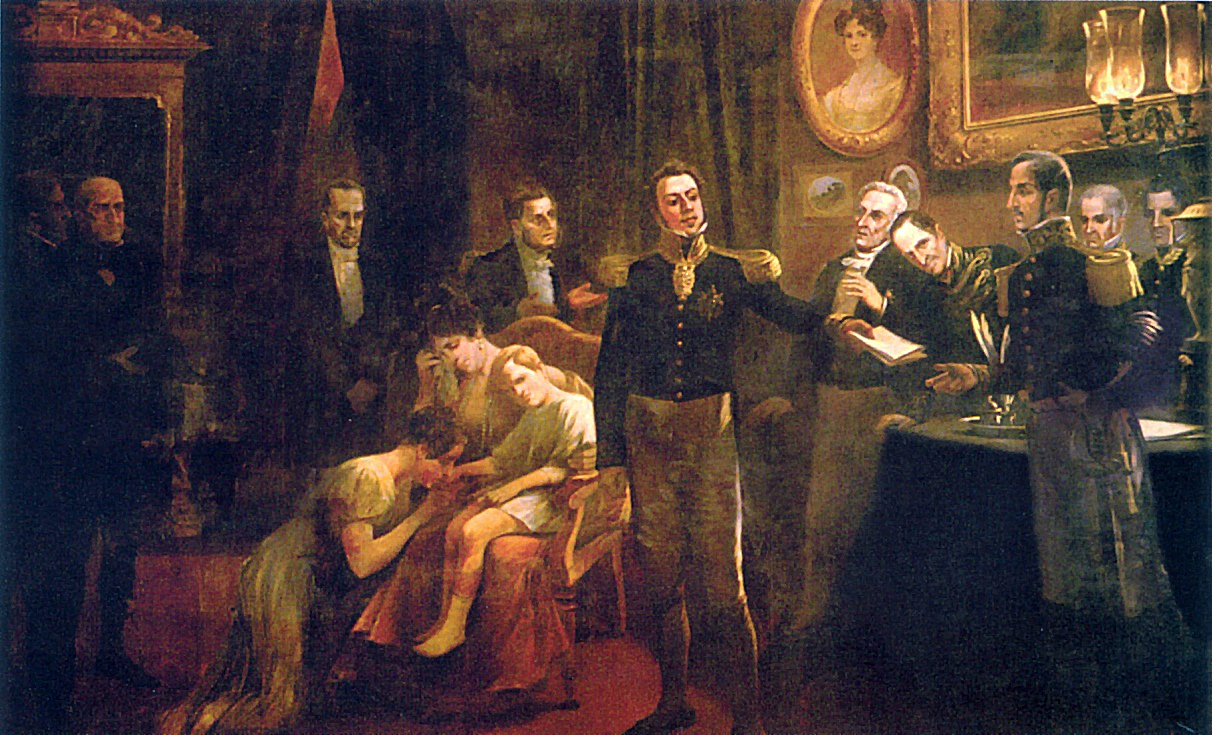
Jean-Baptiste Debret · Public domain
On 7 April 1831, Emperor Pedro I of Brazil abdicated in favor of his five-year-old son, Pedro II. This ended the First Reign and launched the regency period.
Background
Brazil’s independence had created a centralized system where municipalities answered to provinces, which answered to the crown. Elections were indirect and based on property qualifications, excluding most people. Nobility titles were hotly contested, and elite families monopolized government posts. A Council of State, appointed for life by the emperor and limited to ten members, advised on major matters and helped exercise the Moderating Power—the same power Pedro I used when he dissolved the Constituent Assembly.
Liberals fiercely opposed this setup. In 1830, a liberal revolt in France deposed King Charles X, inspiring similar movements elsewhere. In Brazil, newspapers like Rio de Janeiro’s Aurora Fluminense attacked the conservative ministry imposed by Pedro I. Evaristo da Veiga wrote that if fear ruled the people, freedom would become a shadow.
In São Paulo, Italian journalist Líbero Badaró edited O Observador Constitucional, protesting Portuguese-dominated authorities. He was murdered in an ambush, shocking public opinion. The emperor traveled to Minas Gerais to calm liberal agitation led by Bernardo Pereira de Vasconcelos, but found only apathy.
The night of the Bottle Fight
By the time Pedro I returned to Rio de Janeiro on March 11, he was already considering abdication. Portuguese nationals and court members staged a lamp-lit demonstration in his support, clashing with Brazilians who shouted “long live the constitution!” and “long live Dom Pedro II.” This three-day conflict, known as the “night of the bottle fight,” deepened tensions between Brazilians and Portuguese.
The last moments of Pedro I as emperor
With the capital in turmoil, Pedro I dismissed his ministry and appointed a new one that included two Portuguese members, inflaming anti-Portuguese sentiment. Liberal and nativist leaders called people into the streets. Crowds gathered at Campo da Aclamação, near opposition newspapers like O Repúblico, demanding the return of the previous ministry.
Parish judges relayed this demand to the emperor, who replied: “I will do everything for the people, but nothing by the people.” He argued that the constitution gave him the right to appoint ministers; obeying the crowd would make him a tool of the majority, not a defender of the nation’s will. Troops then sided with the protesters, leaving the monarch without military support. In a last attempt, he tried to find Nicolau Pereira de Campos Vergueiro to form a new ministry acceptable to the people, but could not locate him.
Abdication and departure
At two in the morning on April 7, 1831, Pedro I wrote his abdication and handed it to Major Miguel de Frias e Vasconcelos, who had come to report the mood of the troops and the people. With tears in his eyes, the emperor said: “Here is my abdication; I wish you to be happy! I retire to Europe and leave a country that I loved and that I still love.” According to chronicler Viriato Correia, Pedro then went to say goodbye to his sleeping son. He stood by the boy’s bed, unable to wake him, looking for a long time, tears streaming, sobs choking him, until he left the room wiping his eyes.
That morning, the former emperor boarded the English ship Warspite with his pregnant wife Amélie of Leuchtenberg and their daughter, Princess Maria. He left behind in Brazil his five-year-old son Pedro II, along with his daughters from his first marriage: Januária (nine), Paula (eight), and Francisca (seven). The Warspite did not sail for Europe immediately; days later, Pedro and his wife transferred to the frigate Volage, while Princess Maria continued on the French corvette La Seine. As tutor for the young emperor, Pedro left José Bonifácio, with whom he had recently reconciled.
In Europe, Pedro took up arms against his brother Miguel to secure the Portuguese throne for his daughter Maria. In Brazil, the minority of Pedro II ushered in the troubled regency period.
Political Architecture and the Liberal Uprising
The constitutional order Pedro I inherited from independence produced a rigid hierarchy: municipalities answered to provinces, and provinces to the central government. Suffrage was indirect and gated by property qualifications, effectively barring the vast majority of Brazilians from the ballot. Political life became a contest among elites who competed for noble titles and cornered seats in the Chamber, Senate, Council of State, and ministries. The Council of State itself—capped at ten lifetime members chosen by the monarch—was consulted on war, peace, foreign negotiations, and any exercise of the Moderating Power.
Liberals regarded this concentration of prerogative as anathema. The 1830 French revolution that deposed Charles X electrified liberal circles across the Atlantic. In Rio de Janeiro, the Aurora Fluminense launched a sustained attack on the conservative cabinet Pedro imposed. In São Paulo, Italian-born journalist Líbero Badaró edited O Observador Constitucional, denouncing authorities he saw as dominated by Portuguese interests.
His murder in a street ambush shocked the public and deepened the chasm between the throne and the nativist, liberal opposition.
The Long Regency and a Father in Exile
Pedro's departure plunged Brazil into a decade of political instability. Because Pedro II was barely five when his father abdicated, the country entered the regency period, a turbulent era that stretched until the Senate formally declared the young emperor of age on 23 July 1840. Before leaving, Pedro had appointed José Bonifácio as tutor to the future sovereign, a figure with whom he had recently mended a strained relationship. In Europe, the former emperor did not retreat into quiet private life.
He took up arms against his own brother Miguel, fighting to secure the Portuguese throne for his daughter Maria. The English ship Warspite, on which Pedro first embarked, never made the crossing; days after boarding, he and his wife transferred to the frigate Volage, while Princess Maria continued her journey aboard the French corvette La Seine. The abdication thus closed the First Reign and opened a chapter defined by minority rule, provincial unrest, and the slow maturation of a constitutional monarchy that would endure for another half-century.
More in Empire of Brazil
Sources
Compiled from Wikipedia and the sources listed below. Text from Wikipedia is available under CC BY-SA 4.0; this entry is adapted from it.
- Wikipedia: Abdication of Pedro I of Brazil (CC BY-SA 4.0).
Spotted an error? Know more?
Reader corrections go straight into our review queue. Suggest an edit · How this site is sourced