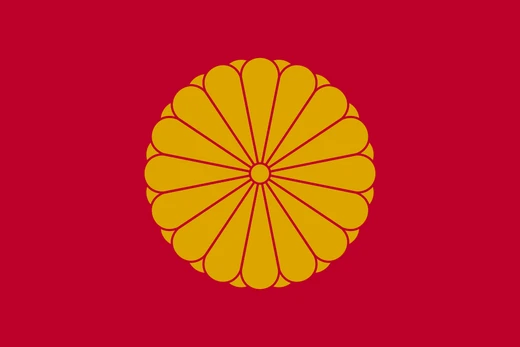
Emperor Go-Mizunoo
108th Emperor of Japan, first to reign entirely in the Edo period.
Emperor Go-Mizunoo, born Masahito on 29 June 1596, was the 108th Emperor of Japan and reigned from 1611 to 1629.[1][2] He abdicated on 22 December 1629 and died on 11 September 1680.[3][4] Go-Mizunoo was the 108th emperor of Japan, reigning from 1611 to 1629, and his entire time on the throne fell within the Edo period.[1]
Quick Facts
- Reign
- 9 May 1611 – 22 December 1629
- Coronation
- 23 May 1611
- Royal house
- Imperial House of Japan
- Predecessor
- Go-Yōzei
- Successor
- Meishō
- Posthumous name
- Tsuigō:; Emperor Go-Mizunoo (後水尾院 or ja, 後水尾天皇)
- Father
- Emperor Go-Yōzei
- Mother
- Konoe Sakiko
Facts from the source article.
Life and work
He became emperor following his father's abdication on 9 May 1611 at age 16.[5][2] The shogunate invalidated the garments and exiled the honored priests.[3] Go-Mizunoo abdicated on the same day the priests went into exile, renouncing the throne to his daughter Okiko, who became Empress Meishō.[3] After abdication, he focused on aesthetic projects, including the gardens of the Shugakuin Imperial Villa.[6]
His reign used the era names Keichō, Genna, and Kan'ei.[7] He is buried at Sennyū-ji in Kyoto at the Tsuki no wa no misasagi mausoleum.[4][6]
What the cited sources add
Titsingh's 1834 "Nipon o daï itsi ran" records that a strong earthquake struck on 26 November 1614 and that a great bell for Daibutsu Temple in Kyoto was cast in that same year.[7]
References
- Wikipedia, "Emperor Go-Mizunoo" (CC BY-SA 4.0), which cites: "後水尾天皇 (108)", Imperial Household Agency, n.d.; Ponsonby-Fane, "The Imperial House of Japan", 1959; Titsingh, "Nipon o daï itsi ran; ou, Annales des empereurs du Japon", 1834, p. 409–411 (original not read by us) en.wikipedia.org
- Wikipedia, "Emperor Go-Mizunoo" (CC BY-SA 4.0), which cites: Meyer, "Japans Kaiserhof in der Edo-Zeit", 1999, p. 186; Titsingh, "Nipon o daï itsi ran; ou, Annales des empereurs du Japon", 1834, p. 409–411; Meyer, "Japans Kaiserhof in der Edo-Zeit", 1999, p. 186; Ponsonby-Fane, "The Imperial House of Japan", 1959 (original not read by us) en.wikipedia.org
- Wikipedia, "Emperor Go-Mizunoo" (CC BY-SA 4.0), which cites: Ponsonby-Fane, "The Imperial House of Japan", 1959; Meyer, "Japans Kaiserhof in der Edo-Zeit", 1999, p. 186; Ponsonby-Fane, "The Imperial House of Japan", 1959; Titsingh, "Nipon o daï itsi ran; ou, Annales des empereurs du Japon", 1834, p. 409–411 (original not read by us) en.wikipedia.org
- Wikipedia, "Emperor Go-Mizunoo" (CC BY-SA 4.0), which cites: Titsingh, "Nipon o daï itsi ran; ou, Annales des empereurs du Japon", 1834, p. 409–411; Meyer, "Japans Kaiserhof in der Edo-Zeit", 1999, p. 186 (original not read by us) en.wikipedia.org
- Wikipedia, "Emperor Go-Mizunoo" (CC BY-SA 4.0), which cites: Titsingh, "Nipon o daï itsi ran; ou, Annales des empereurs du Japon", 1834, p. 409–411; Kitabatake, "A Chronicle of Gods and Sovereigns: Jinnō Shōtōki of Kitabatake Chikafusa", 1980, p. 44 (original not read by us) en.wikipedia.org
- Wikipedia, "Emperor Go-Mizunoo" (CC BY-SA 4.0), which cites: Ponsonby-Fane, "The Imperial House of Japan", 1959 (original not read by us) en.wikipedia.org
- Wikipedia, "Emperor Go-Mizunoo" (CC BY-SA 4.0), which cites: Titsingh, "Nipon o daï itsi ran; ou, Annales des empereurs du Japon", 1834, p. 409–411 (original not read by us) en.wikipedia.org
Each numbered sentence above was checked against the source it cites before publication. Sentences citing Wikipedia adapt text from the English Wikipedia article Emperor Go-Mizunoo (contributors), used under CC BY-SA 4.0; this entry is available under the same licence. Other sources were used for facts only; no text or images are copied from them.
More in Emperors of Japan
Spotted an error? Know more?
Reader corrections go straight into our review queue. Suggest an edit · How this site is sourced