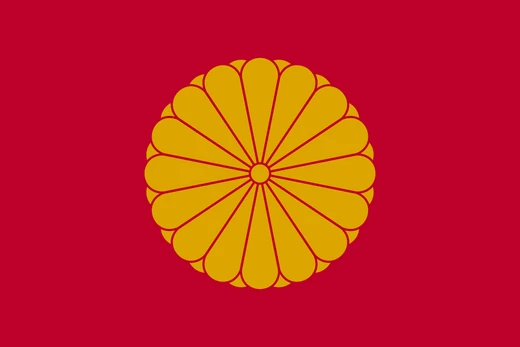
Emperor Go-Murakami
97th emperor of Japan, Southern Court ruler during Nanboku-chō period.
Emperor Go-Murakami, born Noriyoshi in 1328, ruled as Japan's 97th emperor from September 18, 1339, until his death on March 29, 1368. He was part of the Southern Court during the Nanboku-chō era of competing courts. His reign was based in temporary locations including Sumiyoshi, Osaka, Yoshino, and Nara. His name honors the 10th-century Emperor Murakami, with "Go" meaning "later" or "second," so he is sometimes called Emperor Murakami II.
Quick Facts
- Reign
- September 18, 1339 – March 29, 1368
- Coronation
- November 6, 1339
- Predecessor
- Go-Daigo
- Successor
- Chōkei
- Posthumous name
- Tsuigō:; Emperor Go-Murakami (ja, 後村上院 or ja, 後村上天皇)
- Regent
- Ashikaga Takauji; Ashikaga Yoshiakira
- Issue
- Emperor Chōkei; Emperor Go-Kameyama
- Issue pipe
- more...
Facts from the source article.
Events of Go-Murakami's life
Prince Norinaga was Go-Daigo's son from his favorite consort of his later years, Lady Renshi. He lived during the turbulent years of conflict between rival claimants to the Chrysanthemum Throne, known as the Northern and Southern Courts, or the Nanboku-chō period. When Emperor Go-Daigo began his Kenmu Restoration, the still very young prince, along with Kitabatake Akiie, in 1333 went to Tagajō in what is now Miyagi Prefecture, at the time Mutsu Province, to return the eastern samurai to their allegiance and destroy the remnants of the Hōjō clan. In 1336, because Ashikaga Takauji had raised a rebellion, the Emperor returned to Sakamoto with a strong force to confront him, accompanied by Kitabatake Akiie. When Takauji defeated them in Kyōto in 1336, they again returned to Mutsu Province. In 1337, because Tagajō was attacked, they returned yet again to the west, returning to Yoshino while constantly fighting battles. In 1338, he headed to Tagajō, but returned to Yoshino because of a storm. In October 1338, he was named Crown Prince. On 19 September 1339, he became emperor upon the death of Emperor Go-Daigo, and Kitabatake Chikafusa became his advisor. In 1348, Kō no Moronao attacked Yoshino, and the Emperor left for modern-day Nishiyoshino Village in Yoshino District, Nara Prefecture, which was then Yamato Province. In 1352, he entered Otokoyama in Yamashiro Province. As a result of the Battle of Shichijō Ōmiya, Kusunoki Masanori recovered Kyōto from Ashikaga Yoshiakira. At this time, April 1352, the Retired Northern Emperors Kōgon, Kōmyō, and Sukō were taken to Anau, the location of the Southern Court. However, within twenty days, Ashikaga Yoshiakira had recaptured Kyōto. The Emperor and his retinue were confined to Otokoyama, but escaped to Kawachi Province during an attack by Yoshiakira, and a few months later returned to Yoshino. In 1361, Hosokawa Kiyōji and Kusunoki Masanori, who had returned to the Southern Court's allegiance, attacked Kyōto and temporarily recovered it, but Yoshiakira quickly responded, and they evacuated Kyōto in less than twenty days. They continued trying to recover Kyōto, but the Southern Court's power was already weakening, and by the Emperor's death in 1368, Ashikaga Yoshimitsu was in power and the throne had been moved to Sumiyoshi.
More in Emperors of Japan
Spotted an error? Know more?
Reader corrections go straight into our review queue. Suggest an edit · How this site is sourced