Pointer (dog breed)
A pointing dog bred for endurance, speed, and a distinctive pointing stance.
Last updated
The Pointer, also known as the English Pointer, is a medium-sized pointing dog breed developed in England. It is used by hunters to locate game and is considered by gundog enthusiasts to be among the finest breeds of its type, though unlike most hunting breeds its purpose is to point rather than retrieve game.
History
The ancestry of the Pointer has been debated among dog historians. The most common view holds that the breed descends from Old Spanish Pointers imported into England, believed to have been introduced in 1713 by soldiers returning from Spain after the Peace of Utrecht. Sydenham Edwards wrote in 1800 that a Portuguese merchant brought the Spanish Pointer to England, where it was first used by a reduced baron named Bichell in Norfolk. Other early sources suggest Portuguese Pointers, Italian Braccos, or French pointers as the foundation.
In 1902, William Arkwright published a history of the Pointer, concluding after extensive research that Spanish ancestry was most likely, though he found no truly convincing evidence. A less common belief holds that a form of Pointer existed in England from medieval times, used to indicate hares for greyhounds or hawks, and was later influenced by continental blood. The earliest recorded mentions of Pointers in England date from the early 18th century, including a 1713 poem by John Gay and a 1725 painting by Peter Tillemans.
Description
The Pointer is a medium-sized, athletic breed built for endurance and speed. Height typically ranges from 21 to 28 inches, with bitches shorter than dogs; the Kennel Club standard specifies dogs 25 to 27 inches and bitches 24 to 26 inches. Weight is usually 45 to 75 pounds, with dogs 55 to 75 pounds and bitches 45 to 65 pounds. The head is distinctive with a slightly dished face, elevated nose, raised brow, and wide nostrils; ears are hanging, high set, medium-sized, and slightly pointed.
The neck is long, muscular, and slightly arched; shoulders are long and sloping; the chest is wide; forelegs are straight and firm; hindquarters are muscular; feet are oval; the tail is medium-length and thick at the root. The short, fine, hard, smooth coat is evenly distributed, typically bi-colored with white and lemon, orange, liver, or black, though rare tri-colored and self-colored dogs exist. The coat suits summer work on grouse moors but leaves the breed susceptible to cold in wet weather.
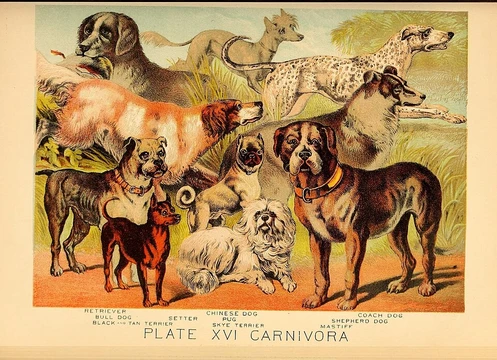
Compared to 19th-century images, the modern breed is finer, reflecting greyhound blood. Differences exist between field-bred and conformation-bred Pointers, with show dogs often having narrower chests, exaggerated facial features, straighter shoulders, less natural movement, and less muscle. The breed is adaptable, obedient, and even-tempered, though field lines can be extremely active; it is more aloof and reserved than other gundog breeds, with a lower need for human companionship.
Popularity and use in field sports
When hunting, the Pointer quarters in front of the hunter with its head high, scenting the air upwind. Upon detecting hidden game, it halts suddenly with its nose pointing toward the game, allowing the hunter to prepare; the hunter then commands the dog to flush the game. Many writers consider the Pointer the ultimate pointing breed due to its sensitive nose, stylish movement, and flashy pointing stance. It is the most popular pointing dog breed used by sporting estates in the United Kingdom and commercial shooting preserves in the United States, and the most successful in pointing dog trials in both countries.
Unlike continental European pointing breeds, a classically trained Pointer typically only points and flushes walked-up game, with retrievers used for retrieval; European breeds often retrieve as well. The Pointer is faster and quarters further than continental pointing breeds. It is also used in falconry to locate game for falcons or hawks.
Health
Pointers typically live 13 to 14 years and are considered a robust breed. The Kennel Club advises no specific genetic screenings for them. However, the breed can inherit hip and elbow dysplasia, patella luxation, hereditary sensory neuropathy, spinal muscle atrophy, X-linked cerebellar ataxia, and deafness. They also have a slight tendency toward hypothyroidism, demodicosis, cataracts, retinal dysplasia, and corneal dystrophy.
More in Dog Breeds
Sources
Compiled from Wikipedia and the sources listed below. Text from Wikipedia is available under CC BY-SA 4.0; this entry is adapted from it.
- Wikipedia: Pointer (dog breed) (CC BY-SA 4.0).
Spotted an error? Know more?
Reader corrections go straight into our review queue. Suggest an edit · How this site is sourced