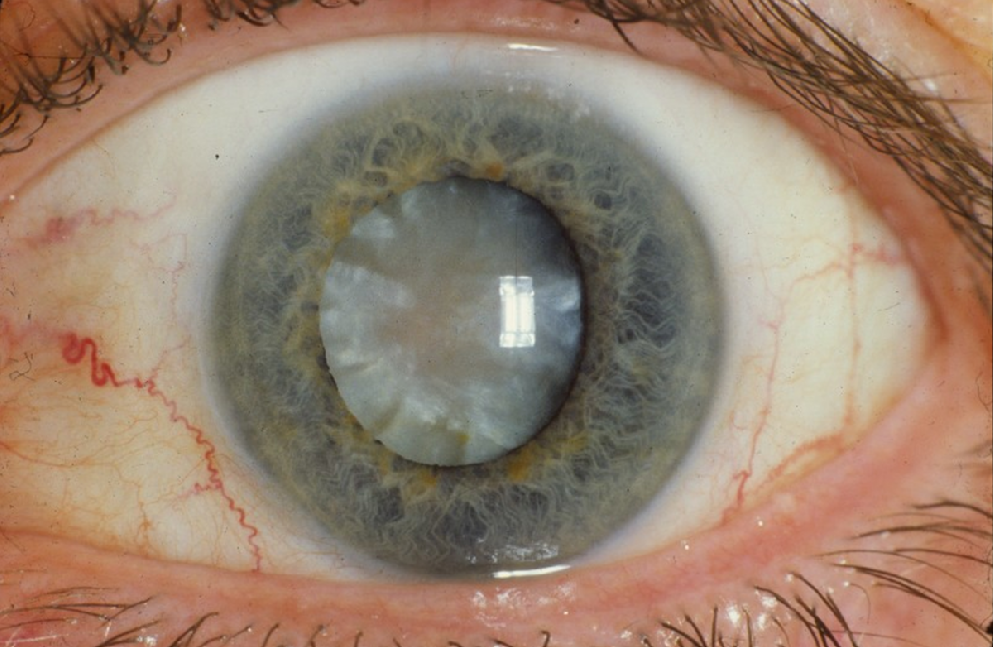
Cataract
Clouding of the eye's lens, leading cause of blindness.

Royalbroil · CC BY-SA 3.0
A cataract is a clouding of the eye's lens that blurs vision. As of 2020, it is the leading cause of blindness globally, with over 200 million people experiencing some degree of vision loss from it. While aging is the most common trigger, cataracts can also stem from eye injuries, radiation exposure, congenital conditions, or other diseases.
Symptoms vary based on the cataract's location and severity. Early on, mild clouding may cause no noticeable issues. As it progresses, vision can become blurry or double, colors may seem faded, and lights might appear with halos. Bright light can become bothersome, and seeing at night grows difficult. These problems can make driving, daily tasks, and staying independent harder, raising the risk of falls and depression.
The lens clouds when the eye's natural cleaning systems falter over time, largely due to oxidative stress and aging. Risk factors include diabetes, long-term corticosteroid use, obesity, other eye conditions, dietary deficiencies, smoking, heavy alcohol use, and prolonged sun exposure. Diagnosis involves an eye exam that tests vision at various distances, uses a slit lamp to inspect the lens, and may include a dilated retinal exam. The three main types are nuclear (center of the lens), cortical (outer edge), and posterior subcapsular (back of the lens).
As of 2025, no proven method exists to prevent or slow age-related cataracts, though controlling risks like smoking, alcohol, and UV exposure can help. Early symptoms may be managed with stronger glasses. When that fails, the only effective treatment is surgery to remove the cloudy lens and replace it with an artificial one, which generally improves quality of life. However, surgery is not widely available in many countries.
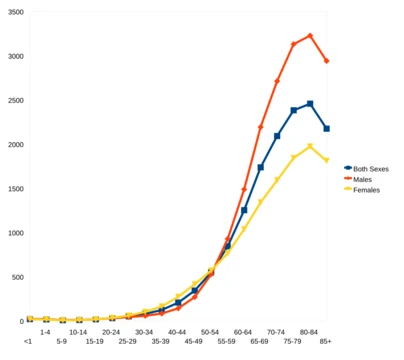
Globally, cataracts affect about 17.2% of people across all ages, with nuclear and cortical types being most common. Prevalence rises with age and is higher in women. Most people with cataracts live in lower-income countries; in South Asia, rates of cataract-induced blindness are especially high. In low- and middle-income regions, cataracts cause up to 50% of blindness, compared to roughly 5% in high-income countries.
Quick Facts
- Field
- Ophthalmology, Optometry
- Complications
- Falling
- depression
- blindness
- Onset
- Gradual
- Causes
- Aging
- trauma
- radiation exposure
- genetic
- Risks
- Diabetes
- smoking tobacco
- prolonged exposure to sunlight
- alcohol
- Diagnosis
- Eye examination
- Treatment
- Glasses, cataract surgery
- Frequency
- 17.2% across all ages
Facts from the source article.
Lore & Background
A cataract is a clouding of the eye's natural lens that can be present at birth (congenital) or develop later in life (degenerative). It can affect one or both eyes. The three most common types are nuclear (center of lens), cortical (outer part), and posterior subcapsular (back of lens). Symptoms include faded colors, blurry or double vision, halos around light, trouble with bright lights, and difficulty seeing at night. As the condition worsens, it can result in difficulty driving, loss of independence, and decreased ability to perform everyday tasks. Poor vision caused by cataracts may also result in an increased risk of falling and depression.
Did You Know?
- Cataracts are most commonly due to aging but may also be caused by trauma, radiation exposure, conditions present from birth, or complications from other conditions.
- As of 2020, around 12 to 15 million people worldwide are blind due to cataracts.
Gallery





More in Aging-associated diseases
Spotted an error? Know more?
Reader corrections go straight into our review queue. Suggest an edit · How this site is sourced