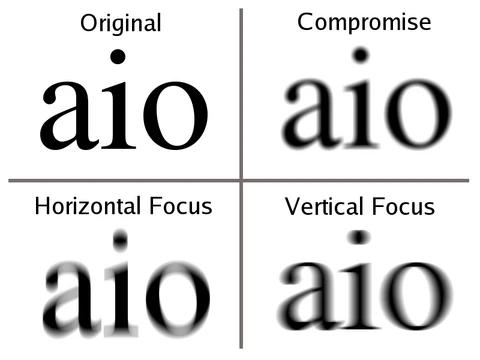
Disorders of Ocular Muscles, Binocular Movement, Accommodation and Refraction
30 entries in the Disorders of Ocular Muscles, Binocular Movement, Accommodation and Refraction compendium.
Aberrations of the eyeOptical imperfections of the eye affecting image quality.Accommodative excessInability to relax accommodation for near work.AniseikoniaA condition of unequal perceived image size between the eyes.AnisometropiaUnequal refractive power between the two eyes.AstigmatismA common refractive error from uneven corneal or lens curvature.Brown's syndromeRare strabismus with limited elevation of the affected eye.Bruns nystagmusAsymmetrical jerk nystagmus from cerebellopontine angle tumours.Congenital fourth nerve palsyA congenital vertical eye misalignment from superior oblique muscle weakness.Convergence insufficiencyA binocular vision disorder impairing near convergence.CycloplegiaParalysis of the ciliary muscle causing loss of accommodation.CyclotropiaA strabismus with eye torsion about the visual axis.Duane syndromeA congenital strabismus with limited eye movement and globe retraction.EsotropiaA strabismus where one or both eyes turn inward.ExotropiaOutward deviation of one or both eyes causing diplopia.FarsightednessA refractive error where near objects appear blurred.HeterophoriaLatent eye misalignment kept hidden by binocular fusion.HypertropiaA vertical misalignment where one eye sits higher than the other.Infantile esotropiaEarly-onset inward eye turn with limited binocular potential.Internuclear ophthalmoplegiaDisorder of conjugate lateral gaze with impaired adduction and nystagmus.Monofixation syndromeA rare eye condition with small-angle deviation and peripheral fusion.Myopia in animalsMyopia is common in domestic animals and experimentally induced in several species.Oculomotor nerve palsyDamage to the third cranial nerve causing eye movement deficits.One and a half syndromeRare disorder with horizontal gaze palsy in one direction and internuclear ophthalmoplegia.OphthalmoparesisWeakness or paralysis of extraocular muscles affecting eye movement.Parinaud's syndromeDorsal midbrain injury causing vertical gaze palsy and pupil dysfunction.PresbyopiaAge-related loss of near focusing ability due to lens stiffening.Refractive errorA common vision problem caused by improper focusing of light on the retina.Scleral reinforcement surgerySurgery to reinforce the sclera in degenerative myopia.Sixth nerve palsyAbducens nerve palsy causing esotropia and horizontal diplopia.StrabismusEye misalignment disorder causing amblyopia or double vision.
Browse Disorders of Ocular Muscles, Binocular Movement, Accommodation and Refraction in the interactive codex →