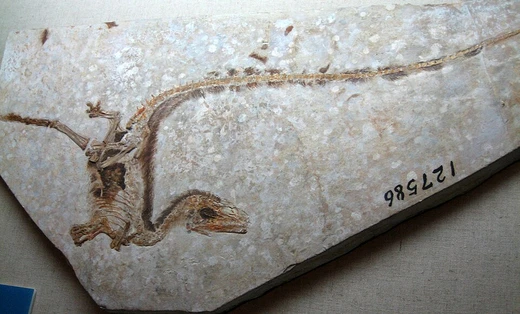
Parasaurolophus
Крупный гребенчатый гадрозаврид из позднего мела Северной Америки и, возможно, Азии.

Gretaz · CC BY-SA 3.0
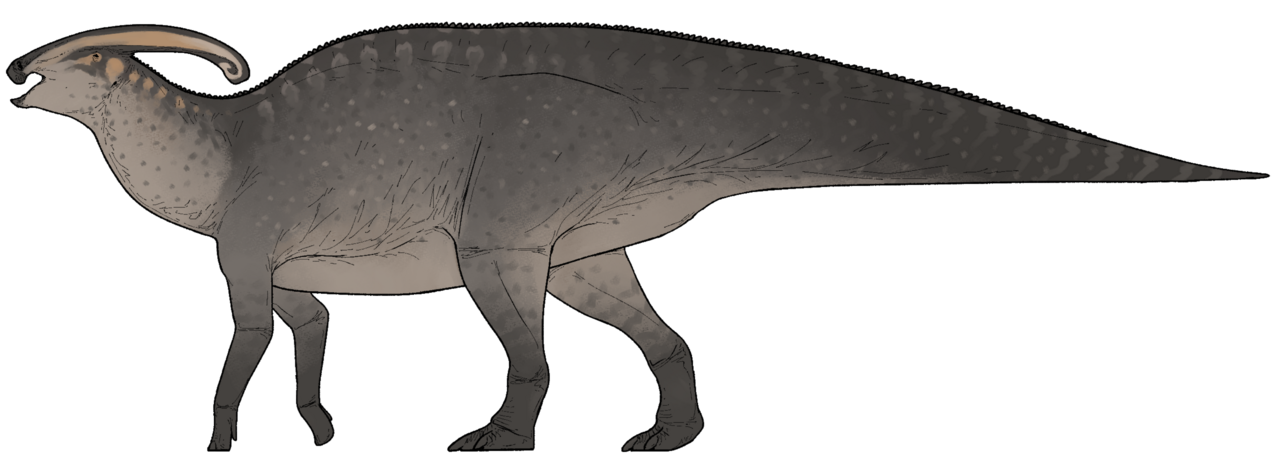
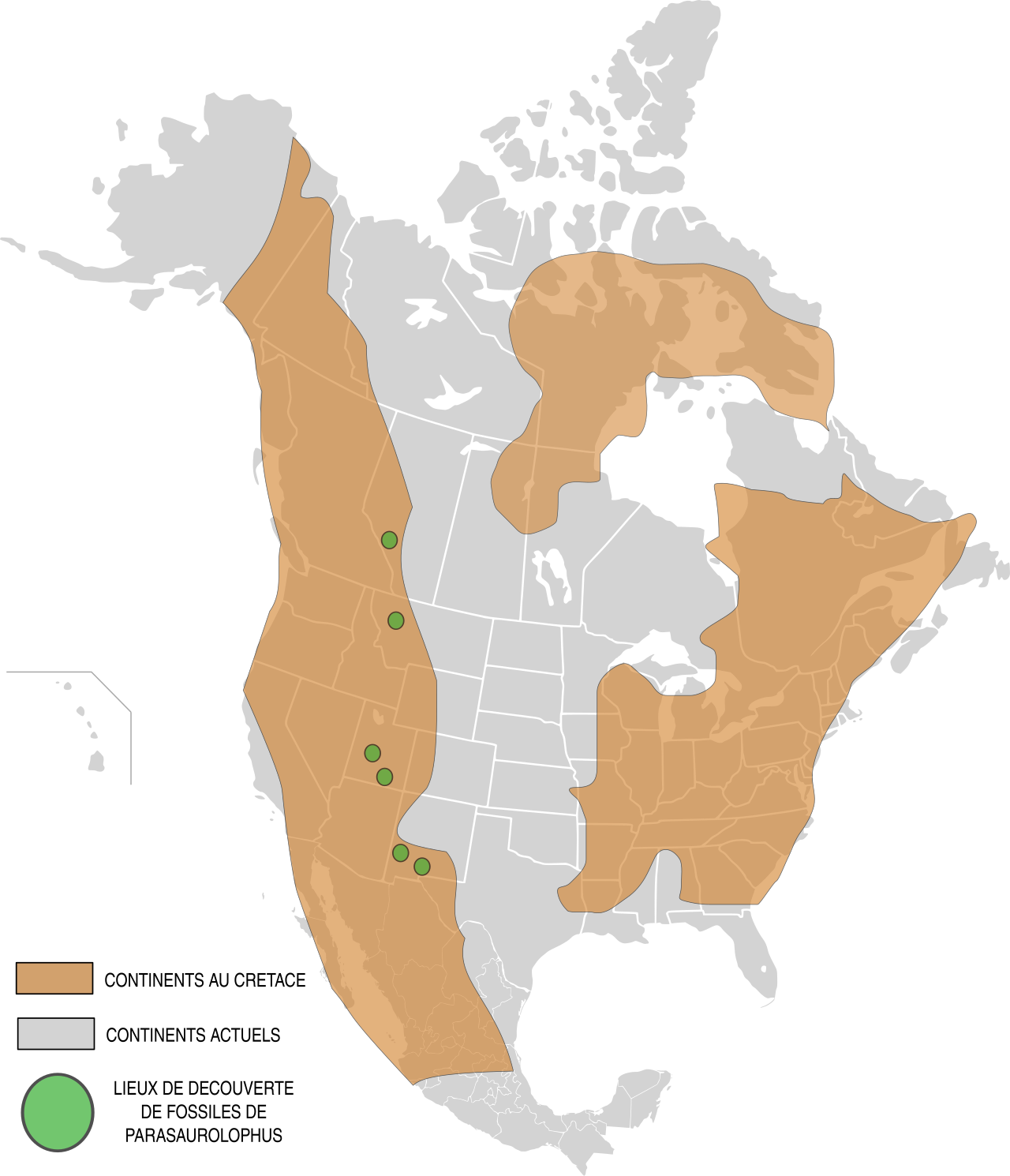
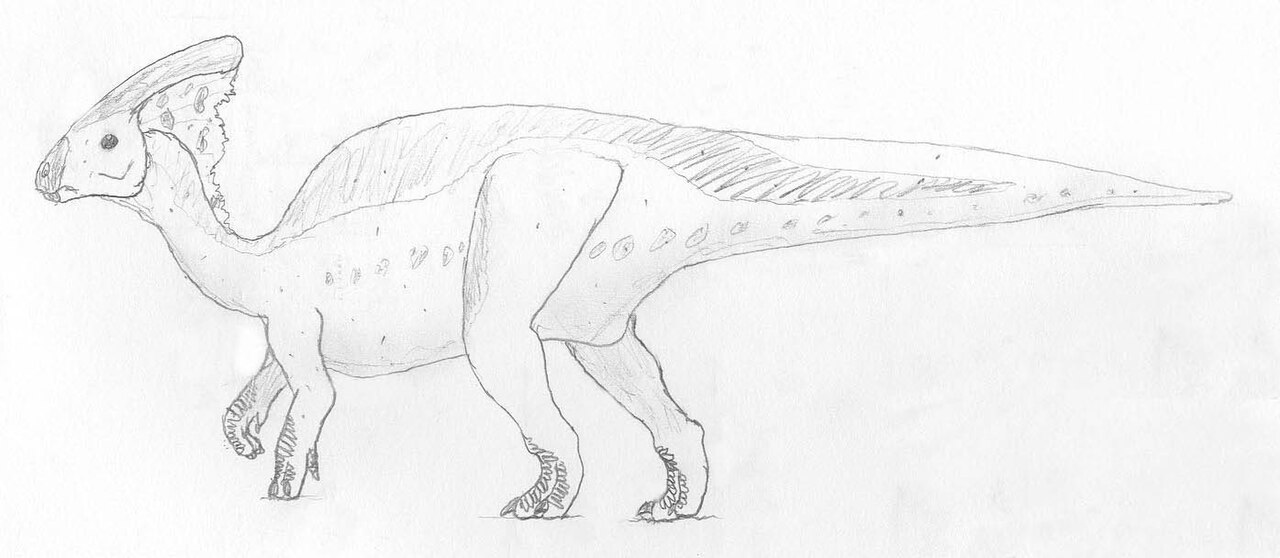
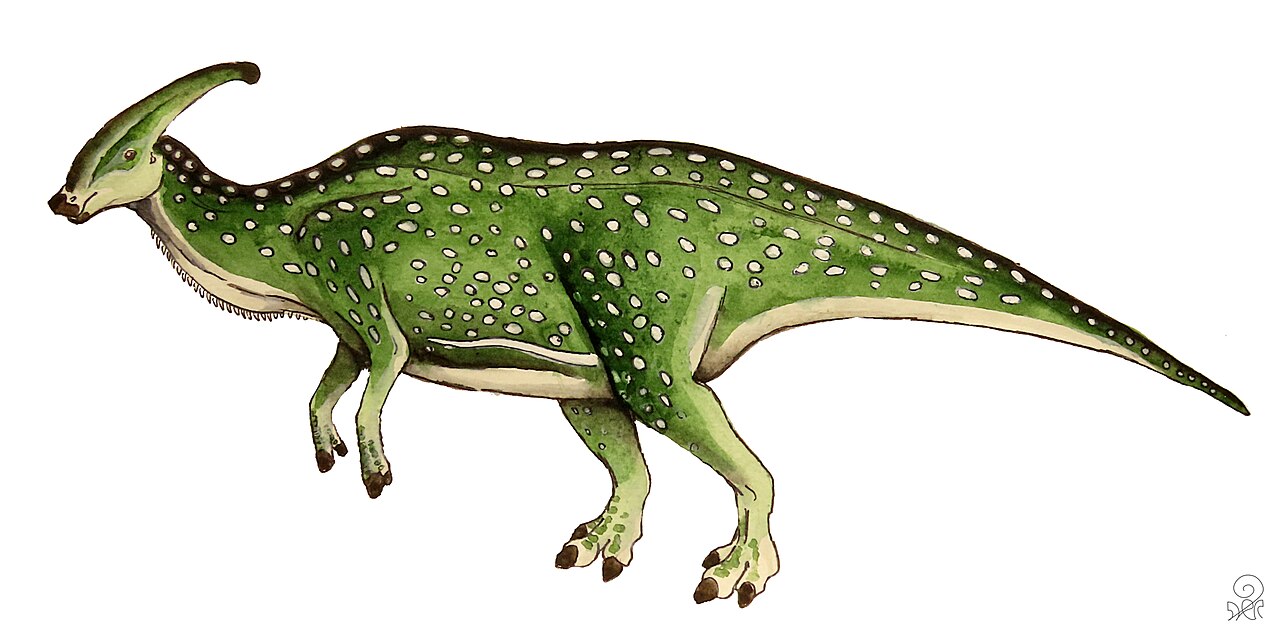
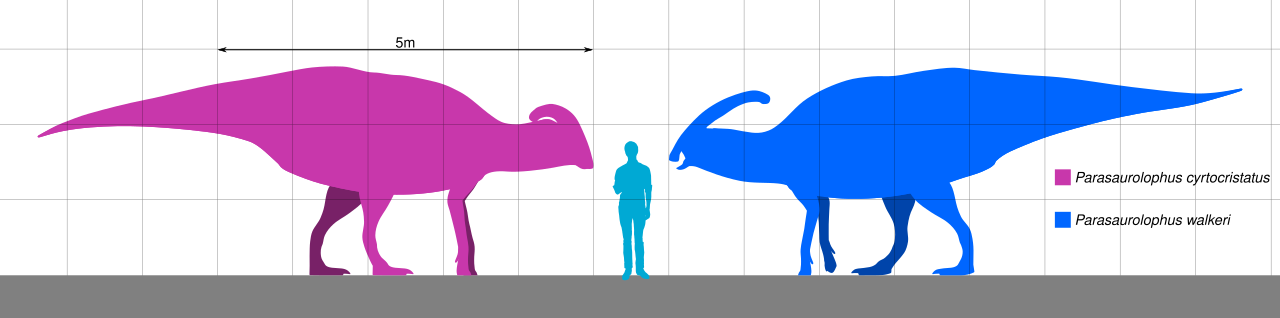
Parasaurolophus is a genus of hadrosaurid, or duck-billed, dinosaur that inhabited western North America and possibly Asia during the Late Cretaceous, roughly 76.5 to 73 million years ago. This large herbivore could exceed 9 meters in length and weigh over 5 metric tons, moving both on two legs and on all fours. The name, meaning "beside crested lizard," references the related dinosaur Saurolophus. Three species are widely accepted: the type species P. walkeri, P. tubicen, and the shorter-crested P. cyrtocristatus. A proposed fourth species, P. jiayinensis, is usually assigned to the separate genus Charonosaurus. Fossils have been found in Alberta, New Mexico, and Utah, with possible remains from Heilongjiang if Charonosaurus belongs to the same genus.
The genus was first described in 1922 by William Parks, based on a skull and partial skeleton (ROM 768) discovered in 1920 along the Red Deer River in Alberta, within what is now the Dinosaur Park Formation. Parks named the specimen P. walkeri in honor of Sir Byron Edmund Walker. Parasaurolophus remains are rare in Alberta, with only a few additional specimens possibly belonging to the genus. In 1931, Carl Wiman described a second species, P. tubicen, from a partial skull found in New Mexico's Kirtland Formation; its name means "trumpeter."
A nearly complete P. tubicen skull was later found in New Mexico in 1995, and a 1999 monograph used CT scans to study its crest anatomy and possible functions. John Ostrom named P. cyrtocristatus in 1961 from a partial skull with a short, rounded crest, found in either the Fruitland or Kirtland Formation of New Mexico. Additional P. cyrtocristatus specimens have since been recovered from Utah's Kaiparowits Formation.
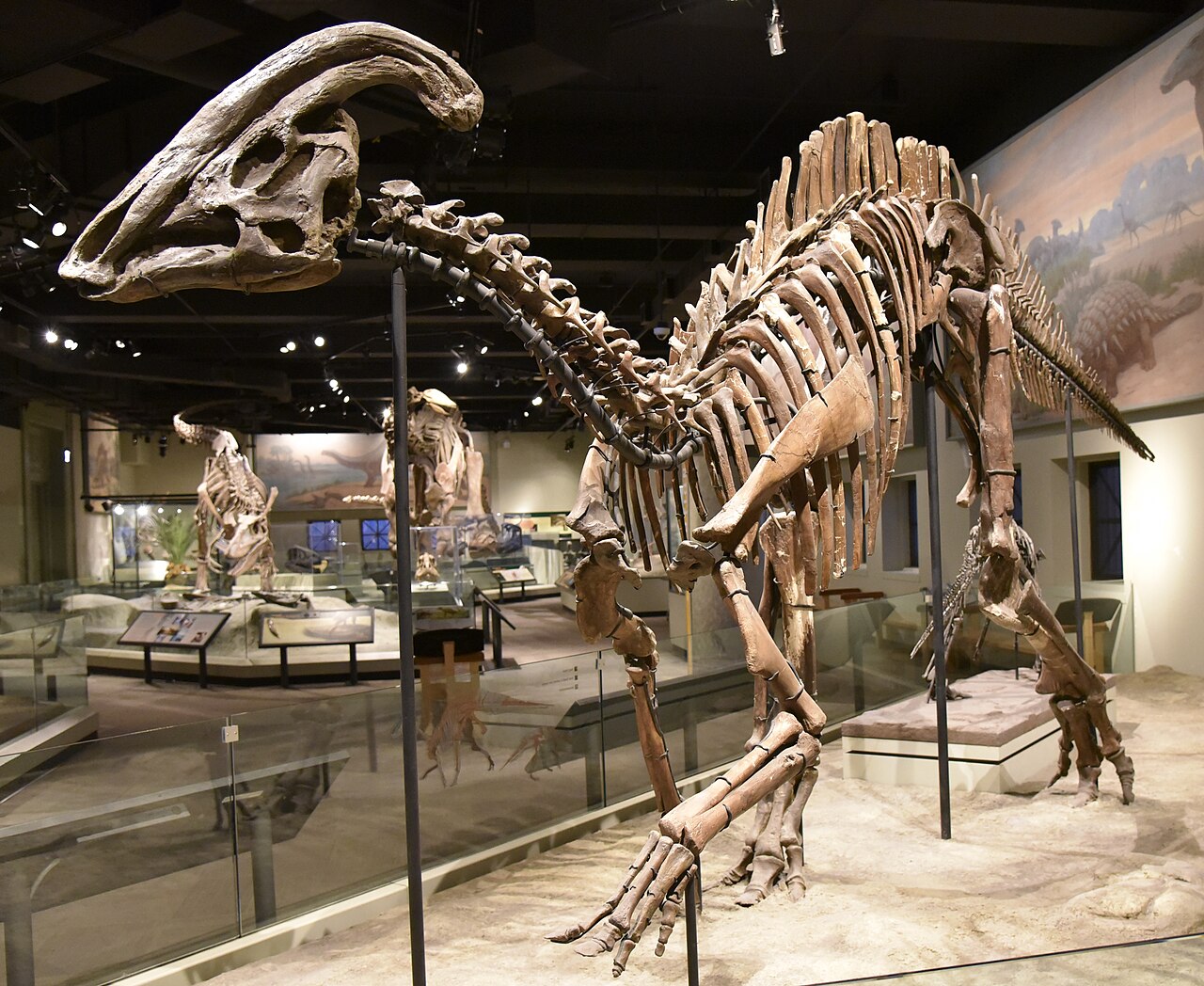
The most distinctive feature of Parasaurolophus is its large, hollow cranial crest, which forms a long, curved tube projecting backward from the skull. This crest likely served multiple purposes, including visual species and sex recognition, acoustic resonance for communication, and possibly thermoregulation. The crest's internal structure varies among species: P. tubicen has the most complex interior, while P. walkeri has a simpler one and a straighter crest. P. cyrtocristatus is the smallest species and possesses the most curved crest.
Quick Facts
- Type species
- Parasaurolophus walkeri
- Subdivision
- P. tubicen; Wiman, 1931, P. cyrtocristatus; Ostrom, 1961, P. jiayinensis? (Godefroit, Zan & Jin, 2000) Paul, 2010
Facts from the source article.
Редкий гигант западного мела
Паразауролоф был массивным травоядным, который бродил по западу Северной Америки и, возможно, частям Азии в позднем меловом периоде, около 76,5–73 миллионов лет назад. В полном росте особь могла превышать девять метров в длину и весить более пяти метрических тонн. Несмотря на свои размеры, он не был ограничен одной походкой; он мог ходить на четырёх ногах или подниматься на задние конечности, что давало ему разнообразные способы передвижения. Его географический ареал простирался от Альберты через Нью-Мексико и Юту, с возможным расширением до Хэйлунцзяна в Китае, если род Charonosaurus в конечном итоге будет включён в Parasaurolophus. Однако для животного таких внушительных размеров ископаемая летопись удивительно скудна. Он входит в число более редких гадрозаврид: известно лишь несколько хорошо сохранившихся экземпляров. В Альберте, помимо типового материала, только один другой частичный череп и три фрагмента скелета без черепов были предварительно отнесены к этому роду. Краткое упоминание о возможном материале P. walkeri в формации Хелл-Крик в Монтане встречается в некоторых фаунистических списках, но последующих работ, подтверждающих это утверждение, не проводилось. Эта редкость остатков делает каждую новую находку значительным вкладом в наше понимание вида.
Gallery
More in Динозавры
Заметили ошибку?
Исправления от читателей сразу попадают в нашу очередь на проверку. Предложить правку · Как собираются источники для этого сайта