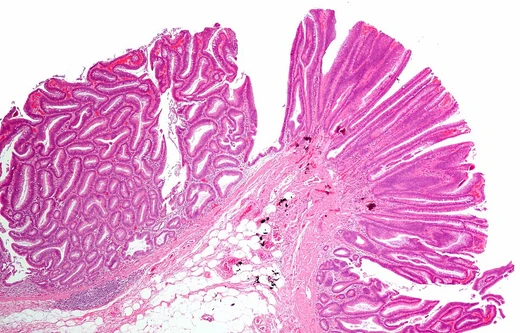
Pancreatic serous cystadenoma
Benign pancreatic tumour, often associated with von Hippel–Lindau syndrome.
Last updated
Pancreatic serous cystadenoma is a benign tumour of the pancreas, usually solitary and found in the body or tail. It may be associated with von Hippel–Lindau syndrome. Unlike some other pancreatic cystic neoplasms, serous cystic neoplasms are almost always entirely benign, though rare malignant serous cystadenocarcinomas have been reported.
Classification
Pathologists classify serous cystic neoplasms into benign serous cystadenoma and malignant serous cystadenocarcinoma. Serous cystadenomas are subtyped as microcystic, oligocystic (or macrocystic), solid, mixed serous-endocrine neoplasm, and VHL-associated serous cystic neoplasm. This classification highlights the range of appearances and clinical associations.
Treatment
These lesions rarely require surgery unless symptomatic or the diagnosis is uncertain. Long-term imaging surveillance is unnecessary due to lack of malignant potential. Surgical options include pancreaticoduodenectomy, distal pancreatectomy, or rarely total pancreatectomy; selected cases may use minimally invasive techniques such as laparoscopy.
More in Digestive System Neoplasia
Sources
Compiled from Wikipedia and the sources listed below. Text from Wikipedia is available under CC BY-SA 4.0; this entry is adapted from it.
- Wikipedia: Pancreatic serous cystadenoma (CC BY-SA 4.0).
Spotted an error? Know more?
Reader corrections go straight into our review queue. Suggest an edit · How this site is sourced