Pavel Datsyuk
Two-way forward known for elite defense and game-changing offense.
Last updated

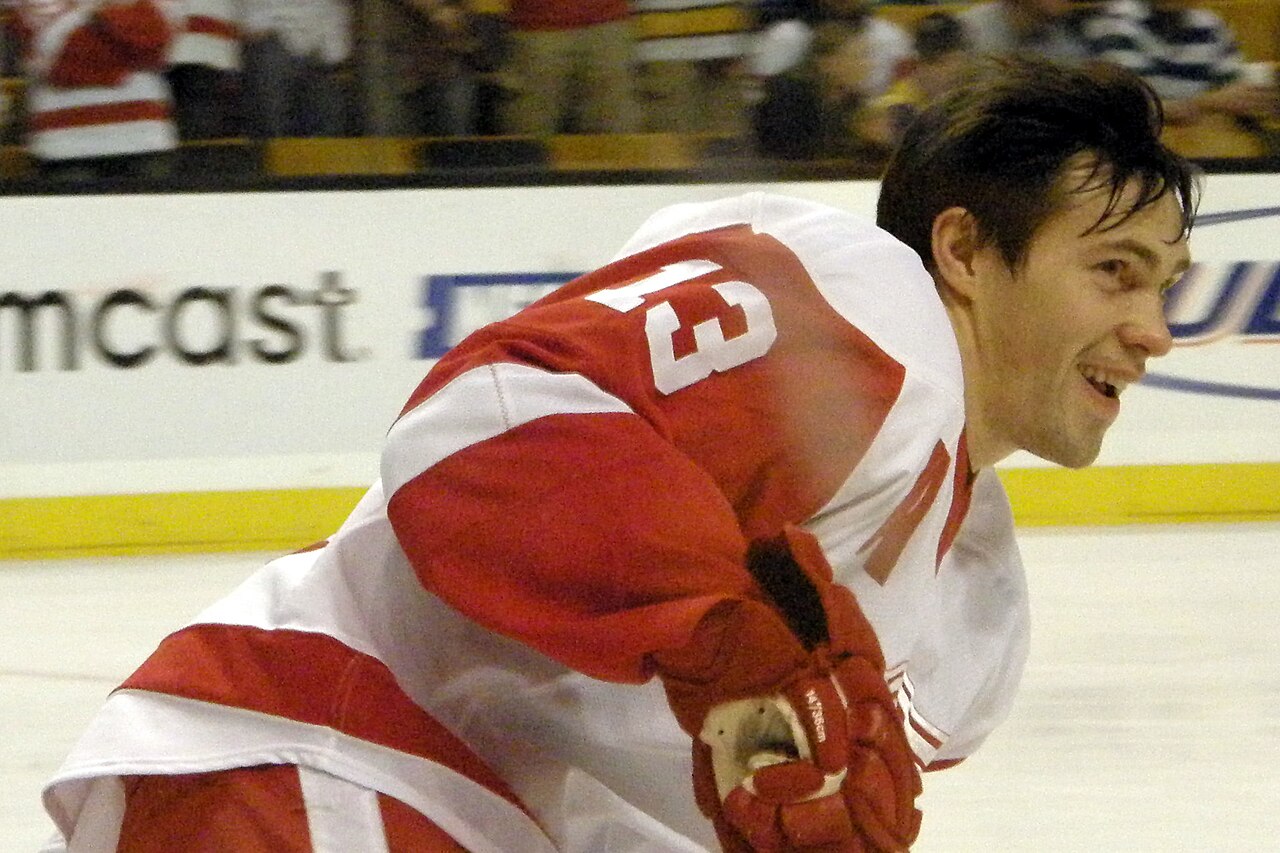
Cwbednarz at English Wikipedia · Public domain
Pavel Valeryevich Datsyuk, a Russian former professional ice hockey player, spent his NHL career with the Detroit Red Wings from 2001 to 2016. Known as the "Magic Man," he was recognized as one of the "100 Greatest NHL Players" in history, and at the time of that announcement, he was the only active player on the list who was not in the NHL. Datsyuk helped the Red Wings win the Stanley Cup in 2002 and 2008, and later captured the Gagarin Cup in 2017 with SKA Saint Petersburg. He was inducted into the Hockey Hall of Fame in 2024.
Early years
Born in Sverdlovsk, Russian SFSR, in the Soviet Union, Datsyuk was called "Pasha" by his parents from an early age. His childhood included significant hardship, particularly when his mother died when he was 15. Despite showing above-average hockey skills, he was often overlooked by scouts due to his smaller size. He started playing for the farm club of Dynamo Yekaterinburg in the mid-1990s, but his career seemed headed for mediocrity until Olympic trainer Vladimir Krikunov took over the team.
Krikunov first noticed Datsyuk not on the ice but on the soccer field, where his anticipation, vision, and intelligence stood out. Under Krikunov, Datsyuk developed into a highly efficient two-way player and began attracting wider attention among Russian hockey fans. Nonetheless, he went undrafted in the 1996 and 1997 NHL drafts.
Early play in Russia
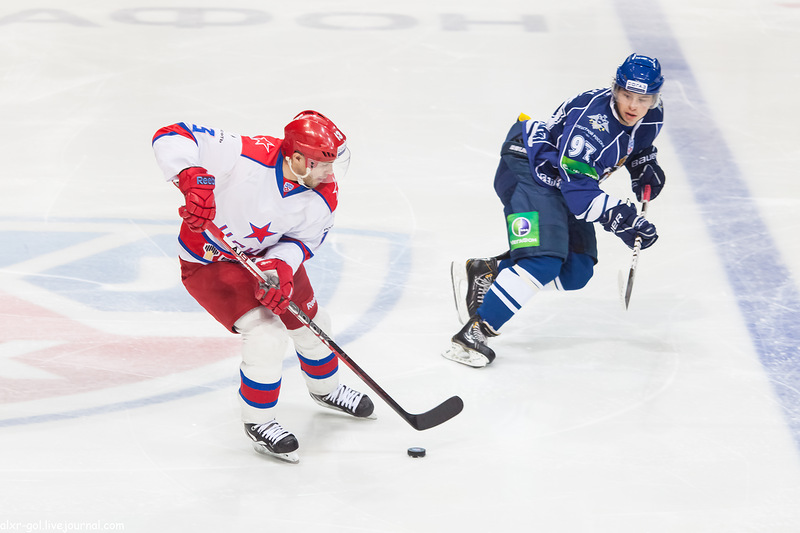
Datsyuk was first spotted by Detroit Red Wings Director of European Scouting Håkan Andersson in the summer of 1997–98. Andersson was in Moscow to scout defenseman Dmitri Kalinin, but his attention was caught by "this little guy on the other team." He made a second trip to see Datsyuk and planned a third, but his flight was canceled due to a storm. A Calgary Flames scout was also scheduled to be on that plane, and because of the storm, Andersson believes he was the only NHL scout to have seen Datsyuk play before the 1998 NHL entry draft, where the Red Wings selected him 171st overall. Datsyuk continued playing for Dynamo Yekaterinburg through 2000, then moved to Ak Bars Kazan for the 2000–01 season, recording nine goals and 17 assists in 42 games.
Detroit Red Wings (2001–2016)
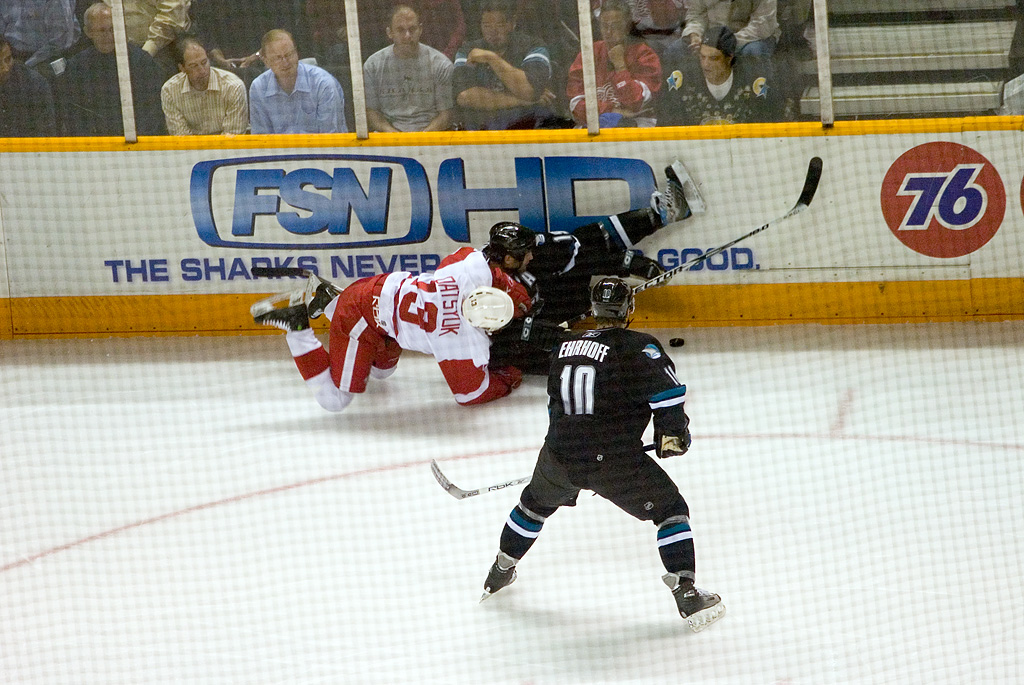
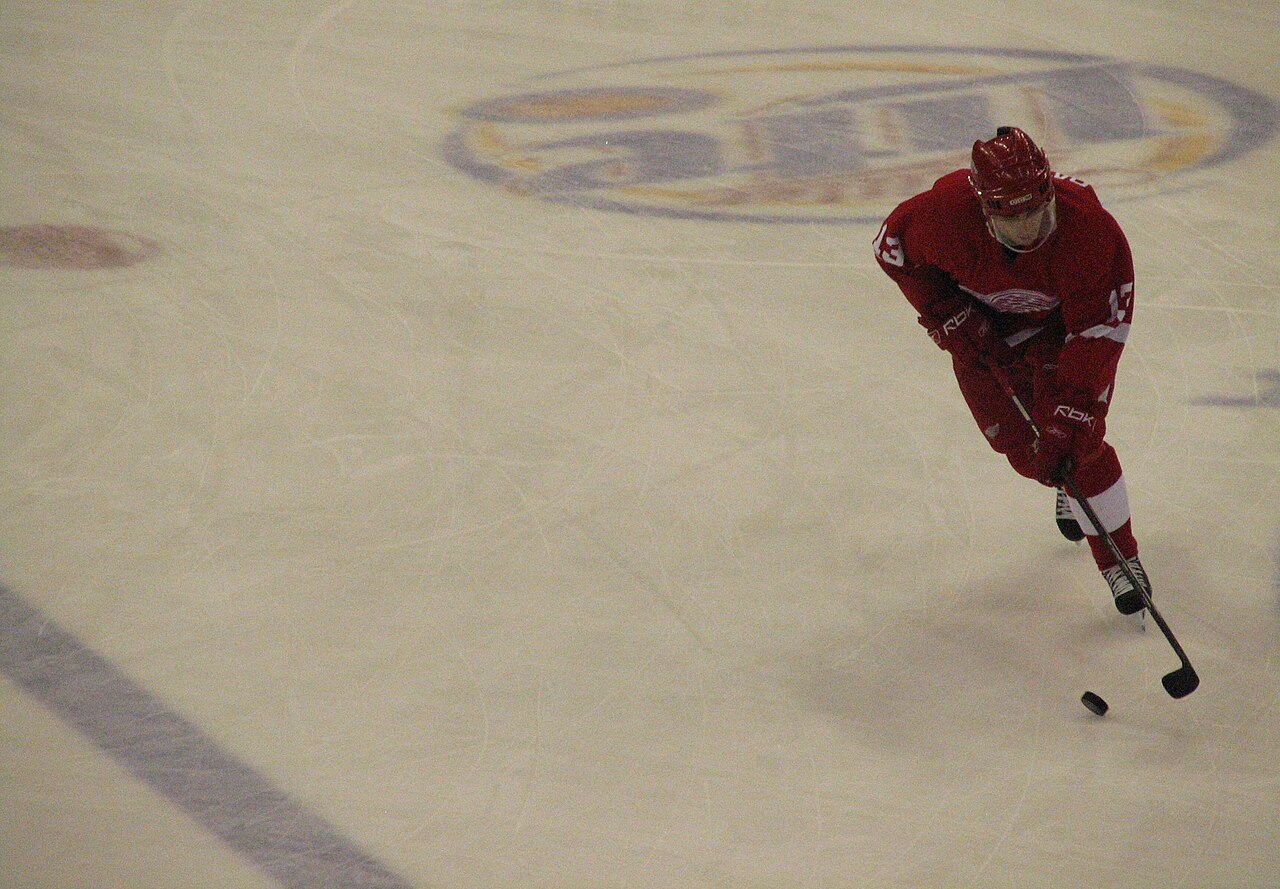
When Datsyuk began his NHL career with the Red Wings, he was mentored by fellow Russian stars Igor Larionov and Sergei Fedorov, as well as Detroit captain Steve Yzerman. He played on a line with Brett Hull and Boyd Devereaux, producing a moderately productive first year.
Lore & Background
Datsyuk was born in Sverdlovsk, Russian SFSR, in the Soviet Union. His childhood included significant difficulty, particularly at age 15 when his mother died. Though he displayed above-average hockey skills, he was often overlooked by scouts due to his smaller size.
He began playing for the farm club of Dynamo Yekaterinburg in the mid-1990s, but his career seemed headed for undistinguished status until noted Olympic trainer Vladimir Krikunov began coaching the team. Krikunov noticed Datsyuk's anticipation, vision, and intelligence on the soccer field rather than on ice, and under his guidance Datsyuk evolved into an efficient two-way player. Despite early successes, he went undrafted in 1996 and 1997.
The Overlooked Kid from Sverdlovsk
Pavel Datsyuk entered the world on 20 July 1978 in Sverdlovsk, a city in the Russian SFSR of the Soviet era. His family knew him simply as "Pasha," a diminutive that stuck from his earliest years. His childhood carried a heavy shadow: his mother passed away when he was just fifteen, a loss that shaped a young man already navigating the pressures of competitive sport.
On the ice, Datsyuk possessed above-average skill, yet his compact frame consistently cost him the attention of scouts. He spent the mid-1990s with the farm club of Dynamo Yekaterinburg, seemingly destined for an unremarkable career. Everything shifted when Olympic trainer Vladimir Krikunov took over coaching duties. Krikunov noticed the "boy with the twitchy walk," but not for his skating.
What struck him was Datsyuk's performance on the soccer pitch, where his anticipation, spatial vision, and tactical intelligence shone far brighter than anything on skates. Under Krikunov's guidance, the young player transformed into a remarkably efficient two-way hockey player and began drawing wider attention among Russian fans. Despite this growth, he went undrafted in both the 1996 and 1997 NHL Entry Drafts, a testament to how easily his smaller stature masked extraordinary potential.
A Storm, a Scout, and Fifteen Years in Detroit
In the summer of 1997-98, Detroit Red Wings European scout Håkan Andersson traveled to Moscow to evaluate defenceman Dmitri Kalinin. The player who actually grabbed his attention was a small forward on the opposing team, whom he recalled as "this little guy on the other team." Andersson arranged a second viewing, and a third was planned, but a storm grounded his flight. A Calgary Flames scout was booked on that same plane, meaning Andersson likely became the only NHL evaluator to see Datsyuk before the 1998 Entry Draft, where the Red Wings selected him 171st overall. He continued playing in Russia through 2000, then posted nine goals and seventeen assists in forty-two games for Ak Bars Kazan during 2000-01.
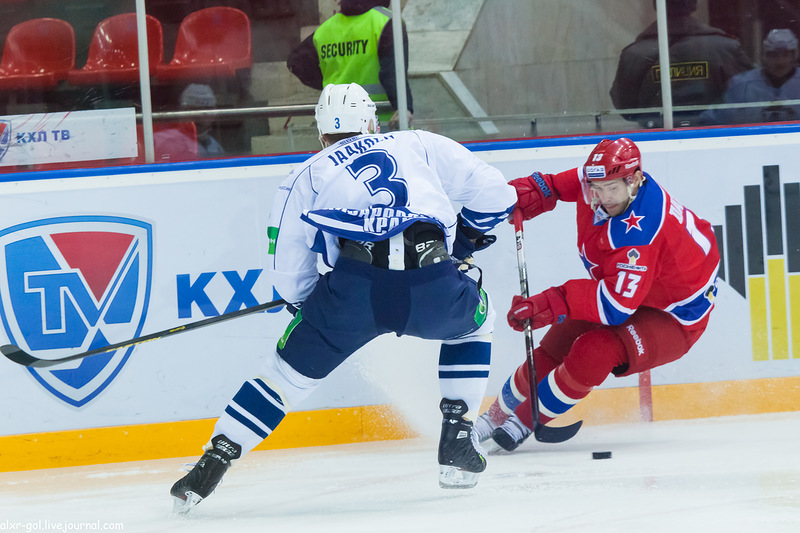
Arriving in Detroit in 2001, he was mentored by Igor Larionov, Sergei Fedorov, and captain Steve Yzerman, sharing a line with Brett Hull. He contributed to the 2002 Stanley Cup title, and after a disappointing 2003 playoff sweep, the departure of Fedorov opened the door for Datsyuk to become the team's primary creative force. A lockout and contract dispute in 2004-05 briefly sent him back to Russia, but he re-signed with Detroit in September 2005 and went on to capture a second Cup in 2008.
The Selke-Byng Paradox
Datsyuk's most remarkable statistical signature was his ability to dominate two seemingly contradictory categories simultaneously. He captured the Frank J. Selke Trophy in 2008, 2009, and 2010, recognizing him as the NHL's top defensive forward, and remained a finalist for that honor in 2011, 2012, and 2013. In the same era, he won the Lady Byng Memorial Trophy four consecutive years from 2006 through 2009, an award celebrating offensive production paired with exemplary sportsmanship. His 2005-06 Lady Byng season, for instance, featured just twenty-two penalty minutes across the entire year.
He was also nominated for the Hart Memorial Trophy as the league's most valuable player in 2009, and earned a berth in the 2004 NHL All-Star Game. This dual mastery of elite two-way play and game-changing offensive creativity defined his identity in Detroit. The culmination of that legacy came in 2024, when Datsyuk was inducted into the Hockey Hall of Fame, cementing a career in which he was simultaneously among the league's best defenders and its most elegant playmakers.
Triple Gold and the Magic Man's Final Chapter
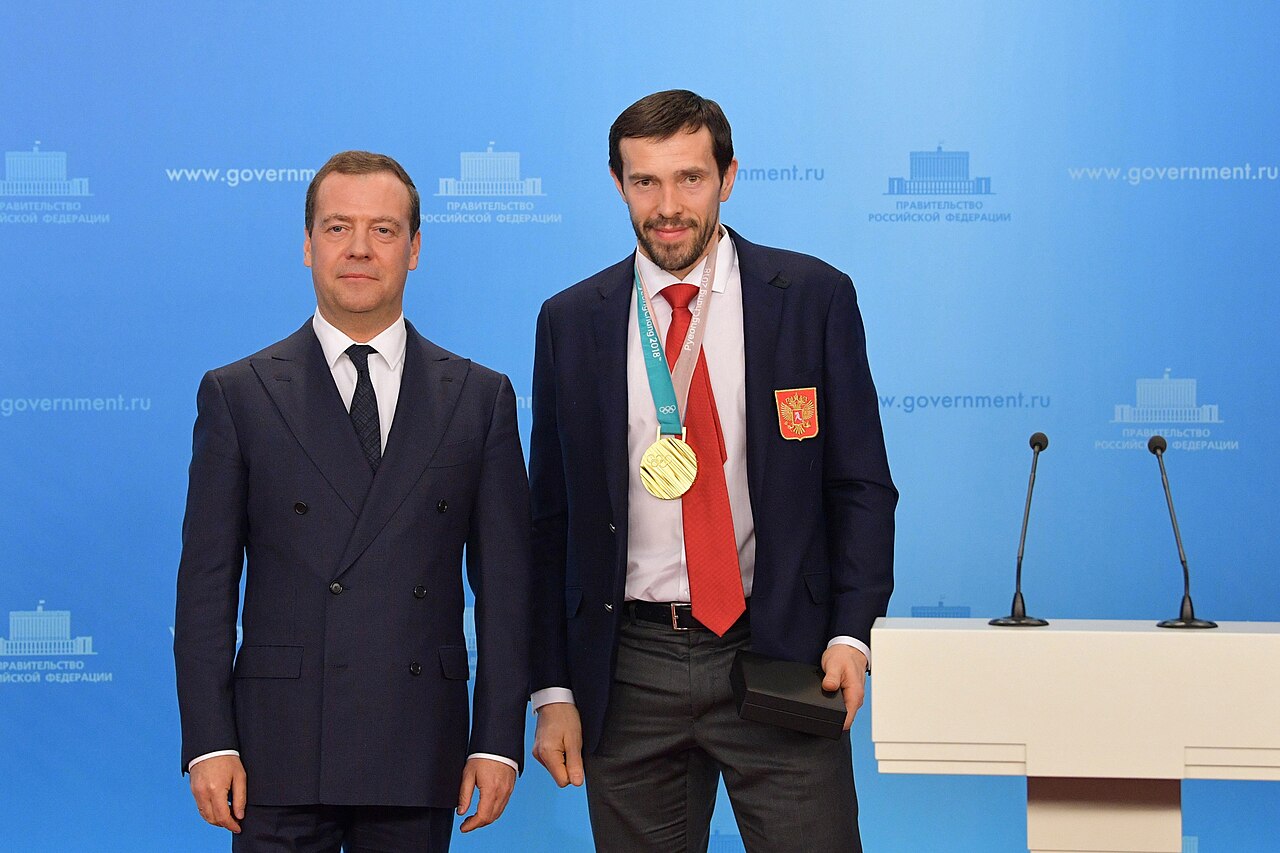
Beyond the NHL, Datsyuk carried the weight of Russian hockey across multiple Olympic cycles. He was a leading presence on Russia's men's national team at the 2002, 2006, and 2010 Winter Games, and he assumed the captaincy for the 2014 and 2018 tournaments. The 2018 gold medal completed a remarkable achievement: Datsyuk joined the Triple Gold Club, the exclusive group of players who have won a Stanley Cup, an Olympic gold, and a World Championship.
He also lifted the Gagarin Cup with SKA Saint Petersburg in 2017, adding a Russian league title to his post-NHL résumé. Nicknamed the "Magic Man," Datsyuk was named to the NHL's "100 Greatest Players" list, and at the time of that announcement he was the only active player on the roster who was not currently in the NHL. His career arc, from an undrafted kid in Sverdlovsk to a Hall of Famer with two Stanley Cups, a Gagarin Cup, and Olympic gold, stands as one of the most complete in modern hockey.
Reader's Guide
Datsyuk was first noticed by Detroit Red Wings Director of European Scouting Håkan Andersson in the summer of 1997–98. Andersson was in Moscow to scout defenceman Dmitri Kalinin but was struck by 'this little guy on the other team.' After a second trip to see Datsyuk, a third was canceled due to a storm; a Calgary Flames scout was scheduled on that flight, and Andersson believes he was the only NHL scout to have seen Datsyuk play before the 1998 NHL entry draft, when the Red Wings selected him 171st overall. Datsyuk continued playing in Russia until joining the Red Wings in 2001. He was mentored by Igor Larionov, Sergei Fedorov, and Steve Yzerman.
His career included winning the Frank J. Selke Trophy as the NHL's top defensive forward in 2008, 2009, and 2010, and four consecutive Lady Byng Memorial Trophies from 2006 to 2009. He was nominated for the Hart Memorial Trophy in 2009. Datsyuk also captained the Russian national team at the 2014 and 2018 Olympics, winning gold in 2018 and joining the Triple Gold Club. He was inducted into the Hockey Hall of Fame in 2024.
Career statistics and honours
Medals
- Gold Ice hockey at the 2018 Winter Olympics – Men's tournament
- Bronze Ice hockey at the 2002 Winter Olympics – Men's tournament
- Gold 2012 IIHF World Championship
- Silver 2010 IIHF World Championship
- Bronze 2005 IIHF World Championship
- Bronze 2016 IIHF World Championship
Regular season and playoffs
| Regular season | Playoffs | |||||||||||
|---|---|---|---|---|---|---|---|---|---|---|---|---|
| Season | Team | League | GP | G | A | Pts | PIM | GP | G | A | Pts | PIM |
| 1994–95 | SKA Avtomobilist–2 Yekaterinburg | RUS.2 | 8 | 0 | 1 | 1 | 4 | — | — | — | — | — |
| 1995–96 | SKA Avtomobilist–2 Yekaterinburg | RUS.2 | 44 | 8 | 9 | 17 | 8 | — | — | — | — | — |
| 1996–97 | Spartak Yekaterinburg | RSL | 18 | 2 | 2 | 4 | 4 | — | — | — | — | — |
| 1996–97 | SKA Yekaterinburg | RUS.3 | 7 | 3 | 3 | 6 | 2 | — | — | — | — | — |
| 1997–98 | Dinamo–Energija Yekaterinburg | RSL | 24 | 3 | 4 | 7 | 4 | — | — | — | — | — |
| 1998–99 | Dinamo–Energija Yekaterinburg | RUS.2 | 13 | 9 | 8 | 17 | 2 | — | — | — | — | — |
| 1998–99 | Dinamo–Energija–2 Yekaterinburg | RUS.3 | 10 | 14 | 14 | 28 | 4 | — | — | — | — | — |
| 1999–2000 | Dinamo–Energija Yekaterinburg | RSL | 15 | 1 | 3 | 4 | 4 | — | — | — | — | — |
| 2000–01 | Ak Bars Kazan | RSL | 42 | 9 | 19 | 28 | 12 | 4 | 0 | 1 | 1 | 2 |
| 2001–02 | Detroit Red Wings | NHL | 70 | 11 | 24 | 35 | 4 | 21 | 3 | 3 | 6 | 2 |
| 2002–03 | Detroit Red Wings | NHL | 64 | 12 | 39 | 51 | 16 | 4 | 0 | 0 | 0 | 0 |
| 2003–04 | Detroit Red Wings | NHL | 75 | 30 | 38 | 68 | 35 | 12 | 0 | 6 | 6 | 2 |
| 2004–05 | Dynamo Moscow | RSL | 47 | 15 | 17 | 32 | 16 | 10 | 6 | 3 | 9 | 4 |
| 2005–06 | Detroit Red Wings | NHL | 75 | 28 | 59 | 87 | 22 | 5 | 0 | 3 | 3 | 0 |
| 2006–07 | Detroit Red Wings | NHL | 79 | 27 | 60 | 87 | 20 | 18 | 8 | 8 | 16 | 8 |
| 2007–08 | Detroit Red Wings | NHL | 82 | 31 | 66 | 97 | 20 | 22 | 10 | 13 | 23 | 6 |
| 2008–09 | Detroit Red Wings | NHL | 81 | 32 | 65 | 97 | 22 | 16 | 1 | 8 | 9 | 5 |
| 2009–10 | Detroit Red Wings | NHL | 80 | 27 | 43 | 70 | 18 | 12 | 6 | 7 | 13 | 8 |
| 2010–11 | Detroit Red Wings | NHL | 56 | 23 | 36 | 59 | 15 | 11 | 4 | 11 | 15 | 8 |
| 2011–12 | Detroit Red Wings | NHL | 70 | 19 | 48 | 67 | 14 | 5 | 1 | 2 | 3 | 2 |
| 2012–13 | CSKA Moscow | KHL | 31 | 11 | 25 | 36 | 4 | — | — | — | — | — |
| 2012–13 | Detroit Red Wings | NHL | 47 | 15 | 34 | 49 | 14 | 14 | 3 | 6 | 9 | 4 |
| 2013–14 | Detroit Red Wings | NHL | 45 | 17 | 20 | 37 | 6 | 5 | 3 | 2 | 5 | 0 |
| 2014–15 | Detroit Red Wings | NHL | 63 | 26 | 39 | 65 | 8 | 7 | 3 | 2 | 5 | 2 |
| 2015–16 | Detroit Red Wings | NHL | 66 | 16 | 33 | 49 | 14 | 5 | 0 | 0 | 0 | 4 |
| 2016–17 | SKA Saint Petersburg | KHL | 44 | 12 | 22 | 34 | 14 | 7 | 3 | 5 | 8 | 27 |
| 2017–18 | SKA Saint Petersburg | KHL | 37 | 8 | 27 | 35 | 8 | 15 | 4 | 3 | 7 | 0 |
| 2018–19 | SKA Saint Petersburg | KHL | 54 | 12 | 30 | 42 | 6 | 12 | 1 | 6 | 7 | 4 |
| 2019–20 | Avtomobilist Yekaterinburg | KHL | 43 | 5 | 17 | 22 | 10 | 4 | 2 | 2 | 4 | 2 |
| 2020–21 | Avtomobilist Yekaterinburg | KHL | 51 | 12 | 23 | 35 | 10 | 5 | 1 | 2 | 3 | 0 |
| RSL totals | 146 | 30 | 45 | 75 | 40 | 14 | 6 | 4 | 10 | 6 | ||
| NHL totals | 953 | 314 | 604 | 918 | 228 | 157 | 42 | 71 | 113 | 55 | ||
| KHL totals | 260 | 60 | 144 | 204 | 52 | 43 | 11 | 18 | 29 | 33 | ||
International
| Year | Team | Event | Result | GP | G | A | Pts | PIM |
|---|---|---|---|---|---|---|---|---|
| 2001 | Russia | WC | 6th | 7 | 0 | 4 | 4 | 0 |
| 2002 | Russia | OG | Bronze | 6 | 1 | 2 | 3 | 0 |
| 2003 | Russia | WC | 7th | 7 | 1 | 4 | 5 | 0 |
| 2004 | Russia | WCH | 5th | 4 | 1 | 0 | 1 | 0 |
| 2005 | Russia | WC | Bronze | 9 | 3 | 4 | 7 | 0 |
| 2006 | Russia | OG | 4th | 8 | 1 | 7 | 8 | 10 |
| 2010 | Russia | OG | 6th | 4 | 1 | 2 | 3 | 2 |
| 2010 | Russia | WC | Silver | 6 | 6 | 1 | 7 | 0 |
| 2012 | Russia | WC | Gold | 10 | 3 | 4 | 7 | 2 |
| 2014 | Russia | OG | 5th | 5 | 2 | 4 | 6 | 0 |
| 2016 | Russia | WC | Bronze | 10 | 1 | 10 | 11 | 0 |
| 2016 | Russia | WCH | 4th | 2 | 0 | 2 | 2 | 0 |
| 2018 | OAR | OG | Gold | 6 | 0 | 6 | 6 | 0 |
| 2018 | Russia | WC | 6th | 8 | 2 | 8 | 10 | 2 |
| Senior totals | 92 | 22 | 58 | 80 | 16 | |||
Tables copied from the source article, totals included as the source gives them: Wikipedia: Pavel Datsyuk (CC BY-SA 4.0). Wide tables scroll sideways.
More in Detroit Red Wings Players
Test yourself
Three questions drawn from this entry’s sources. Pick an answer to check it.
Answers checked against the source article
Sources
Compiled from Wikipedia and the sources listed below. Text from Wikipedia is available under CC BY-SA 4.0; this entry is adapted from it.
- Wikipedia: Pavel Datsyuk (CC BY-SA 4.0).
- Statistics, medals and awards: the tables of the source article.
- Word definitions: the Codexery glossary, each quoted from its Wikipedia article.
Spotted an error? Know more?
Reader corrections go straight into our review queue. Suggest an edit · How this site is sourced