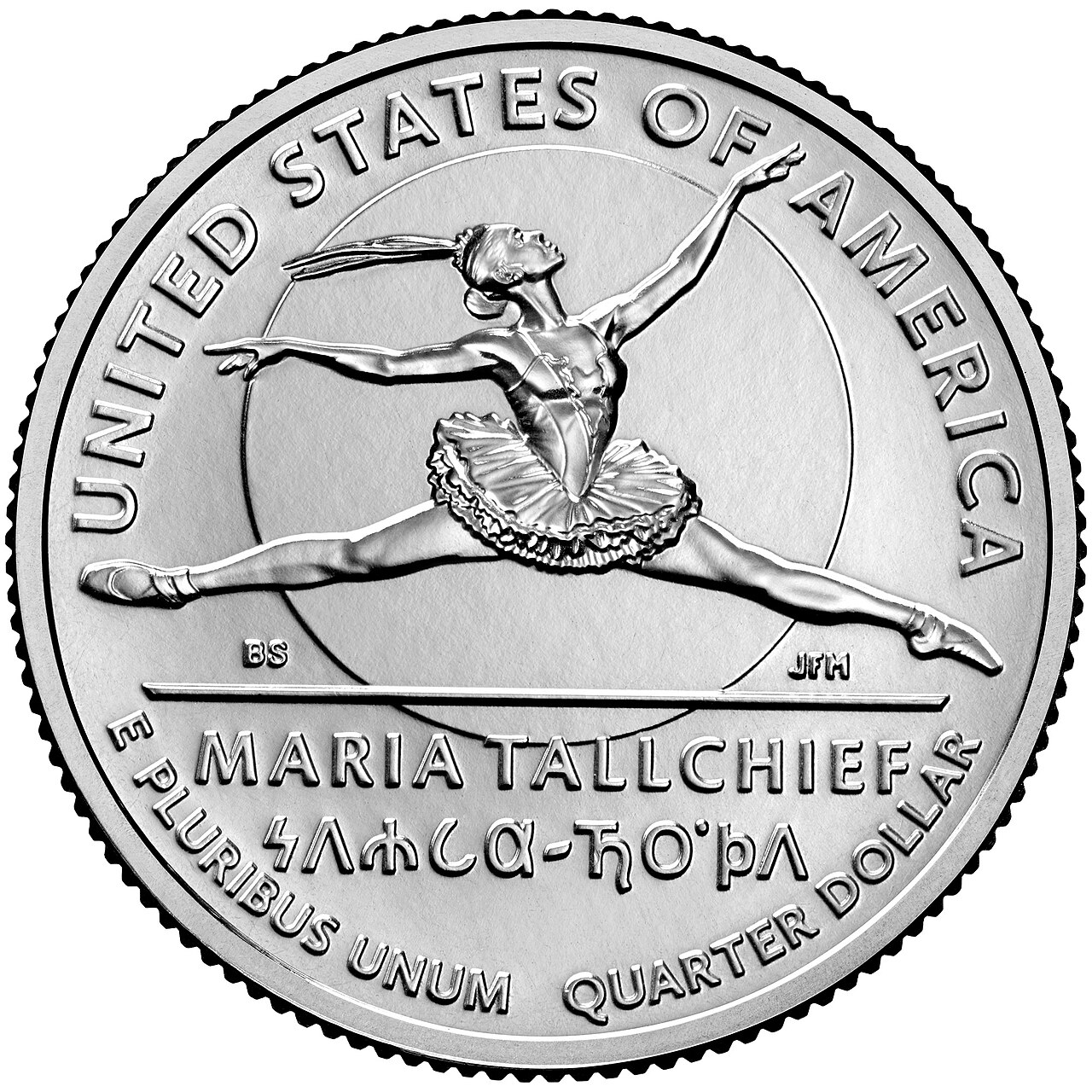
Maria Tallchief
Osage ballerina who became America's first major prima ballerina.

Joseph Menna, Benjamin Sowards · Public domain
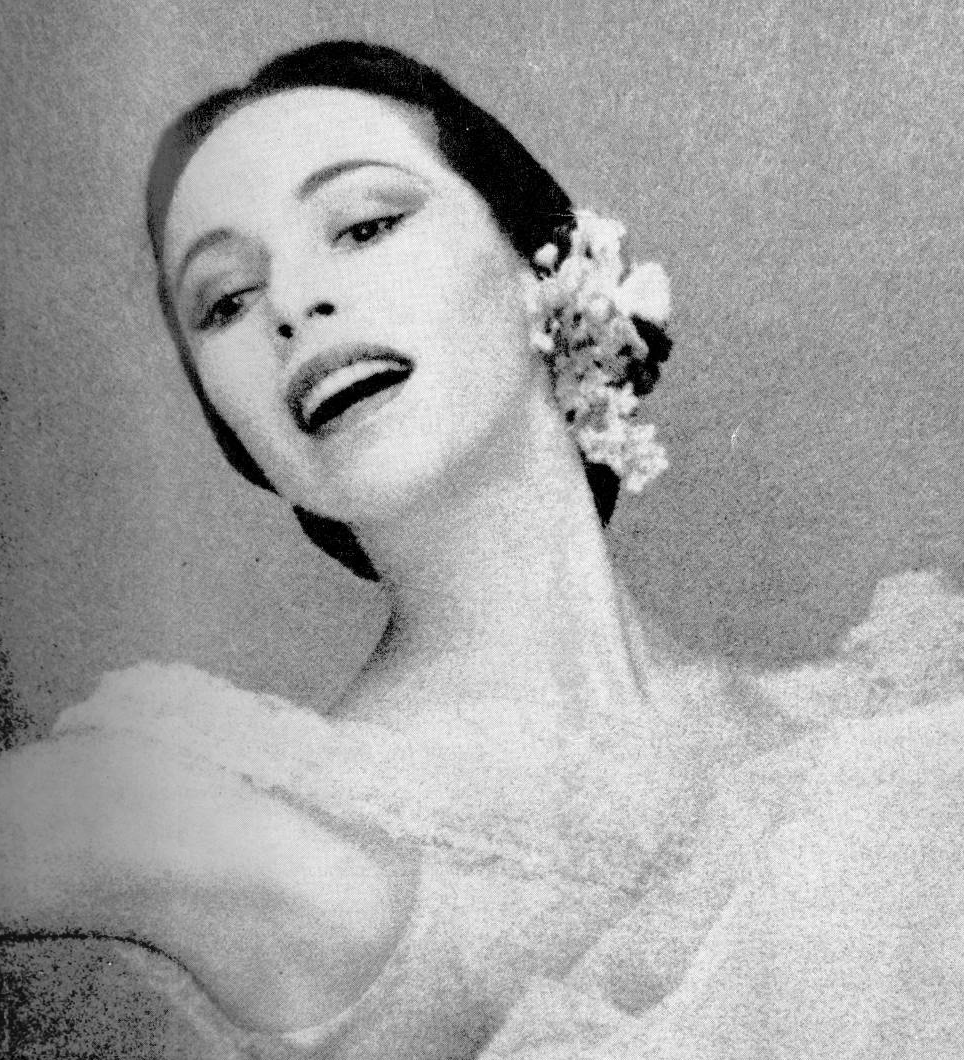
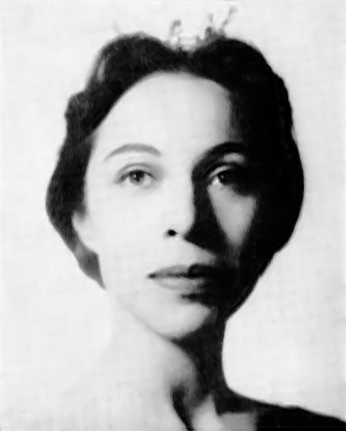
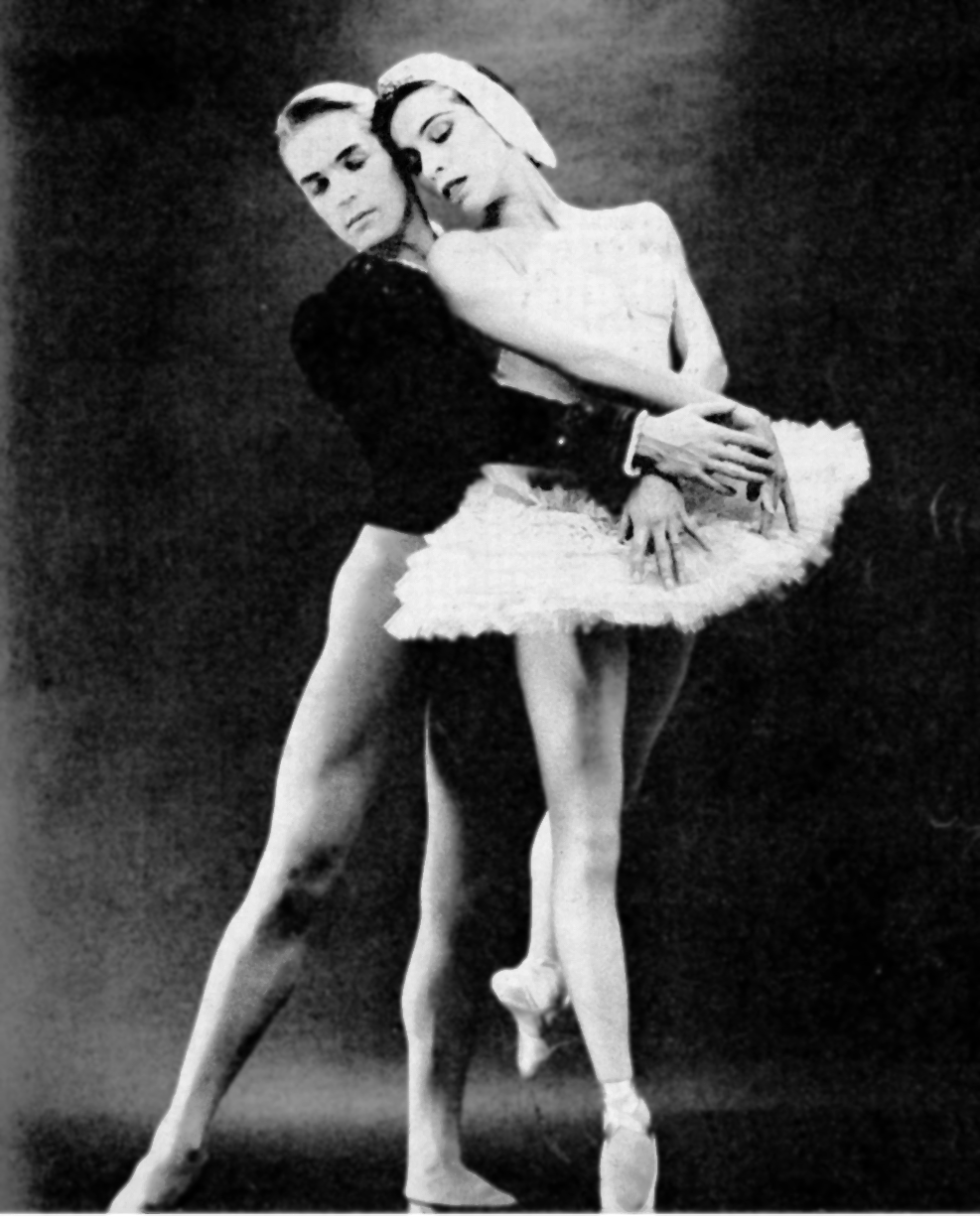
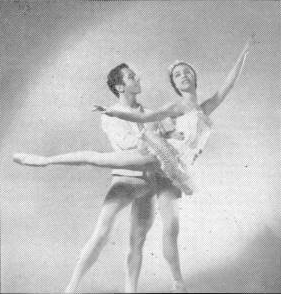
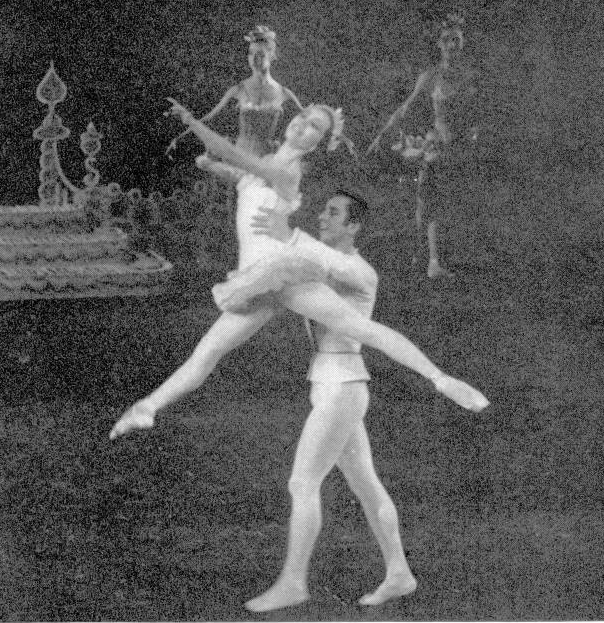
Maria Tallchief, born Elizabeth Marie Tall Chief on January 24, 1925, in Fairfax, Oklahoma, was an Osage ballerina who became America’s first major prima ballerina and the first Native American to achieve that rank. Along with choreographer George Balanchine, she is credited with transforming American ballet.
She was the third child of Alexander Joseph Tall Chief, an Osage man, and Ruth Porter, who was of Scottish-Irish descent. Ruth met Alexander, a widower, while visiting her sister, who worked as a housekeeper for Alexander’s mother. Known as “Betty Marie” to family and friends, she grew up in a large terracotta-brick house overlooking the Osage reservation. Her father had inherited wealth from oil revenues, which came after her great-grandfather, Peter Bigheart, helped negotiate mineral rights for the Osage. Despite this wealth, her father was a binge drinker, and her parents often argued about money. The family spent summers in Colorado Springs to escape the Oklahoma heat.
Alexander had three children from a previous marriage: Alex III, Frances, and Thomas, who played football for the University of Oklahoma and was drafted by the Pittsburgh Steelers. With Ruth, he had Gerald, who was severely injured by a horse kick as a child and never regained normal cognitive function, and Marjorie, who became a ballerina and Tallchief’s “best friend.”
Ruth had dreamed of performing but couldn’t afford lessons, so she ensured her daughters could. Betty Marie started ballet at age three in Colorado Springs, and she and Marjorie also performed at rodeos. She studied piano and considered becoming a concert pianist. In 1930, a Tulsa teacher named Mrs. Sabin took on the sisters, but Tallchief later called Sabin a “wretched instructor” who put her en pointe at age five, far too young. At five, she attended Sacred Heart Catholic School, where her reading ability let her skip two grades. Between piano, ballet, and school, she had little free time but loved wandering outdoors and hunting for arrowheads.
In 1933, the family moved to Los Angeles to get the children into Hollywood musicals. A drugstore clerk recommended dance teacher Ernest Belcher. His school moved Betty Marie back to her proper grade but placed her in an advanced class. Bored, she focused on dance, relearning ballet from the start and also studying tap, Spanish dancing, and acrobatics—though she found tumbling difficult and quit. The family later moved to Beverly Hills, where she faced “painful” discrimination and began spelling her last name as one word, Tallchief. She continued piano, performing as a guest soloist with small orchestras through high school.
At age 12, she studied under renowned choreographer Bronislava Nijinska and dancer David Lichine. Nijinska, Tallchief said, “was a personification of what ballet was all about,” and instilled in her the discipline that ballet was a full-time pursuit. Under Nijinska, Tallchief decided to devote her life to ballet, abandoning her earlier plan to become a concert pianist.
- born
- January 24, 1925, Fairfax, Oklahoma
- died
- April 11, 2013
- field
- Ballet
- nationality
- American (Osage Nation)
- known_for
- America's first major prima ballerina; first Native American prima ballerina; co
Verified Timeline
Lore & Background
Elizabeth Marie Tall Chief was born in Fairfax, Oklahoma, on January 24, 1925, the third child of Alexander Joseph Tall Chief, a member of the Osage Nation, and his second wife Ruth Porter, of Scottish-Irish descent. Her father grew up wealthy from oil revenues on Osage land. She began ballet at age three in summer classes in Colorado Springs. At five, she was enrolled at Sacred Heart Catholic School, where teachers allowed her to skip the first two grade levels. In 1933, the family moved to Los Angeles seeking Hollywood opportunities. There she studied under Ernest Belcher, who removed her from pointe, and later with renowned choreographer Bronislava Nijinska, who opened her own studio in Los Angeles. Nijinska imparted a strong sense of discipline; Tallchief recalled, 'We didn't concentrate only for an hour and a half a day. We lived it.' Under Nijinska, Tallchief decided ballet was what she wanted to devote her life to. At age 17 in 1942, she moved to New York and joined the Ballet Russe de Monte Carlo as an apprentice, later becoming a full member at $40 per week. Agnes de Mille suggested she change her name to Maria Tallchief, which she agreed to.
Reader's Guide
Tallchief’s significance stems from her role as America’s first major prima ballerina and the first Native American to hold that rank, a barrier-breaking achievement that redefined American ballet. Together with choreographer George Balanchine, she is widely credited with revolutionizing the art form in the United States. Her technical precision and artistry helped forge a distinctly American ballet tradition, moving beyond European influences. Tallchief’s Osage heritage was integral to her identity; her Osage family name translates to “Two-Standards,” and her great-grandfather, Peter Bigheart, negotiated mineral rights for the Osage reservation, which later enriched her family through oil revenues. Raised on the Osage reservation in Fairfax, Oklahoma, she began ballet at age three, studying under a local teacher who put her en pointe at five—a practice she later recognized as potentially harmful. After moving to Los Angeles, she trained under renowned choreographers Bronislava Nijinska and David Lichine, with Nijinska instilling in her the discipline that ballet demanded full-time devotion. Tallchief’s legacy endures as a symbol of cultural achievement and the integration of Indigenous heritage into classical dance, inspiring generations of dancers from diverse backgrounds.
Did You Know?
- Tallchief's Osage family name is Ki He Kah Stah Tsa, written in Osage script as 𐒼𐒱𐒹𐒻𐒼𐒰-𐓆𐓈𐒷𐓊𐒷.
- She was put en pointe at age five by a teacher she later called 'a wretched instructor who never taught the basics.'
- At age 12, she began working with Bronislava Nijinska, who inspired her to devote her life to ballet instead of becoming a concert pianist.
- She joined the Ballet Russe de Monte Carlo in 1942 at age 17, partly because she had a passport—many Russian refugee dancers were stateless.
- Agnes de Mille suggested she change her name to Maria Tallchief, which she agreed to, after refusing earlier suggestions to use a Russian-sounding name like 'Tallchieva.'
Osage Heritage and a World of Wealth and Turmoil
Born Elizabeth Marie Tall Chief in Fairfax, Oklahoma, in January 1925, she entered a family steeped in Osage history and sudden prosperity. Her paternal great-grandfather Peter Bigheart had negotiated mineral rights for the Osage Nation, and the subsequent oil boom made the family extraordinarily wealthy. Her father Alexander Joseph owned the local movie theater, the pool hall, and a ten-room terracotta-brick house perched on a hill overlooking the reservation. Summers were spent in Colorado Springs to escape the Oklahoma heat. Yet the gilded surface concealed real pain: her father was a binge drinker, and her parents frequently clashed over money. She had an older brother Gerald, who suffered a devastating head injury from a horse kick as a child and never fully recovered his cognitive abilities, and a sister Marjorie who became a dancer and her closest confidante. Her father's earlier marriage to a German immigrant had produced three children, including Thomas, who played football at the University of Oklahoma before being drafted by the Pittsburgh Steelers.
From Rodeo Stages to Rebuilding a Dancer from Scratch
Ruth Porter had long dreamed of performing but could never afford lessons, so she was determined her daughters would not share that limitation. Betty Marie began summer ballet classes in Colorado Springs at just three years old, and the family regularly performed at rodeos and local community events. In 1930, a Tulsa instructor named Mrs. Sabin came to Fairfax recruiting students and took both sisters in, though Tallchief later recalled her as a wretched teacher who neglected fundamentals and placed the five-year-old en pointe at a dangerously young age. In 1933 the family moved to Los Angeles hoping to land the children in Hollywood musicals. A drugstore clerk's offhand suggestion directed them to Ernest Belcher's studio, where Betty Marie had to essentially rebuild her ballet technique from the ground up while also studying tap, Spanish dance, and acrobatics. At Beverly Vista School she endured what she called painful discrimination and began writing her surname as a single word, Tallchief. She continued piano studies throughout high school, appearing as a guest soloist with small symphony orchestras.
The Nijinska Turning Point
At twelve, Betty Marie began training under Bronislava Nijinska, the renowned choreographer who had recently opened her own Los Angeles studio. Tallchief described Nijinska as a living embodiment of everything ballet could be, and said simply looking at her clarified that this was the path she would follow. Under Nijinska's exacting standards, the students did not merely attend a class for an hour and a half; they immersed their entire lives in the art. This was the moment she set aside her earlier ambition of becoming a concert pianist and committed wholly to dance. Nijinska recognized her dedication and poured exceptional attention into her development. When Nijinska staged three ballets at the Hollywood Bowl, Tallchief expected a principal role but was instead placed in the corps de ballet. She was crushed, feeling humiliated and abandoned. A frank conversation with her mother rekindled her determination, and she steadily worked her way into the lead part in the Chopin Concerto.
Breaking Barriers and Reshaping American Ballet
Maria Tallchief's place in dance history is without parallel: she became America's first major prima ballerina and the first Native American to hold that rank. In partnership with Georgian-American choreographer George Balanchine, she is widely credited with revolutionizing American ballet, helping transform it from a derivative echo of European traditions into a bold, self-assured art form with its own identity. Her Osage identity—born Elizabeth Marie Tall Chief, carrying the Osage name Two-Standards and the family name Ki He Kah Stah Tsa—remained inseparable from her artistic self throughout her career. She lived from January 24, 1925, to April 11, 2013, a lifetime that spanned the rise of American ballet from a regional curiosity to a commanding global presence. Her trajectory, from a hilltop house on the Osage reservation to the world's most celebrated stages, made her a figure who simultaneously shattered barriers of race, nationality, and artistic convention.
Gallery
Frequently Asked Questions
Who is Maria Tallchief?
Born Elizabeth Marie Tall Chief in Fairfax, Oklahoma, she was an Osage dancer who went on to become the first Native American to hold the rank of prima ballerina in the United States.
Why is Maria Tallchief considered a landmark figure in ballet?
She is credited as America's first major prima ballerina and the first member of a Native American nation to achieve that rank. Her partnership with choreographer George Balanchine is widely regarded as having reshaped the identity of American ballet.
What was Maria Tallchief's relationship with George Balanchine?
Balanchine served as her principal choreographic collaborator, and together they are frequently cited as a defining creative duo in twentieth-century American dance. Their work is often described as a turning point that gave American ballet its own distinct voice.
What was Maria Tallchief's cultural heritage?
She was a member of the Osage Nation, born in 1925 in Fairfax, Oklahoma. Her Native American identity made her rise to the top of the ballet world a historic first for both her community and the art form.
When did Maria Tallchief live?
She was born on January 24, 1925, and passed away on April 11, 2013, giving her a life span of nearly eighty-eight years.
More in Dancers And Choreographers 1-24
Related in Dancers And Choreographers
Links follow this subject's own source article.
Spotted an error? Know more?
This is a living reference — every entry is fact-audited, and reader corrections feed straight into our audit queue. Suggest an edit · See this site's audit record