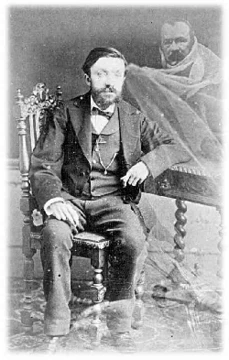
Michael W. Friedlander
Physicist and skeptic of fringe science.
Last updated
Michael W. Friedlander was a South African-born American physicist and skeptic who served as professor emeritus of physics at Washington University in St. Louis. His research focused on cosmic rays and gamma ray astronomy. He is known for his book "At The Fringes Of Science" (1998), a scholarly study of fringe science that includes criticism of the ideas of Immanuel Velikovsky.
Education and career
Michael W. Friedlander began his academic journey in South Africa, earning a Bachelor of Science in Physics and Applied Mathematics from the University of Cape Town in 1948, followed by a Master of Science in Physics with First Class honors in 1950. He stayed on as a junior lecturer in physics at the same university from 1951 to 1952. He then moved to London for doctoral work at the University of Bristol, where he served as a research associate from 1954 to 1956.
During this time, he co-authored a paper with M. G. K. Menon that announced the discovery of beta decay in the kaon and provided the first precise measurement of the lambda-zero hyperon's mass. He completed his PhD in Physics at Bristol in 1955. In August 1956, Friedlander joined Washington University's physics department as an assistant professor, later becoming an associate professor. He worked to recreate the Cosmic Ray Laboratory he had known at Bristol, studying the elemental makeup of light cosmic rays by analyzing nuclear emulsions collected from high-altitude balloons.
He became a full professor of physics in 1967. In the late 1960s, he collaborated with Joseph Klarmann and Robert M. Walker to examine ultra-heavy cosmic rays, those with atomic numbers above 26. He also explored how cosmic ray particles affect the dust and gas around the stellar system Eta Carinae. Friedlander had a strong commitment to public science education.
In 1994, he launched the Saturday Science lecture series for the general public, organizing talks by himself and colleagues on a broad range of physics and scientific topics. He continued this work until 2015, when failing health forced him to step back.
He was also a member of the Greater St. Louis Citizens' Committee for Nuclear Information, which started the Baby Tooth Survey. That project analyzed baby teeth donated by parents to see if children near U.S. bomb test sites in the 1950s had absorbed more radioactive strontium-90 than normal. Additionally, Friedlander served as interim chair of Washington University's music department from 1984 to 1986.
Recognition
Friedlander spent 1962 to 1963 as a Guggenheim Fellow and visiting professor at Imperial College, London. Washington University honored him with its Alumni Award for Teaching in 1975 and its Kemper Award for Innovative Teaching in 1993. The university established the Michael Friedlander Scholarship for undergraduates in October 1999. His son David created a memorial website that showcases his cosmic rays research, his varied interests, and his family life.
More in Critics of Parapsychology
Test yourself
Three questions drawn from this entry’s sources. Pick an answer to check it.
Answers checked against the source article
Sources
Compiled from Wikipedia and the sources listed below. Text from Wikipedia is available under CC BY-SA 4.0; this entry is adapted from it.
- Wikipedia: Michael W. Friedlander (CC BY-SA 4.0).
- Word definitions: the , each quoted from its Wikipedia article.
Spotted an error? Know more?
Reader corrections go straight into our review queue. Suggest an edit · How this site is sourced