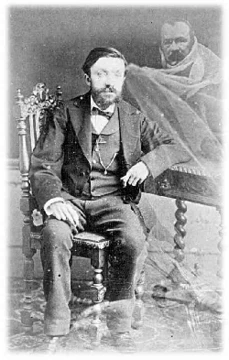
Piero Angela
Italian science journalist and television host known for scientific disclosure.
Last updated
Piero Domenico Angela was an Italian science journalist, television host, and essayist, with a brief early professional career also as a jazz musician and pianist. He started as a radio reporter, then became a foreign correspondent, and established himself as the host of the RAI newscast. He is best known as the creator and presenter of broadcasting programmes modelled on BBC and David Attenborough documentaries, and also for his scientific journalism published in numerous publications. Angela wrote thirty-three books, which sold over three million copies, received many honorary degrees, made over sixty documentaries and hundreds of television episodes, won seven Telegattos, and eight times won the national television directing award.
Journalism
At the end of 1951, Angela began collaborating on a programme about the history of jazz for RAI. By 1952 he stopped playing music and worked full time as a journalist, first as a reporter and contributor. He spent nine years in Paris, four years in Brussels as a correspondent, and toured America as a correspondent for RAI. His wife Margherita Pastore gave up her career as a dancer, married him when she was 19, and accompanied him to Paris.
Their children Christine and Alberto were born in Paris. Fabiano Fabiani asked Angela to come to Rome to work on television, saying he wanted journalists on television.
In 1968 Angela was the first anchor alternating with Andrea Barbato on the National Television News at 13.30. He wrote 33 books, sold over three million copies, received many honorary degrees, made about sixty documentaries and hundreds of television episodes, and won seven Telegacts and eight times the National Television Directing Award. In 1969 he left the newscast to make longer, more detailed programs.
Scientific journalism
Influenced by Roberto Rossellini's documentary lesson, in 1968 Angela produced a series of documentaries titled 'The Future in Space' on the Apollo program, making live connections for RAI during the launch of the Saturn V carrier. He then began a long activity of scientific disclosure, producing transmissions including 'Destinazione Uomo', 'Da zero a tre anni', 'Dove va il mondo?', 'Nel buio degli anni luce', 'Indagine critica sulla parapsicologia', and 'Nel cosmo alla ricerca della vita'.
Starting in 1971 he hosted scientific TV programmes on astronomy, biology, global economy, parapsychology, and others. In 1981 he started his most famous show, Quark, which as of 2022 is still active.
Quark was hosted weekly until 1983 and spawned specials and spin-offs on topics from dinosaurs to cosmology. The formula used BBC and David Attenborough documentaries, Bruno Bozzetto cartoons, interviews with experts, and studio explanations. Spin-offs included 'Quark speciale', 'Il mondo di Quark', 'Quark economia', and 'Quark Europa'.
Other activities
In 1989, Angela helped establish CICAP, a group focused on science education and critical thinking, particularly examining fields like parapsychology. He became its honorary president in May 2016. A well-known saying tied to him, about keeping an open mind without letting the brain fall out, actually has many possible origins.
In 1996, the Committee for Skeptical Inquiry gave him a journalism award. His 1978 show on parapsychology exposed the tricks used by mediums and gurus. After a 2000 Superquark episode called homeopathy unscientific, two homeopathic groups sued him for defamation.
Angela was cleared in both cases, with the judge agreeing homeopathy lacks scientific basis. He wrote many popular books, starting in 1972, often with his son Alberto. He described himself as agnostic about religion and called death a nuisance.
Awards
Angela received many honorary degrees. In 1993 he received the Kalinga Award for scientific dissemination from UNESCO, and in 2002 the gold medal for the culture of the Italian Republic. He received seven Telegatti, one overseeing his entire career awarded on 22 January 2008. On 3 October 2010 he received the Special Jury Prize of the Literary Award Giuseppe Dessì.
The asteroid 7197 discovered by Andrea Boattini and Maura Tombelli bears his name: Pieroangela. A gastropod mollusk (Babylonia pieroangelai) and an extinct bird (Shuilingornis angelai) are named in his honor. Padua recognized his honorary citizenship for his contribution to scientific dissemination; Turin gave him honorary citizenship on 23 October 2017. He received honorary degrees in Natural Sciences, Biology, Biological Sciences, Physics, Veterinary Medicine, Materials science and technology, Applied Biology and Experimental Medicine, Communication Science and Technology, and from the American University of Rome, as well as a Diploma honoris causa in Piano.
Did You Know?
- At age one, Angela nearly died from pneumonia; at age 12 he underwent a two-and-a-half-hour appendicitis operation due to complications.
- By 1948, he played jazz in Turin clubs using the name Peter Angela, and in the early fifties formed a jazz trio with drummer Franco Mondini.
- In 1984 he created 'Pillole di Quark', a thirty-second spot on technical, scientific, educational, social, and medical topics.
- Angela wrote that he was 'a bad student' in school and that teachers should remember the Latin motto 'ludendo docere' ('teach with fun').
Frequently Asked Questions
When and where was Piero Angela born?
Piero Angela was born on 22 December 1928 in Turin, Kingdom of Italy.
When did Piero Angela die?
Piero Angela died on 13 August 2022 in Rome, Italy.
More in Critics of Parapsychology
Sources
Compiled from Wikipedia and the sources listed below. Text from Wikipedia is available under CC BY-SA 4.0; this entry is adapted from it.
- Wikipedia: Piero Angela (CC BY-SA 4.0).
- Word definitions: the , each quoted from its Wikipedia article.
Spotted an error? Know more?
Reader corrections go straight into our review queue. Suggest an edit · How this site is sourced