Frequently Asked Questions
The most-asked questions about costa rican cuisine.
What defines Costa Rican cuisine as a whole?
Costa Rican cooking is built around corn, rice, beans, and tropical fruits, with a generally mild flavor profile compared to its Central American neighbors. It emphasizes fresh, locally sourced ingredients and simple preparation methods rather than heavy spicing.
What is gallo pinto and why is it so central?
Gallo pinto is a rice-and-beans dish seasoned with cilantro, onion, and a touch of aji dulce (sweet pepper), and it anchors nearly every meal of the day. It is so foundational that Costa Ricans often describe a day as starting and ending with it.
What is a 'casado' and why is it called the national dish?
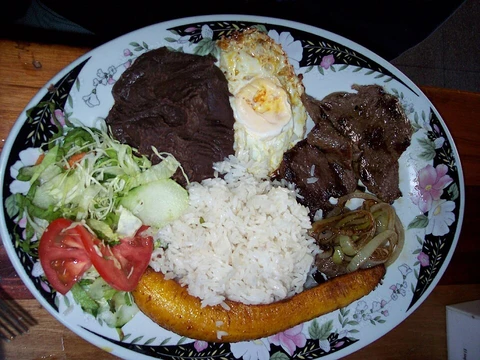
A casado is a plate pairing white rice, black beans, a fried plantain, a small salad, and a protein such as grilled fish or chicken, all served together. It is considered the national dish because it showcases the core ingredients and structure of a typical home-cooked Costa Rican meal.
What role does corn play in the cuisine?
Corn is the backbone of Costa Rican cooking, appearing as fresh ears, tortillas, tamales, and even in broths. Its versatility means it shows up at breakfast, lunch, and dinner in different forms.
What does a typical Costa Rican breakfast look like?
A standard breakfast centers on gallo pinto, a fried egg, a slice of cheese, and a piece of bread, often accompanied by hot coffee or fresh orange juice. It is hearty but straightforward, rarely featuring the elaborate pastries common in other Latin American countries.
How spicy is Costa Rican food?
Costa Rican cuisine is notably mild; heat is kept low with aji dulce and only a small amount of aji limo (bird's-eye chili) used sparingly. Most dishes rely on the natural sweetness of tropical fruits and the earthiness of beans rather than capsaicin.
What are some signature desserts?
Popular desserts include natilla (a sweet corn pudding), arroz con leche (rice pudding), and simple fruit plates like mango with lime and a pinch of salt. Desserts tend to be dairy- or fruit-forward and served after a full meal rather than as elaborate confections.
What beverages are most associated with Costa Rican food?
Black coffee, often grown in the highlands of Tarrazú, is the default drink, alongside fresh-squeezed juices from citrus, mango, or pineapple. Cerveza Gallo is the most common alcoholic pairing at the table.
How does Costa Rican cuisine differ from its Central American neighbors?
Compared to the chili-driven cooking of Guatemala or the more complex sauces of Nicaragua, Costa Rican food leans toward simplicity and freshness. It uses fewer dried chilies and more raw vegetables, fruits, and herbs like cilantro and mint.
Where should a newcomer start to understand the cuisine?
Learning to make gallo pinto and a basic casado gives you the structural template for most meals. From there, exploring regional tamales, coastal seafood traditions, and highland coffee culture rounds out the full picture.