Coral bleaching
Coral bleaching is the loss of symbiotic algae causing coral whitening and stress.

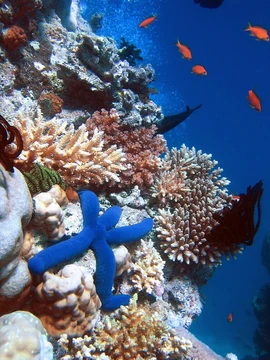
Coral bleaching happens when corals turn white because they lose the symbiotic algae and pigments living inside them. These algae, called zooxanthellae, give coral its color and provide up to 90 percent of its energy through photosynthesis. In return, the coral supplies the algae with carbon dioxide and ammonium. When environmental stressors—such as changes in water temperature, light, salinity, or nutrients—disrupt this relationship, the coral expels or consumes the algae to survive short-term. This leaves the coral pale or white. Under mild stress, some corals may appear bright blue, pink, purple, or yellow instead of white, a condition known as colorful bleaching. Without the algae, the coral begins to starve. If the stressful conditions continue, the coral’s chances of survival drop. Recovery requires the algae to re-enter the coral’s tissues and restart photosynthesis. If the coral dies, its hard skeleton remains, gets overgrown by algae, and eventually erodes, causing the reef structure to collapse.
A bleached coral is stressed, more vulnerable to starvation and disease, and at risk of death. The leading cause of large-scale bleaching is rising ocean temperatures due to climate change. Other triggers include increased or reduced water temperature, high solar irradiance, sedimentation, bacterial infections, salinity changes, herbicides, extreme low tide, cyanide fishing, elevated sea levels, mineral dust from droughts, pollutants like certain sunscreen ingredients, ocean acidification from CO₂, oil or chemical spills, and imbalances in nitrate and phosphate levels. Marine heatwaves, often driven by the El Niño-Southern Oscillation, are a major cause of widespread bleaching and coral death.
According to the United Nations Environment Programme, the longest recorded global bleaching events occurred between 2014 and 2016, killing coral on an unprecedented scale. In 2016, bleaching on the Great Barrier Reef killed 29 to 50 percent of its coral. Bleaching events have impacted regions including Australia, Hawaii, Japan, and others. The IPCC Sixth Assessment Report in 2022 noted that since the early 1980s, the frequency and severity of mass bleaching events have increased sharply worldwide. Many coral reefs are expected to undergo irreversible shifts due to marine heatwaves if global warming exceeds 1.5°C.
- Longest recorded global bleaching events
- 2014 to 2016
- Great barrier reef coral killed in 2016
- 29 to 50 percent
- Percentage of energy zooxanthellae provi
- up to 90 percent
- First major bleaching event great barrie
- 1998
- Bleaching events on great barrier reef 2
- three events
Lore & Background
The corals that form great reef ecosystems depend upon a symbiotic relationship with algae-like single-celled flagellate protozoa called zooxanthellae that live within their tissues and give the coral its coloration. The zooxanthellae provide the coral with nutrients through photosynthesis, a crucial factor in clear and nutrient-poor tropical waters. In exchange, the coral provides the zooxanthellae with carbon dioxide and ammonium needed for photosynthesis. Negative environmental conditions, such as abnormally warm or cool temperatures, high light, and even some microbial diseases, can lead to the breakdown of this symbiosis. According to a study by D.J. Smith et al., photoinhibition is a likely factor in coral bleaching, and hydrogen peroxide produced in zooxanthellae may signal them to flee the corals. To ensure short-term survival, the coral-polyp then consumes or expels the zooxanthellae, leading to a lighter or completely white appearance. Under mild stress, some corals may appear bright blue, pink, purple, or yellow instead of white due to continued or increased presence of intrinsic pigment molecules, a phenomenon known as 'colourful bleaching'.
Reader's Guide
Coral bleaching events and the subsequent loss of coral coverage often result in the decline of fish diversity. The loss of diversity and abundance in herbivorous fish particularly affects coral reef ecosystems. As mass bleaching events occur more frequently, fish populations will continue to homogenize, with smaller and more specialized fish species replaced by more generalized species. The loss of specialization likely contributes to the loss of resilience in coral reef ecosystems. According to the United Nations Environment Programme, between 2014 and 2016, the longest recorded global bleaching events killed coral on an unprecedented scale. In 2016, bleaching of coral on the Great Barrier Reef killed 29 to 50 percent of the reef's coral. Bleaching events impact many regions of the world, including Australia, Hawaii, Japan, and more. Natural corals adapted against bleaching and human assistance with reef building may help prevent further damage. The IPCC Sixth Assessment Report in 2022 found that since the early 1980s, the frequency and severity of mass coral bleaching events have increased sharply worldwide. It is expected that many coral reefs will undergo irreversible phase shifts due to marine heatwaves with global warming levels greater than 1.5°C.
More in Coral Reefs 1-24
Spotted an error? Know more?
Reader corrections go straight into our review queue. Suggest an edit · How this site is sourced