Sound Blaster 16
CD-quality audio and broad compatibility defined the Sound Blaster 16.
Last updated
A 1993 Computer Gaming World review reported that the card's digital audio quality suffered from "pops and extra noise" and incomplete Sound Blaster compatibility.[1][2]
How it changed
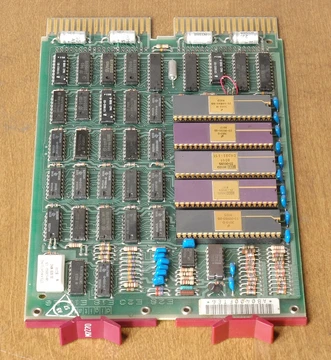
The ASP chip was a SGS-Thomson ST18932 DSP core with 16K of program RAM and 8K of data RAM.[3] It added hardware-assisted speech synthesis, QSound spatialization, and PCM audio compression.[3] Starting in late 1995, Creative used a cost-replaced OPL-3 FM substitute called CQM synthesis, which produced distortion and high-pitched artifacts.[4] DSP versions 4.11, 4.12, and some 4.13 are affected, while versions 4.16 or later and older versions like 4.05 are not.[5]
This hardware-level bug has no workaround and occurs on all operating systems.[5][6]
What the maker and period sources say
A 1993 Computer Gaming World survey stated "We were not impressed with the quality of the digital audio" of the Sound Blaster 16 or 16 ASP.[1][2] The Linux Hardware Compatibility HOWTO notes that the ASP chip on Sound Blaster 16 series is not supported.[6]
References
- Wikipedia, "Sound Blaster 16" (CC BY-SA 4.0), which cites: "CGW Sound Card Survey", October 1993, p. 76–83 (we also read that source) en.wikipedia.org
- "CGW Sound Card Survey", October 1993, p. 76–83. facts only, no text reused. cgwmuseum.org
- Wikipedia, "Sound Blaster 16" (CC BY-SA 4.0), which cites: Info on Soundblaster 16 ASPs signal prosessor., comp.sys.ibm.pc.soundcard, August 1993.; Notes on programming Creative Sound Blaster series ISA cards., accessed April 9, 2020.; "SGS-Thomson readies strategy via new DSP core, Electronic News, May 1, 1995", Electronic News (original not read by us) en.wikipedia.org
- Wikipedia, "Sound Blaster 16" (CC BY-SA 4.0), which cites: CREATIVE ANNOUNCES INNOVATION IN PC MUSIC SYNTHESIS, 1995/08/04, Free Online Library. (original not read by us) en.wikipedia.org
- Wikipedia, "Sound Blaster 16" (CC BY-SA 4.0), which cites: Linux Hardware Compatibility HOWTO: Sound cards, accessed August 6, 2007.; Help! Stuck notes with SB16 and SCD-15, comp.sys.ibm.pc.soundcard.tech, March 1995.; Roland SCD-10, SCD-15 specs (stuck notes), comp.sys.ibm.pc.soundcard.tech, April 1995. (we also read that source) en.wikipedia.org
- Linux Hardware Compatibility HOWTO: Sound cards, accessed August 6, 2007.. facts only, no text reused. tldp.org
Each numbered sentence above was checked against the source it cites before publication. Sentences citing Wikipedia adapt text from the English Wikipedia article Sound Blaster 16 (contributors), used under CC BY-SA 4.0; this entry is available under the same licence. Other sources were used for facts only; no text or images are copied from them.
More in Computer Cooling and Sound Cards
Sources
Compiled from Wikipedia and the sources listed below. Text from Wikipedia is available under CC BY-SA 4.0; this entry is adapted from it.
- Wikipedia: Sound Blaster 16 (CC BY-SA 4.0).
Spotted an error? Know more?
Reader corrections go straight into our review queue. Suggest an edit · How this site is sourced