Orange (fruit)
Hybrid citrus fruit, widely cultivated for sweet flavor.

The sweet orange, known botanically as *Citrus × sinensis*, is a hybrid fruit from the tree family Rutaceae. It is a cross between the pomelo (*Citrus maxima*) and the mandarin orange (*Citrus reticulata*), with its maternal lineage—determined by chloroplast DNA—coming from the pomelo. This fruit originated in a region covering Southern China, Northeast India, and Myanmar, with the earliest known mention appearing in Chinese literature from 314 BC. Today, orange trees thrive in tropical and subtropical climates, and their fruit is consumed fresh or used to make juice and fragrant peel. In 2024, global production reached 67 million tonnes, led by Brazil (23%), followed by China and Mexico.
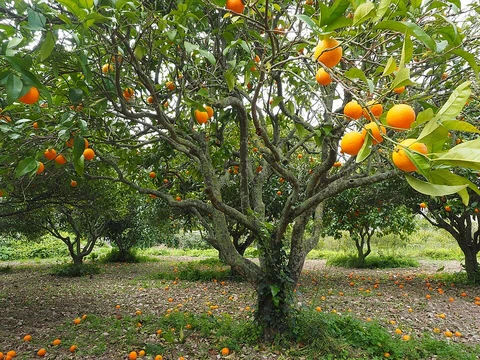
The sweet orange tree is a small evergreen, typically 9 to 10 meters tall, though old specimens can reach 15 meters. Its oval leaves, 4 to 10 cm long, are arranged alternately with finely toothed edges. The fruit varies in size and shape from spherical to oblong. Beneath the rind lies a porous white layer called the albedo or pith. Inside, about ten distinct carpels (segments) are separated by membranes, each filled with juice vesicles and usually a few seeds. Unripe oranges are green; the ripe rind ranges from bright orange to yellow-orange, sometimes retaining green patches or staying entirely green in warm climates. Like other citrus, sweet oranges are non-climacteric, meaning they do not ripen after being picked. The fruit is a hesperidium, a modified berry with a rugged rind formed from the ovary wall. Sweet oranges are divided into four classes: common oranges, blood oranges, navel oranges, and acidless oranges.
The sweet orange is not a wild fruit but arose through domestication in East Asia, likely from a cross between a non-pure mandarin and a hybrid pomelo with significant mandarin ancestry. Genomic analysis shows the sweet orange is about 42% pomelo and 58% mandarin. All varieties descend from this original hybrid, differing only through mutations selected during cultivation. The bitter orange has a separate origin, possibly from a wild cross of pure mandarin and pomelo. Sweet oranges have also spawned further hybrids: the grapefruit came from a sweet orange backcross with pomelo; the clementine and murcott from backcrosses with mandarins or tangerines; the ambersweet from a complex mix of sweet orange, Orlando tangelo, and clementine; and the citranges from sweet orange crossed with trifoliate orange.
In Europe, the Moors introduced bitter oranges, lemons, and limes to al-Andalus during the Arab Agricultural Revolution, with large-scale cultivation beginning in the 10th century using specialized irrigation. Bitter oranges reached Sicily in the 9th century under the Emirate of Sicily, but the sweet orange did not arrive there until the late 15th or early 16th century, brought by Italian and Portuguese merchants. Soon after, sweet oranges became a luxury food, grown in private conservatories called orangeries. By 1646, they were well known across Europe and eventually became the most widely cultivated fruit tree. Louis XIV of France was especially fond of oranges, building the grandest royal Orangerie at Versailles, where potted trees in silver tubs decorated the palace, and the Orangerie allowed year-round fruit for the court. When Louis condemned his finance minister Nicolas Fouquet in 1664, part of the confiscated treasures included over 1,000 orange trees.
Oranges have appeared in human culture for centuries. They were depicted in Chinese art long before reaching the West, as in Zhao Lingrang's Song dynasty fan painting *Yellow Oranges and Green Tangerines*. In Western art, they first appear in Jan van Eyck's *Arnolfini Portrait*. By the 17th century, an orangery was a status symbol, exemplified by the Versailles Orangerie. Later artists like Vincent van Gogh, John Sloan, and Henri Matisse also included oranges in their works.
- Scientific name
- Citrus × sinensis
- Family
- Rutaceae
- Origin
- Southern China, Northeast India, Myanmar
- Global production (2024)
- 67 million tonnes
- Top producer (2024)
- Brazil (23% of total)
Quick Facts
- Kj
- 197
- Protein
- 0.94 g
- Water
- 87 g
- Fat
- 0.12 g
- Carbs
- 11.75 g
- Fibre
- 2.4 g
- Sugars
- 9.35 g
- Calcium Mg
- 40
- Iron Mg
- 0.1
- Magnesium Mg
- 10
- Phosphorus Mg
- 14
- Potassium Mg
- 181
Facts from the source article.
Lore & Background
The sweet orange tree is a small, evergreen flowering tree, typically reaching 9 to 10 meters in height, though very old specimens may grow to 15 meters. Its oval leaves, 4 to 10 centimeters long, are arranged alternately and have finely toothed edges. The fruit itself varies in size and shape, from spherical to oblong. Beneath the rind lies a porous white tissue called the albedo or pith. Inside, the orange is divided into roughly ten distinct carpels, or segments, each enclosed by a membrane and filled with juice-filled vesicles and usually a few seeds. When unripe, the fruit is green; the ripe rind is grainy and irregular, ranging from bright orange to yellow-orange, though it often retains green patches or, in warm climates, may stay entirely green. Like all citrus, the sweet orange is non-climacteric, meaning it does not ripen after being picked. The fruit is a hesperidium, a modified berry with a rind formed by a thickened ovary wall. The sweet orange group is divided into four classes: common oranges, blood oranges, navel oranges, and acidless oranges. The tree is widely cultivated in tropical and subtropical regions for its fruit, which is eaten fresh or processed for juice and peel.
Reader's Guide
The sweet orange has had its full genome sequenced. It is a relatively small evergreen tree, averaging 9 to 10 m in height, with oval leaves and crenulate margins. The fruit is a hesperidium, a modified berry, with a grainy rind ranging from bright orange to yellow-orange, and contains about ten carpels filled with juice vesicles. The sweet orange is non-climacteric, not ripening off the tree. It is subdivided into four classes: common oranges, blood oranges, navel oranges, and acidless oranges. The fruit has featured in human culture since ancient times, appearing in Chinese art centuries before its first Western depiction in Jan van Eyck's Arnolfini Portrait. By the 17th century, orangeries became items of prestige in Europe, as seen at the Versailles Orangerie.
Did You Know?
- The sweet orange is a hybrid between pomelo and mandarin orange, with pomelo as the maternal parent.
- The sweet orange has given rise to hybrids including the grapefruit, clementine, and murcott.
Frequently Asked Questions
What is Orange (fruit)?
The orange is a sweet citrus fruit borne by a tree in the Rutaceae family, botanically classified as the hybrid Citrus × sinensis. It is the offspring of a pomelo crossed with a mandarin orange.
What is Orange (fruit)'s scientific classification?
Its scientific designation is Citrus × sinensis, placing it within the Rutaceae family. It is a hybrid resulting from the cross between Citrus maxima (pomelo) and Citrus reticulata (mandarin orange).
How does Orange (fruit) differ from bitter orange?
The sweet orange (Citrus × sinensis) is set apart from the bitter orange (Citrus × aurantium) primarily by its noticeably sweeter flavor. The qualifier 'sweet orange' exists specifically to avoid confusion with its tart, bitter relative.
More in Common Plants And Crops 1-24
Spotted an error? Know more?
This is a living reference — every entry is fact-audited, and reader corrections feed straight into our audit queue. Suggest an edit · See this site's audit record